India Autos & EVs: The Market Structure Question — Lessons from ICE
Summaries are public. PDF access requires an active membership; all members have the same access. Sign in
Key Views
EV success drivers will mirror those of ICE: cost competitiveness, durability, and distribution in the commuter segment; brand and product differentiation in the premium segment. However, lower entry barriers — shorter development cycles and outsourced components such as batteries and motors — may yield more product launches and a more fragmented mass market. Incumbent OEMs (TVS, Bajaj, Hero) have seen their combined e-2W market share rise from about 10% in June 2022 to over 60% by June 2026, yet they have not established a durable cost advantage. Current EV leaders also lack entrenched competitive moats, leaving room for further disruption from entrants such as Suzuki, Honda, Royal Enfield, and VinFast.
Outlook
No explicit price targets were provided. EV leadership remains fluid, with motorcycle EV penetration likely to trail scooters due to affordability challenges.
Recommended Securities
Financial forecasts (FY26A–FY28E) and risk analyses are provided for TVS Motor Co Ltd, Bajaj Auto Ltd, Hero MotoCorp Ltd, and Eicher Motors Ltd. Historical ratings as of July 15, 2026: Bajaj Auto — Outperform; Hero MotoCorp — Market-Perform.
Key exhibits
Exhibit 1
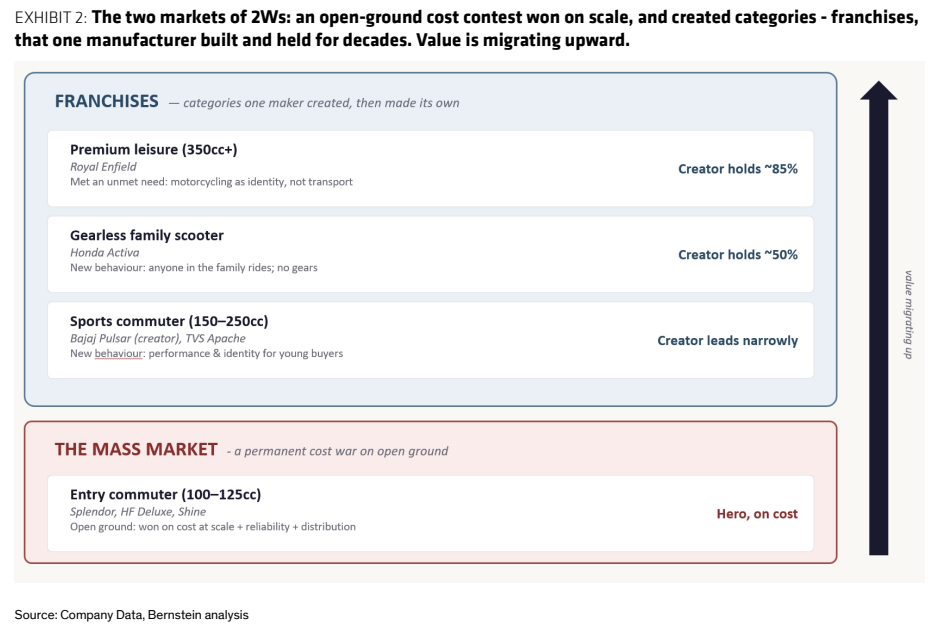
Exhibit 2
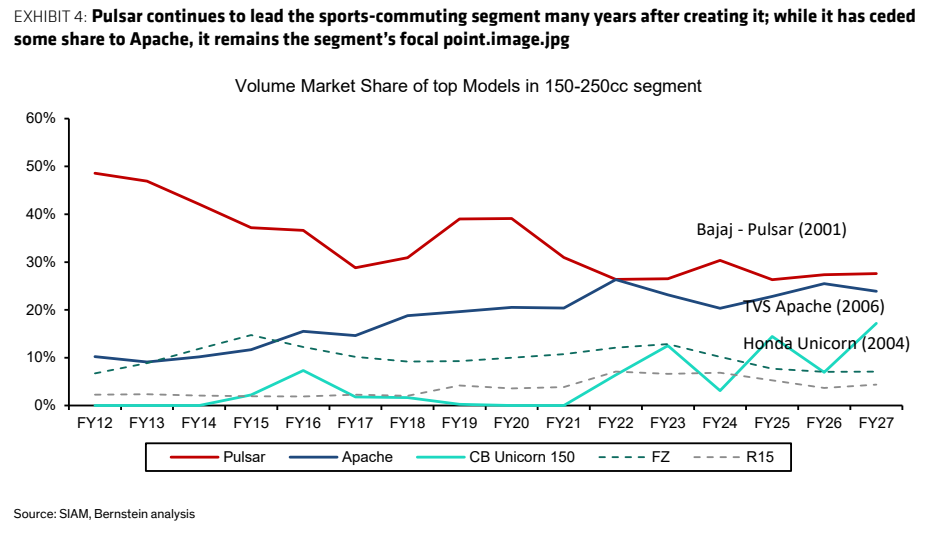
Exhibit 3
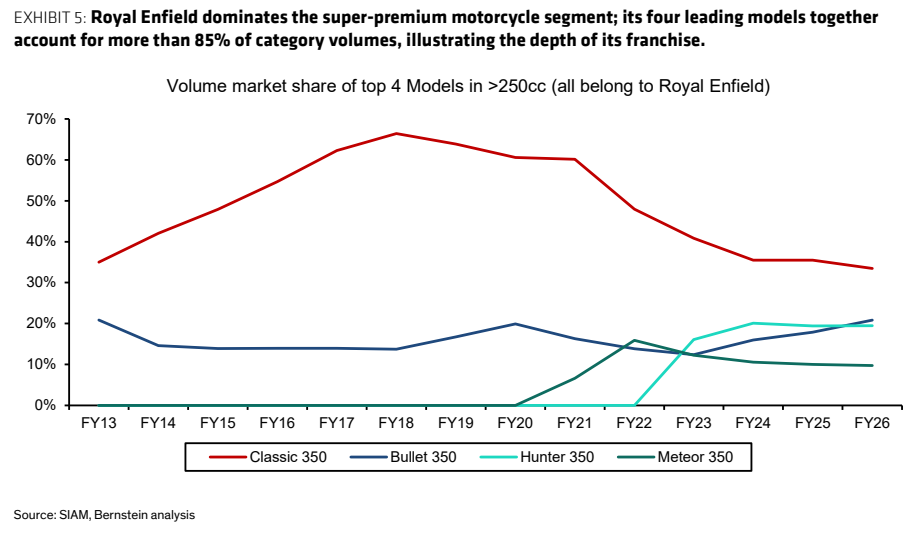
Exhibit 4
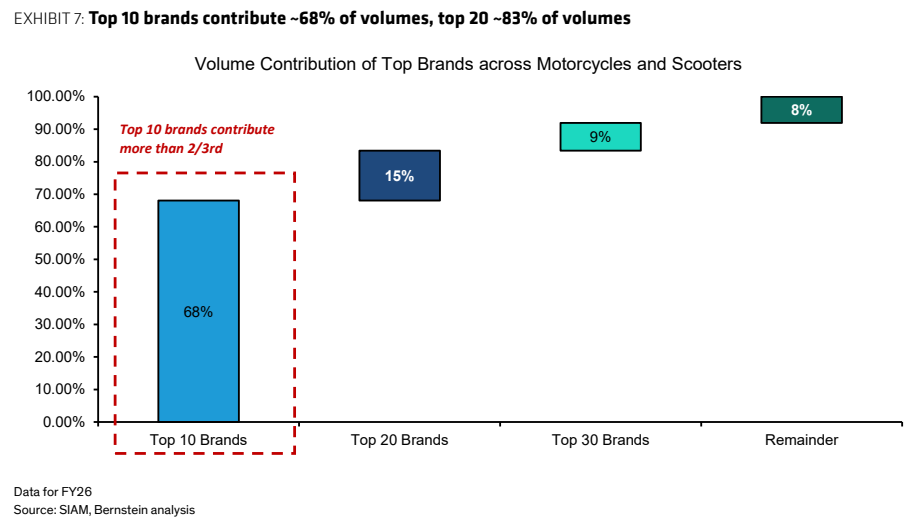
Exhibit 5
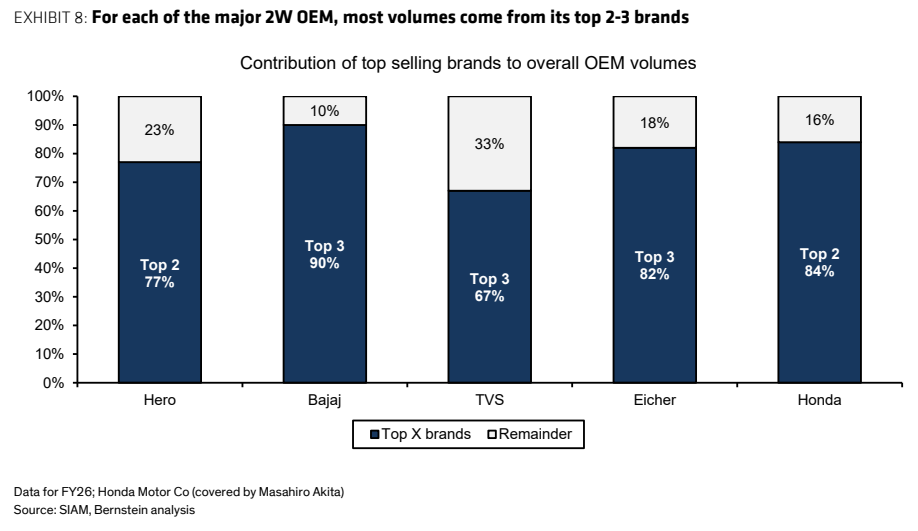
Exhibit 6

Exhibit 7
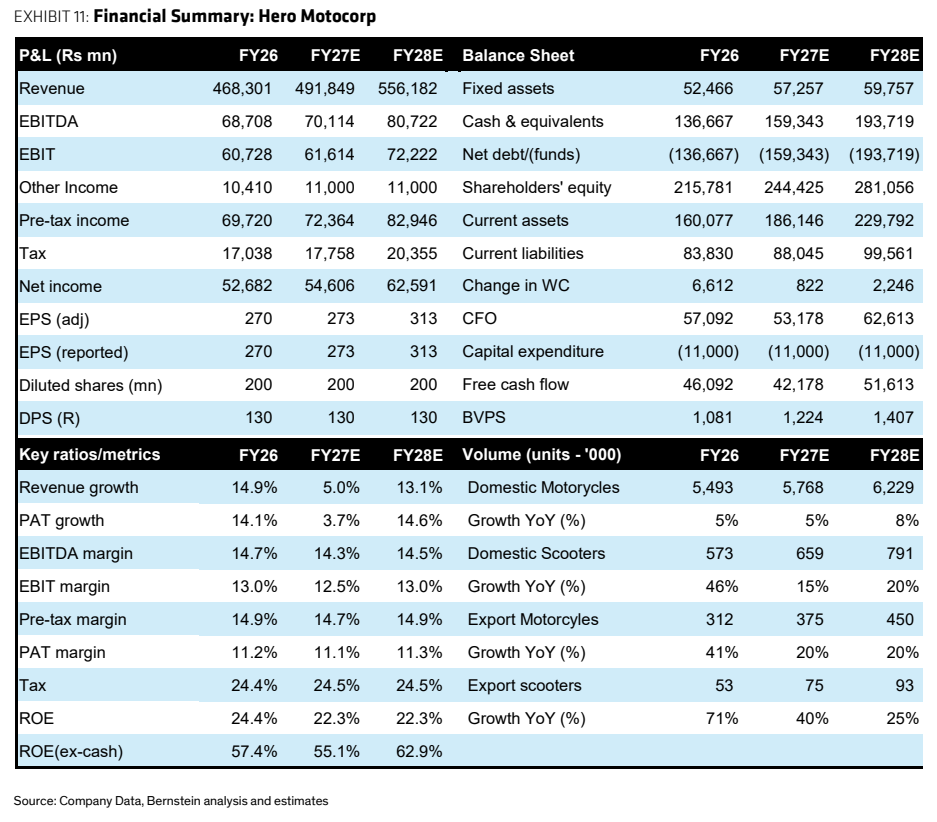
Exhibit 8
