Goldman Sachs Japan Economics Analyst: Measuring the Wealth Effect of Rising Equity Prices in Japan
Summaries are public. PDF access requires an active membership; all members have the same access. Sign in
This Goldman Sachs analysis examines how rising Japanese equity prices influence household consumption through the wealth effect. Although Japanese households hold a relatively low proportion of equities in their overall financial assets, this allocation has been increasing, partly driven by a surge in NISA accounts. The report estimates that for every 10% rise in the Nikkei 225, household consumption could increase by 0.2–0.3%. This wealth effect manifests within one to two quarters and is notably more pronounced among elderly households aged 65 and older, who possess larger equity holdings.
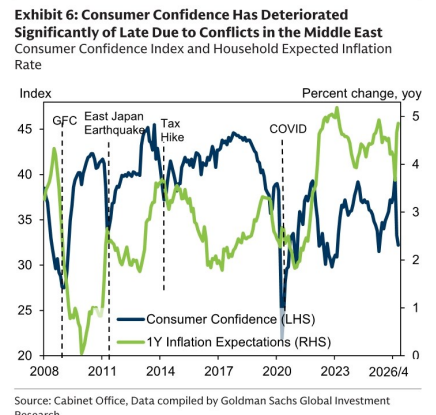
Goldman Sachs identifies two primary transmission channels: a direct wealth effect from appreciated asset values and an indirect confidence channel that bolsters consumer sentiment. Should equity prices sustain their upward trajectory, the resulting wealth effect could contribute an additional 0.1–0.2 percentage points to GDP growth. However, the magnitude heavily depends on the durability of the equity rally and sustained household confidence. If equity prices decline, a corresponding negative wealth effect could equally drag down consumption. The report does not provide specific asset recommendations or targeted forecast windows but notes that the ongoing consumer confidence deterioration poses a key risk to this transmission mechanism.
Key exhibits
Exhibit 1
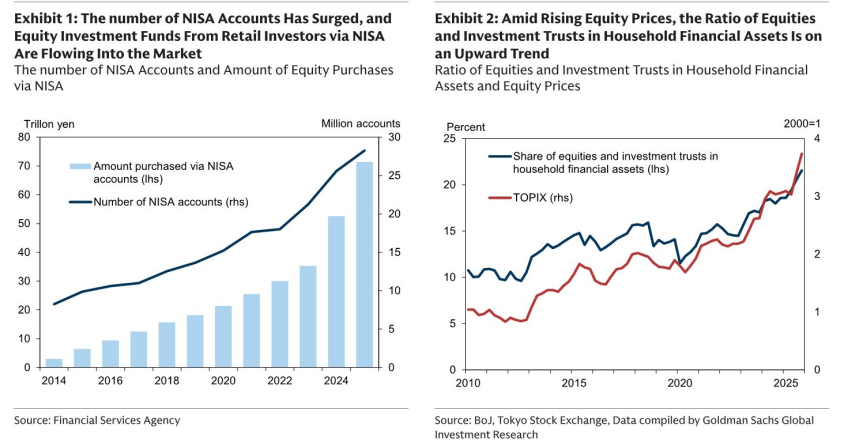
Exhibit 2

Exhibit 3
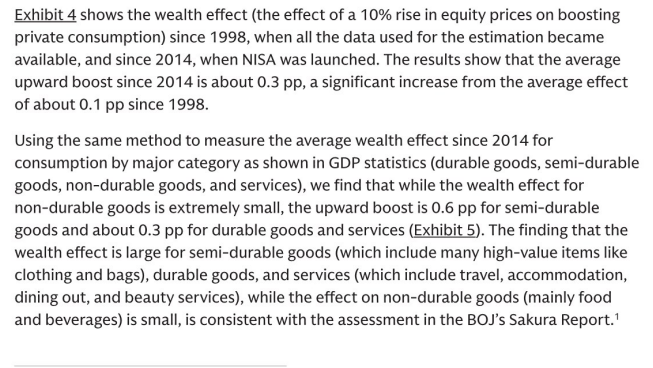
Exhibit 4
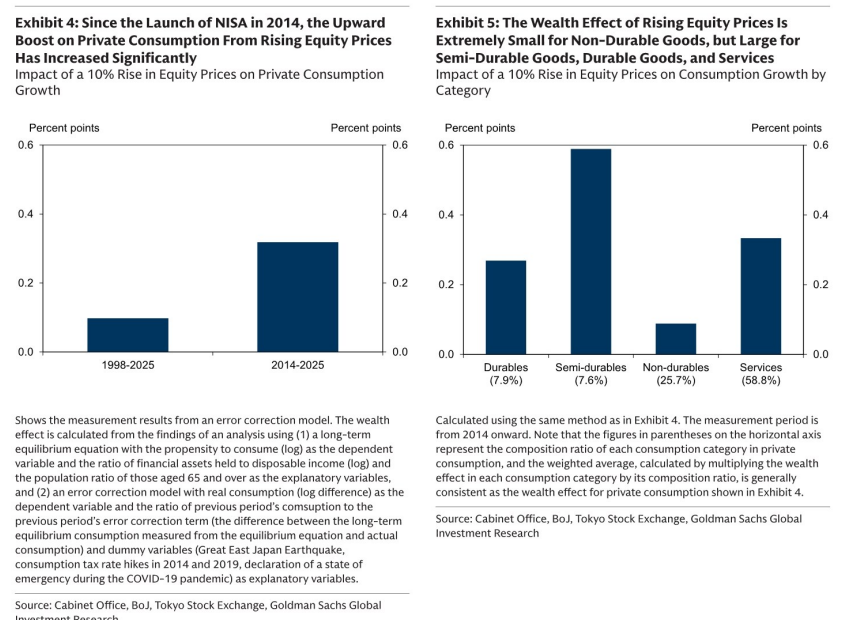
Exhibit 5