UBS Strait of Hormuz Tracker (Day 59): First Zero-Transit Day; Japanese Tanker Exception
Summaries are public. PDF access requires an active membership; all members have the same access. Sign in
Key Views
US-Iran negotiations remain deadlocked. President Trump rejected Iran's latest proposal, which sought to defer nuclear issues while focusing solely on ending hostilities and reopening the strait. Notably, the Idemitsu Maru, managed by Japan's Idemitsu Kosan, carried 2 million barrels of Saudi crude through the strait via an Iranian route. Coordination details remain unclear, potentially signaling a partial workaround.
Iranian crude loadings hold near 1.6 million b/d this month, slightly below March's 1.7 million b/d. Bypass ports at Yanbu (Saudi Arabia) and Fujairah (UAE) continue ramping throughput, averaging approximately 6.4 million b/d over the past week—approaching UBS's estimated capacity ceiling of roughly 6.5 million b/d, and sharply higher than February's 2 million b/d and March's 5.2 million b/d.
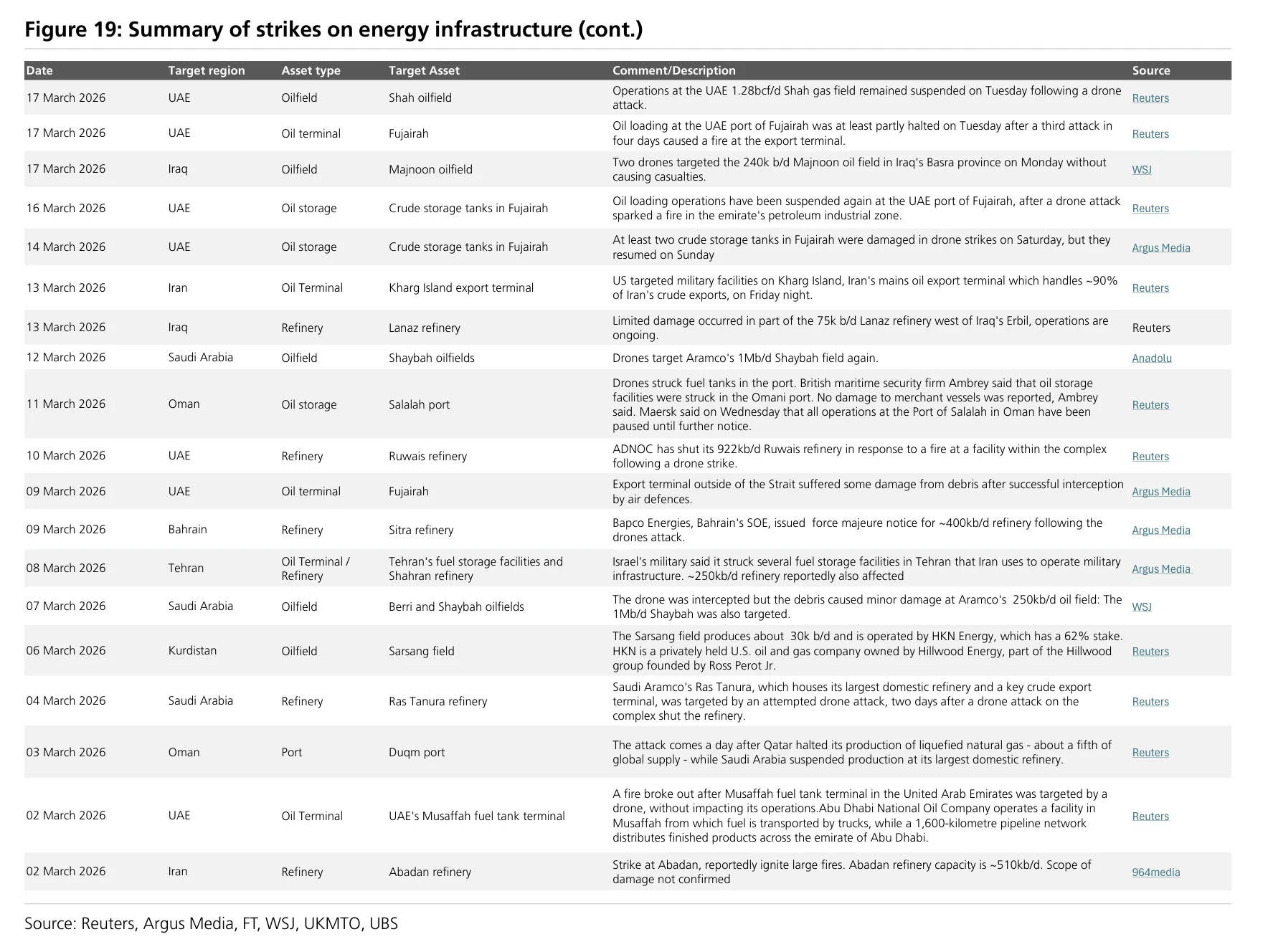
Energy infrastructure across the Middle East has suffered extensive attacks since early March. Major incidents include damage to Qatar's LNG facilities reducing 17% of export capacity, ADNOC's shutdown of its 922,000 b/d Ruwais refinery, and a strike on Saudi Arabia's East-West pipeline that temporarily cut 700,000 b/d.
Outlook
With bypass capacity near its estimated ceiling and negotiations stalled, the blockade may persist. Asian buyers—primarily China, India, Japan, and South Korea—face the greatest supply security risk.
Key exhibits
Exhibit 1
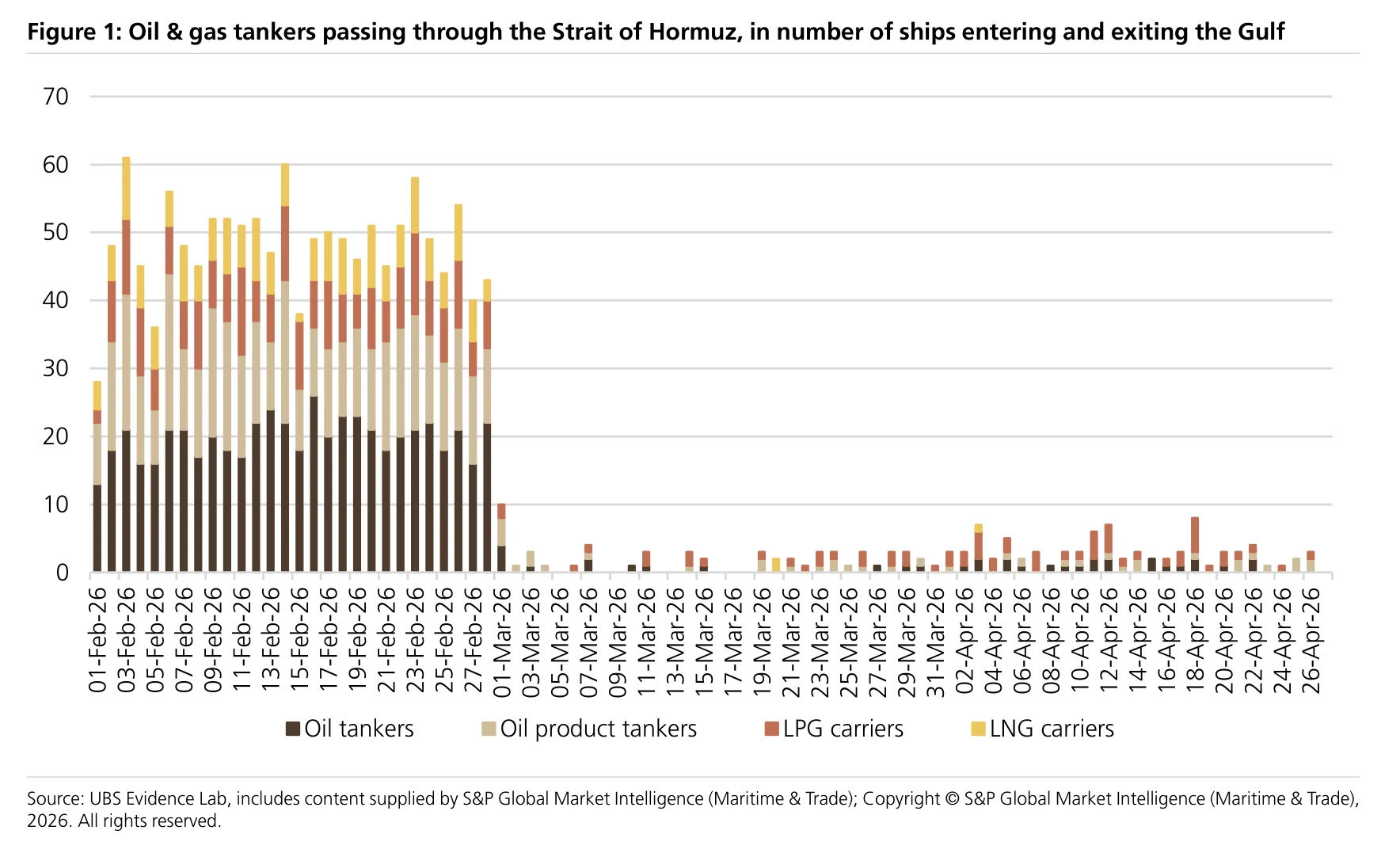
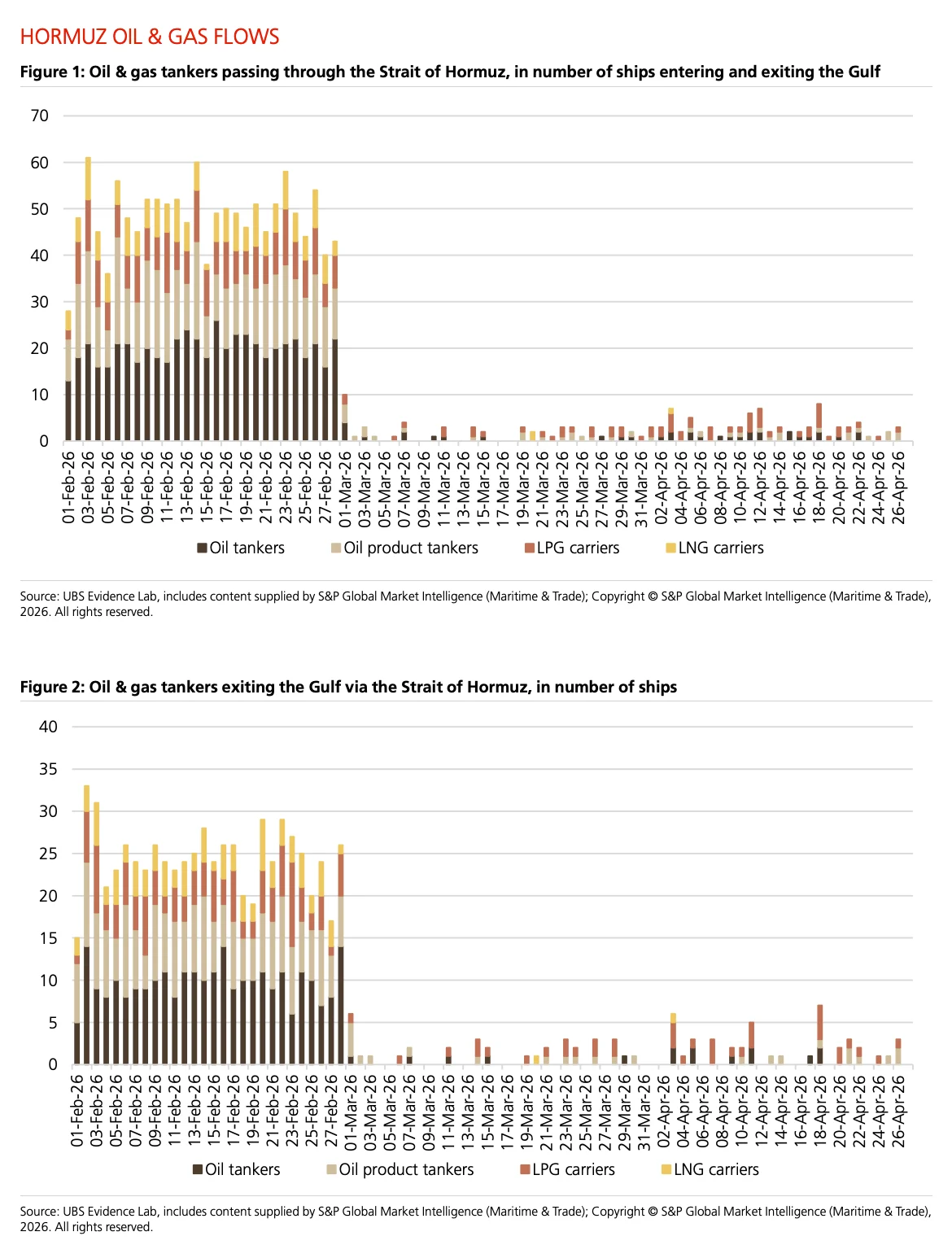
Exhibit 2
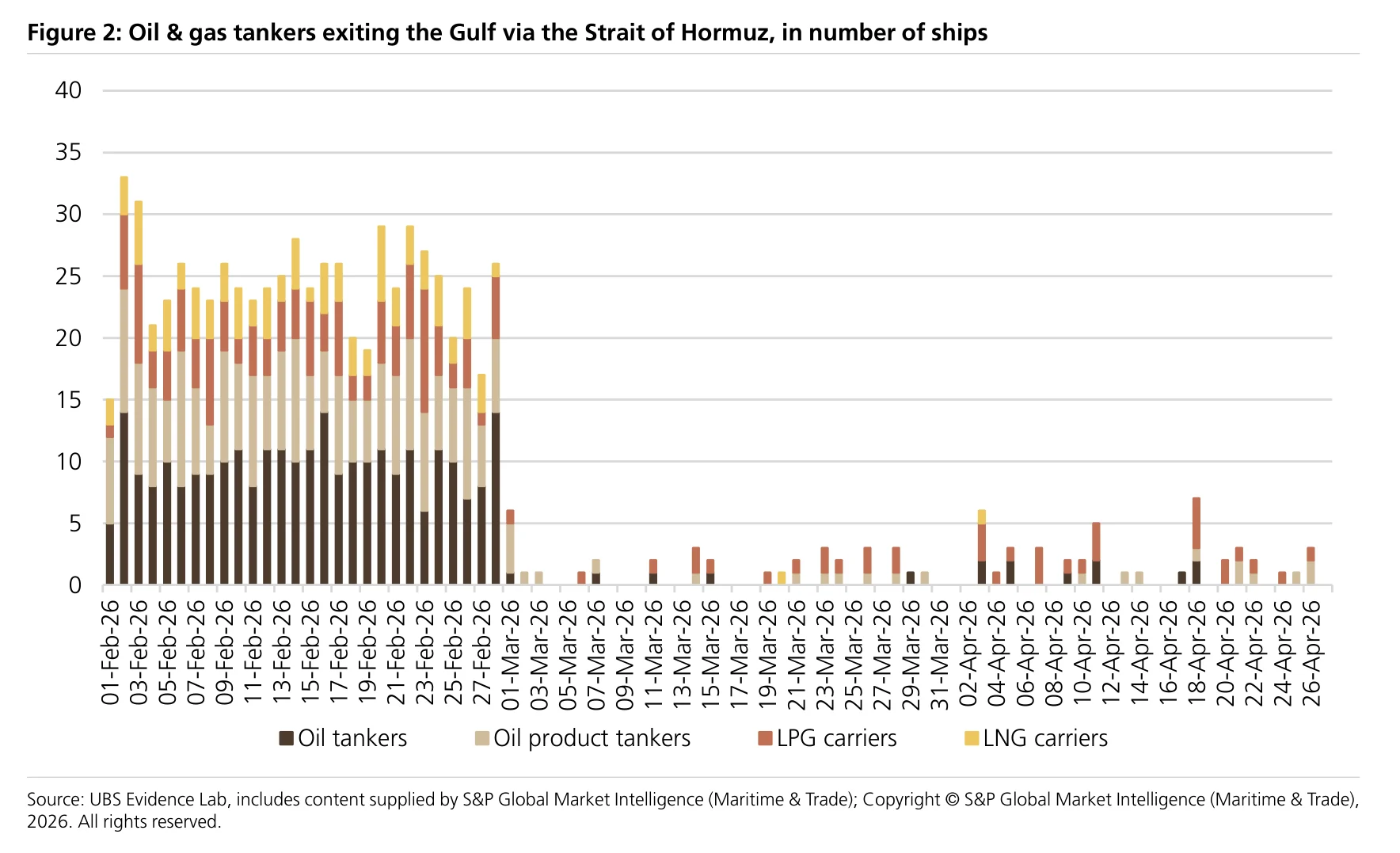
Exhibit 3
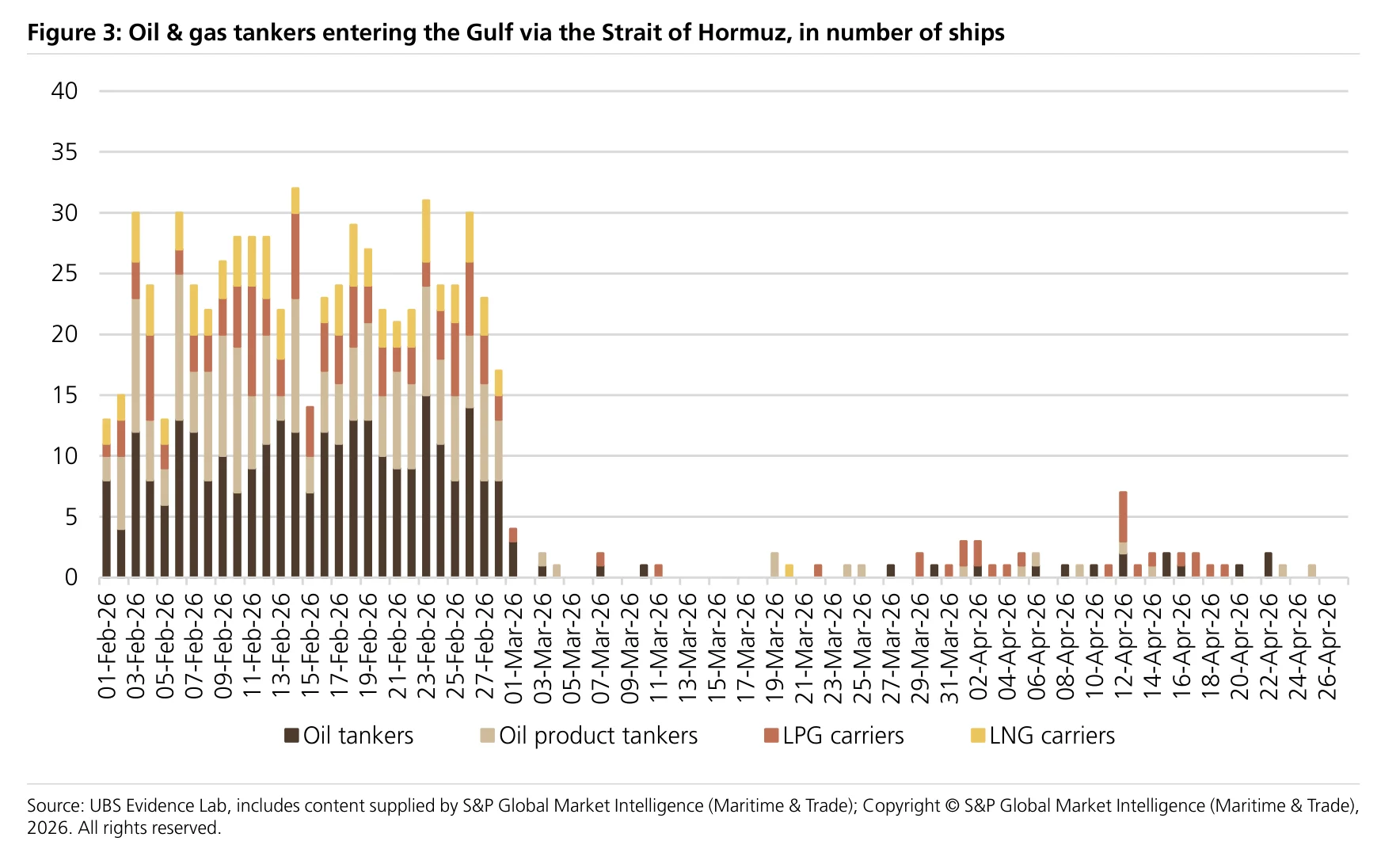
Exhibit 4
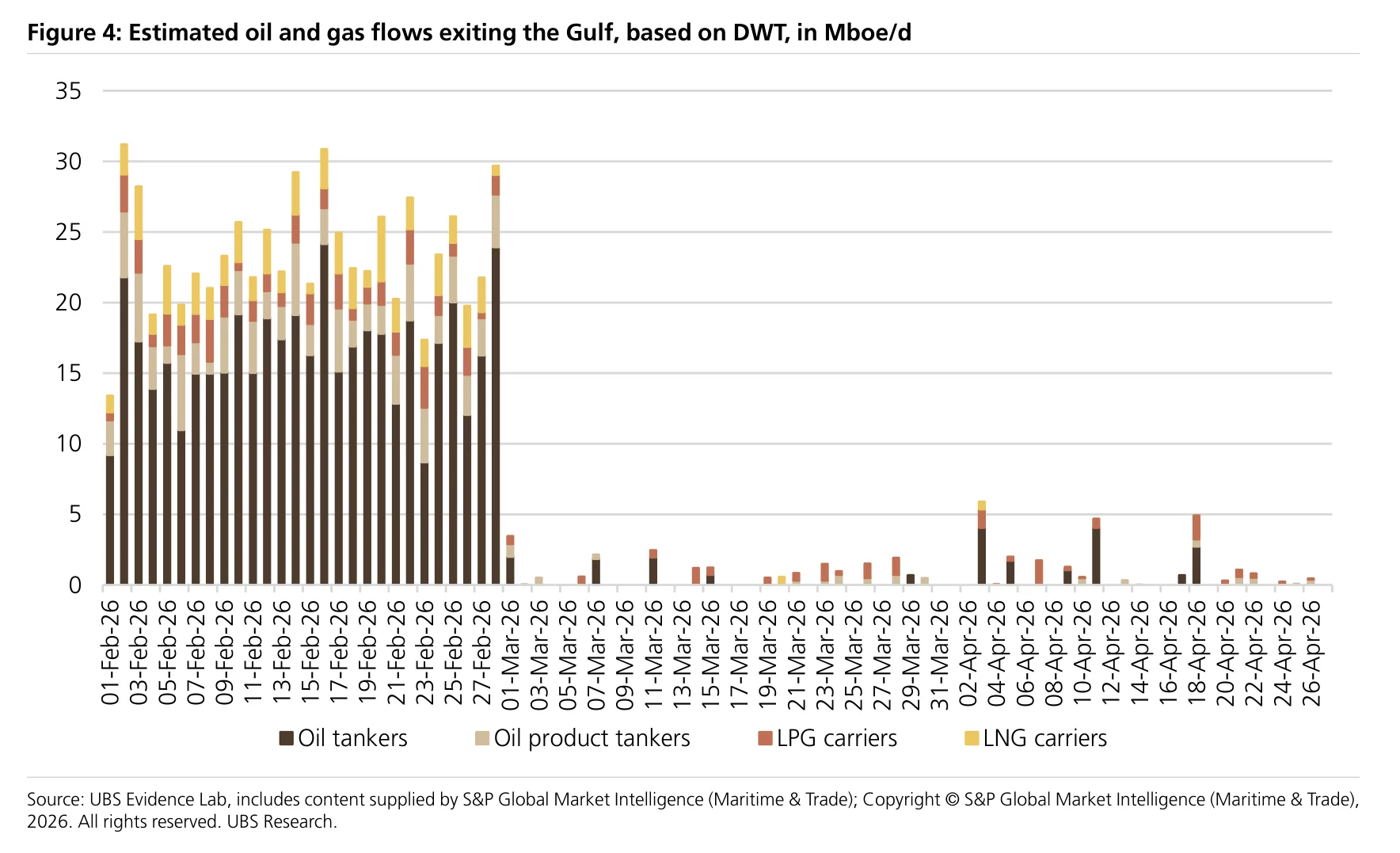
Exhibit 5
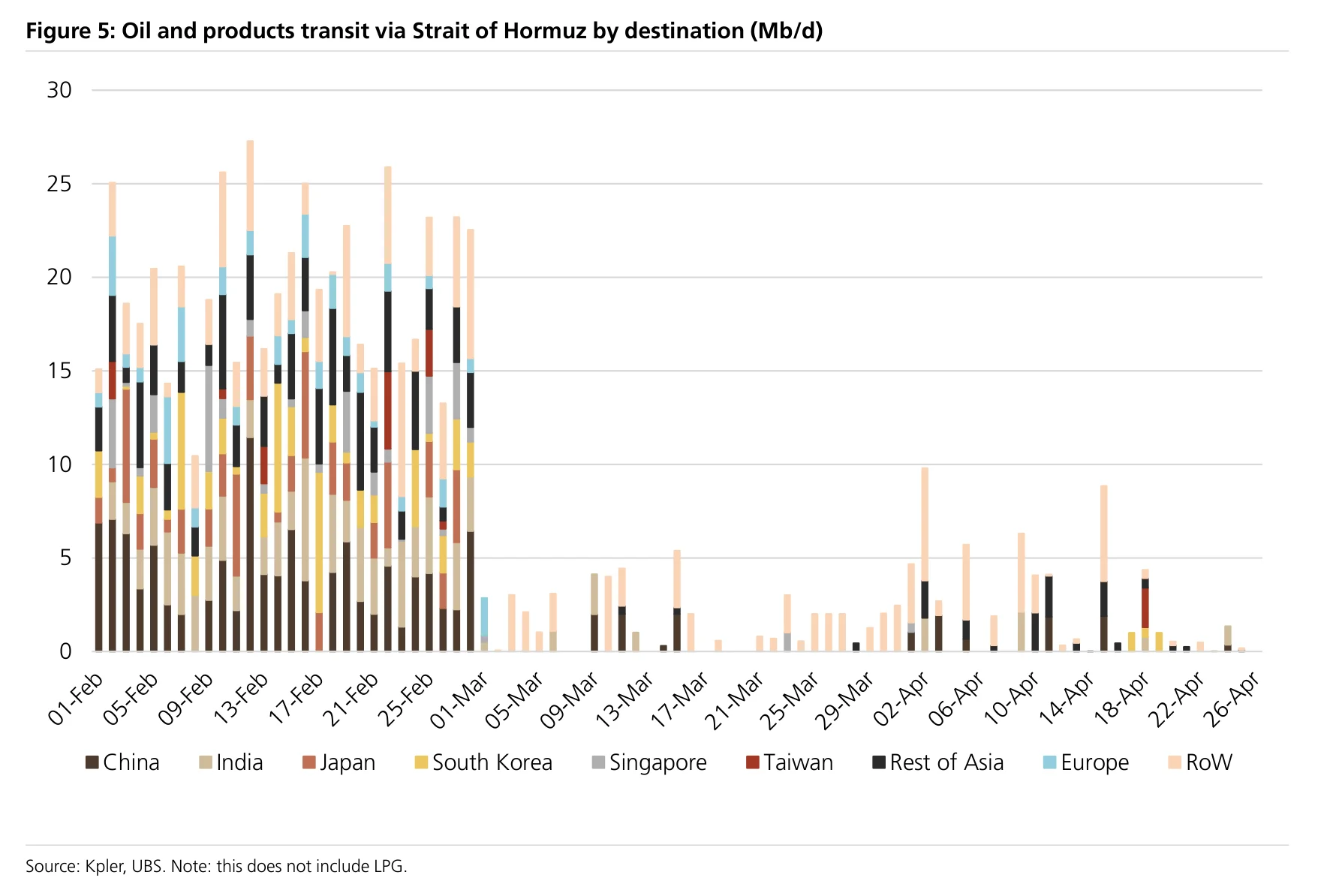
Exhibit 6

Exhibit 7
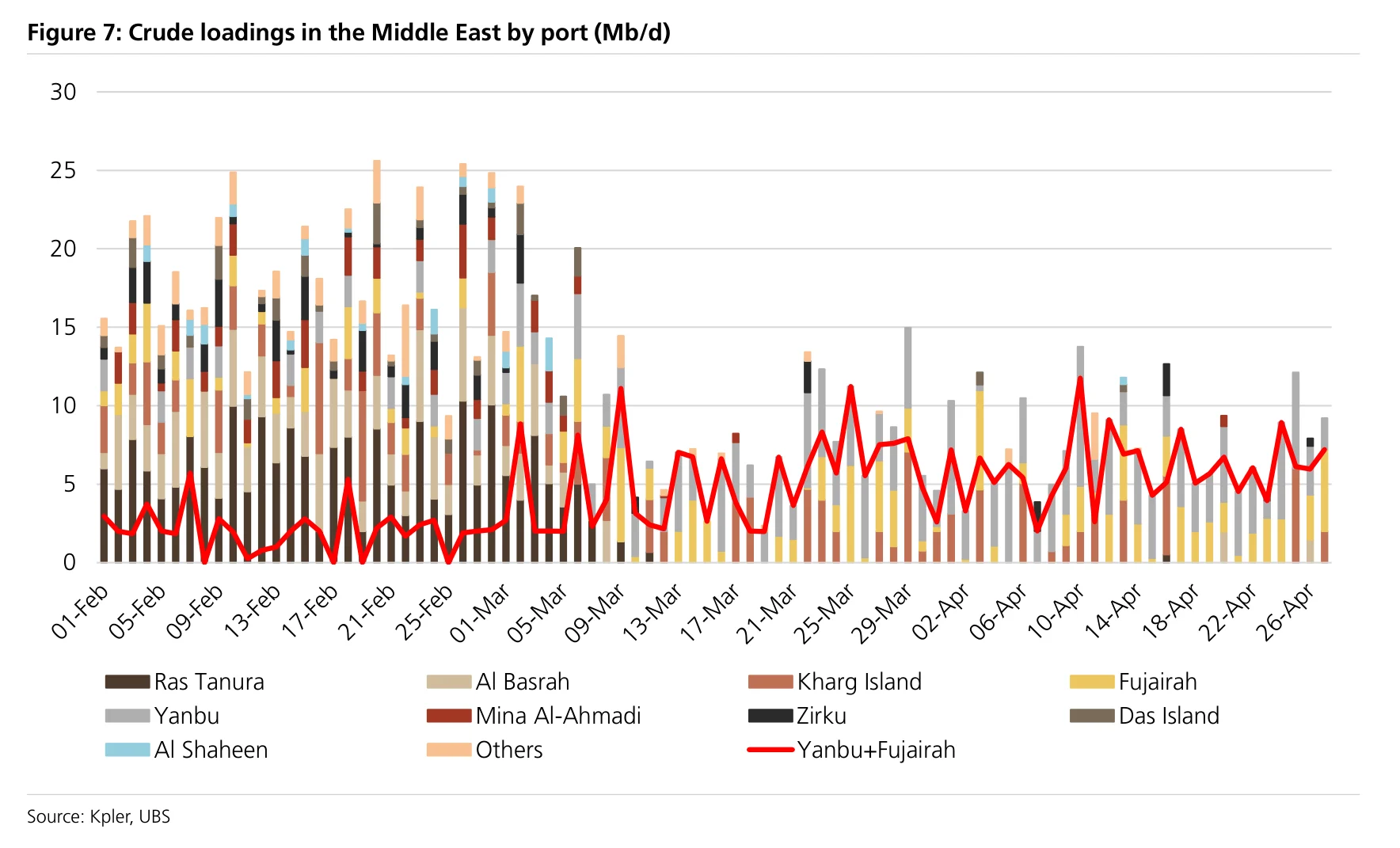
Exhibit 8
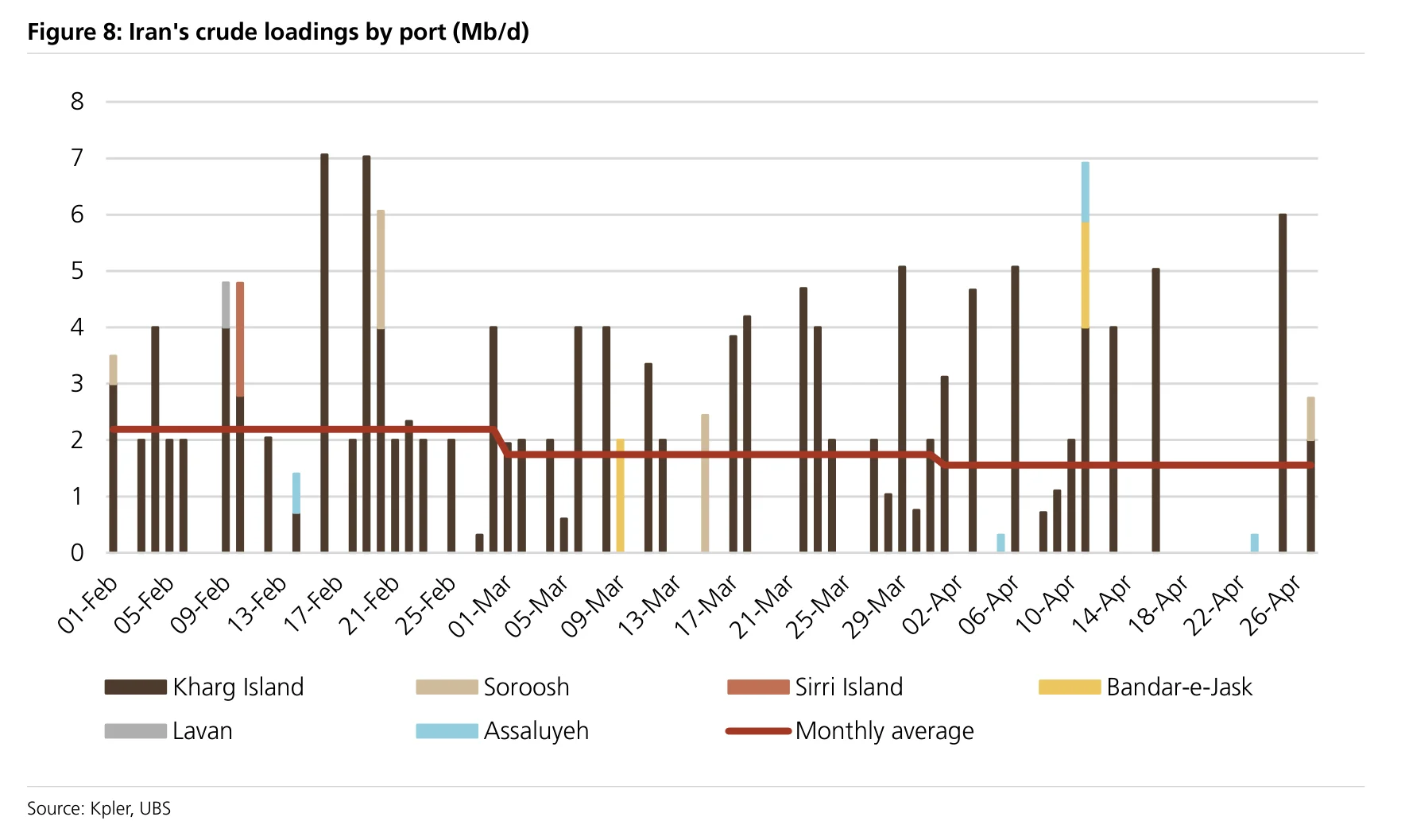
Exhibit 9
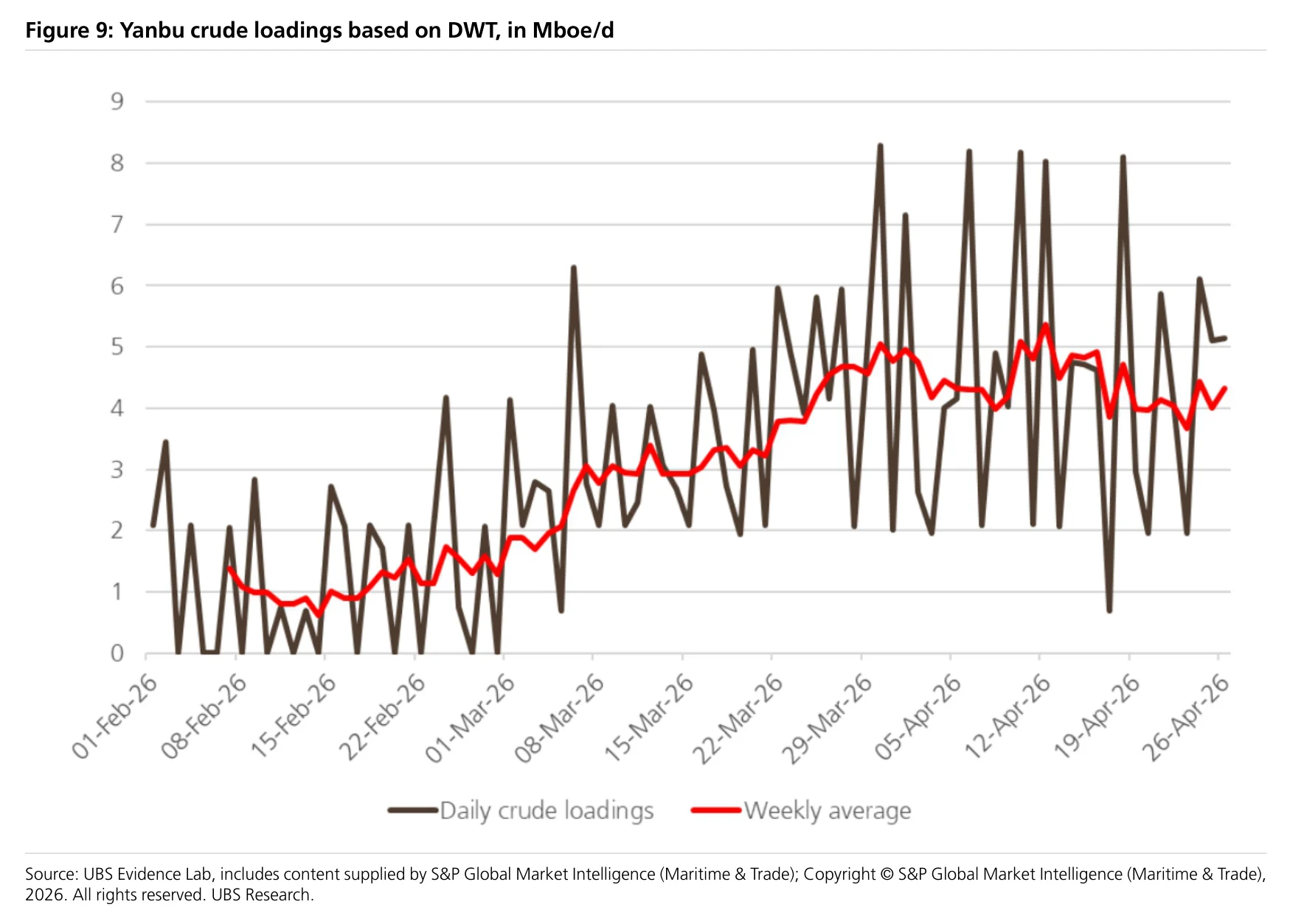
Exhibit 10
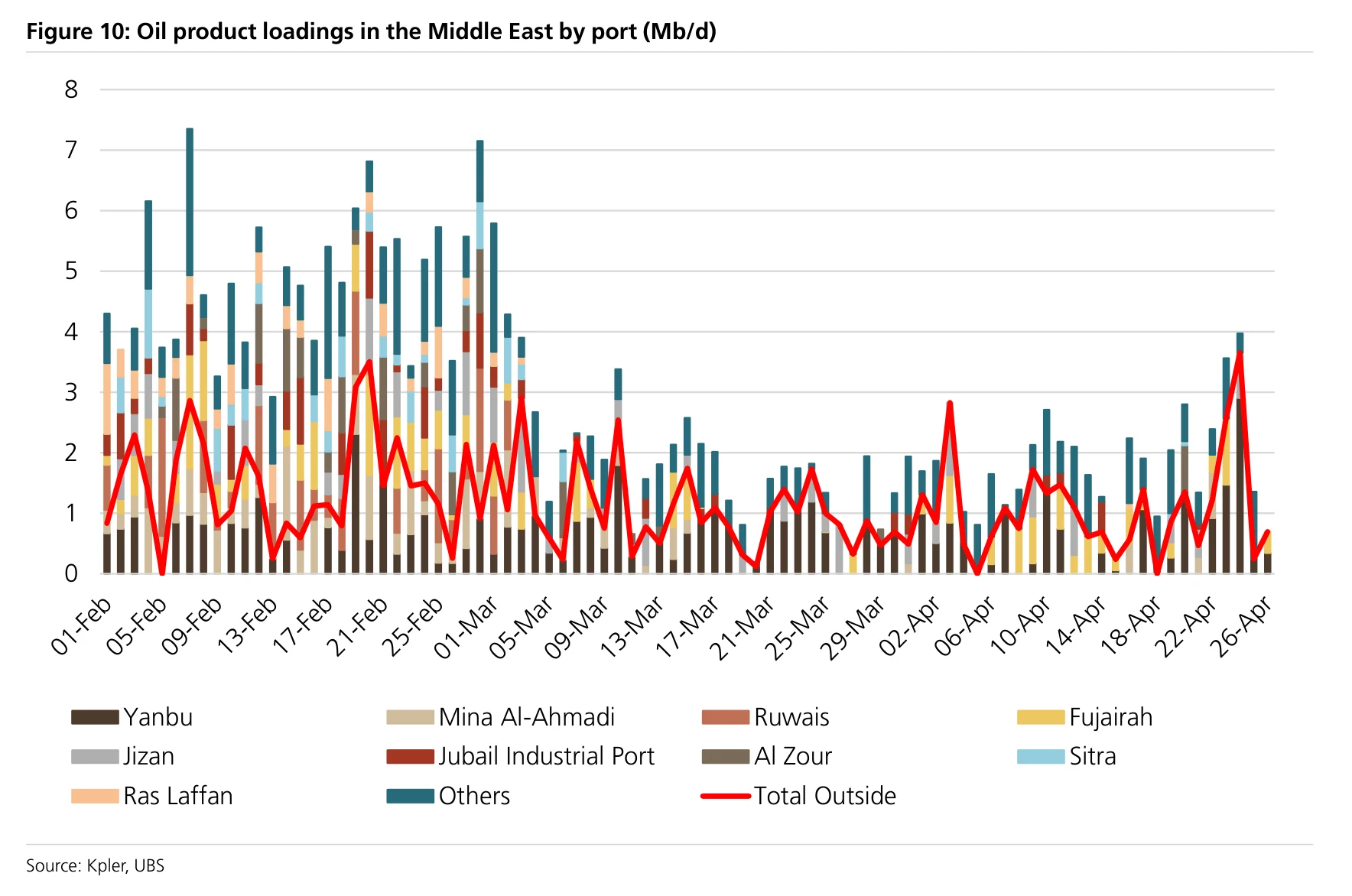
Exhibit 11
Exhibit 12
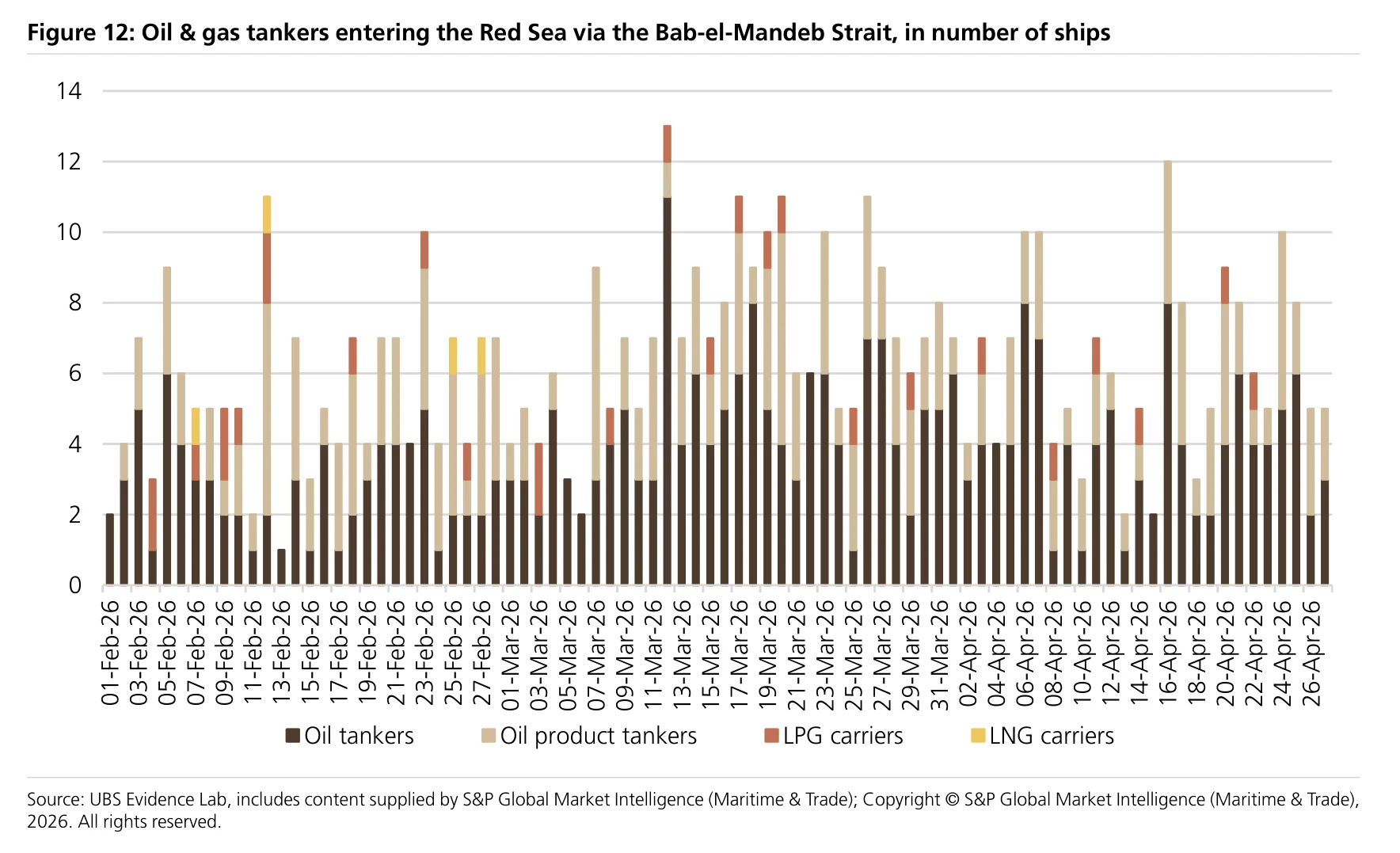
Exhibit 13
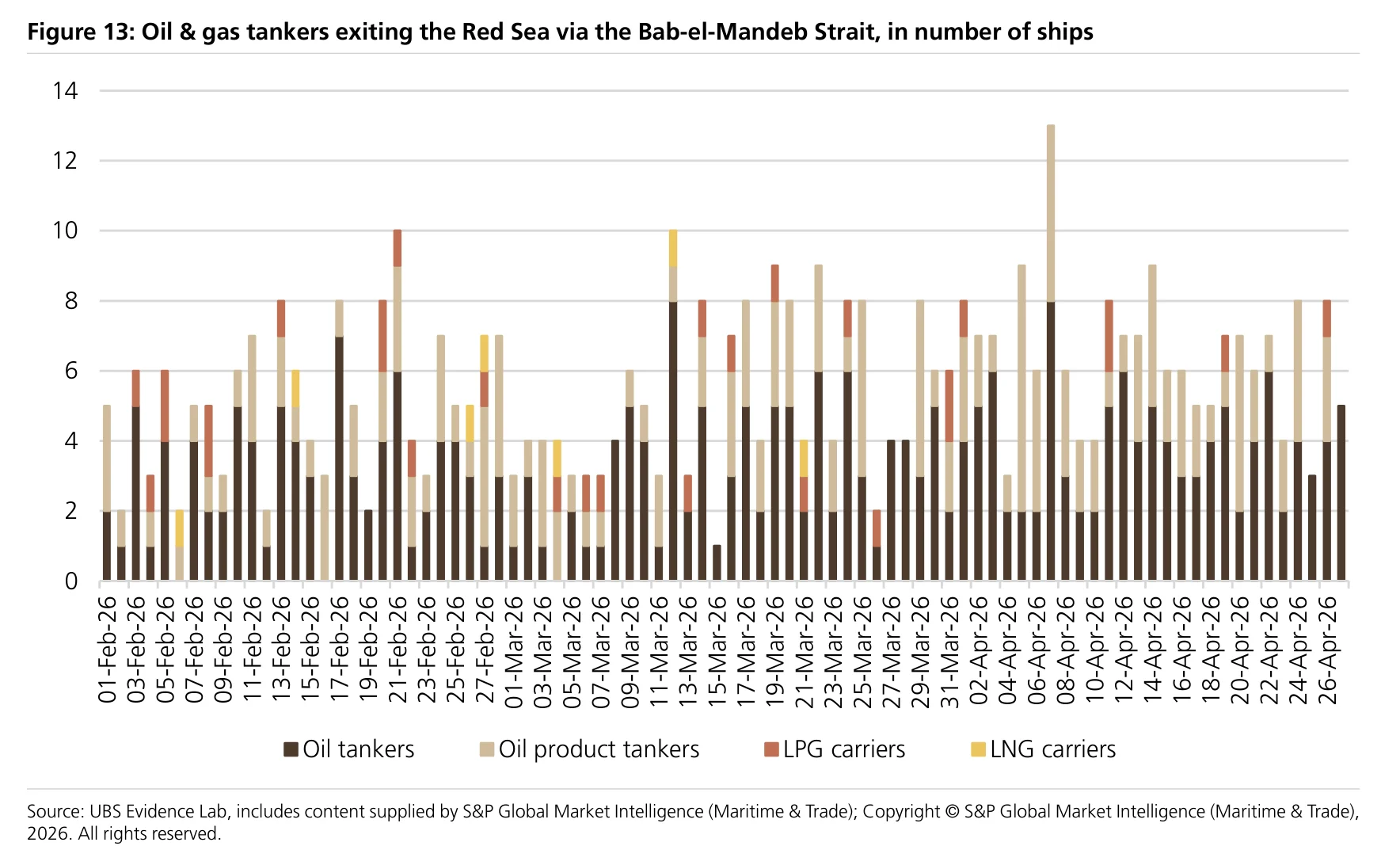
Exhibit 14
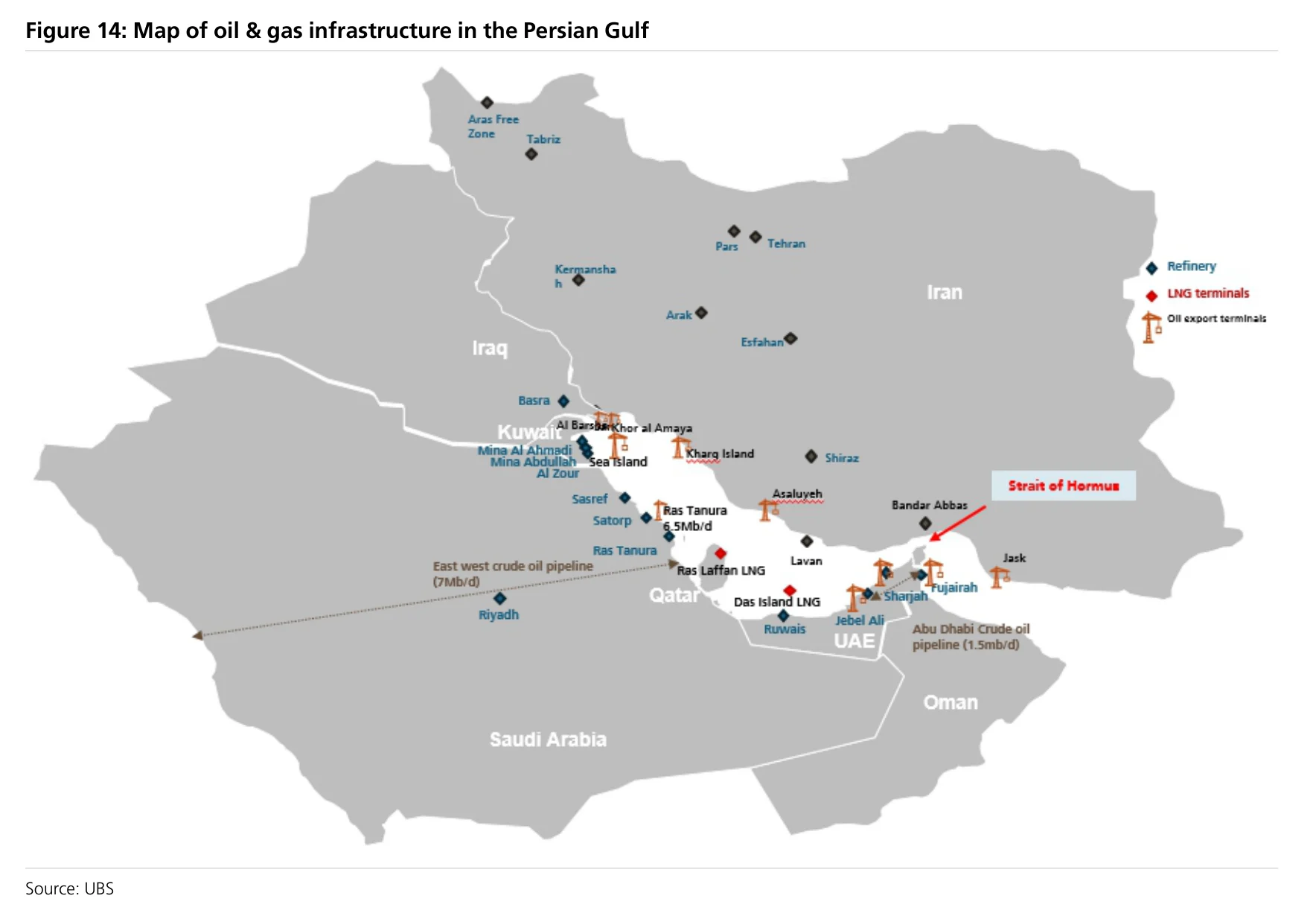
Exhibit 15
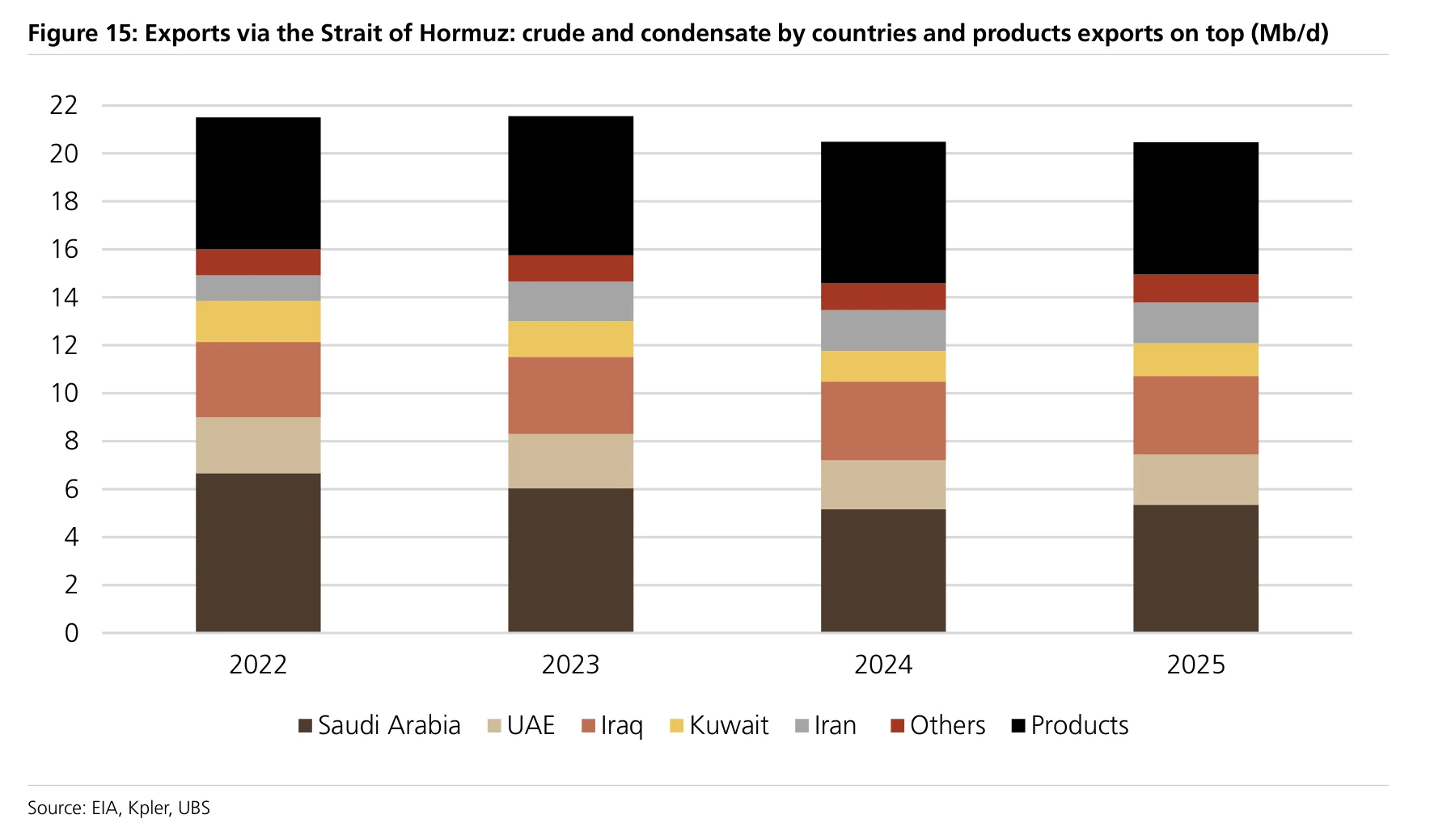
Exhibit 16
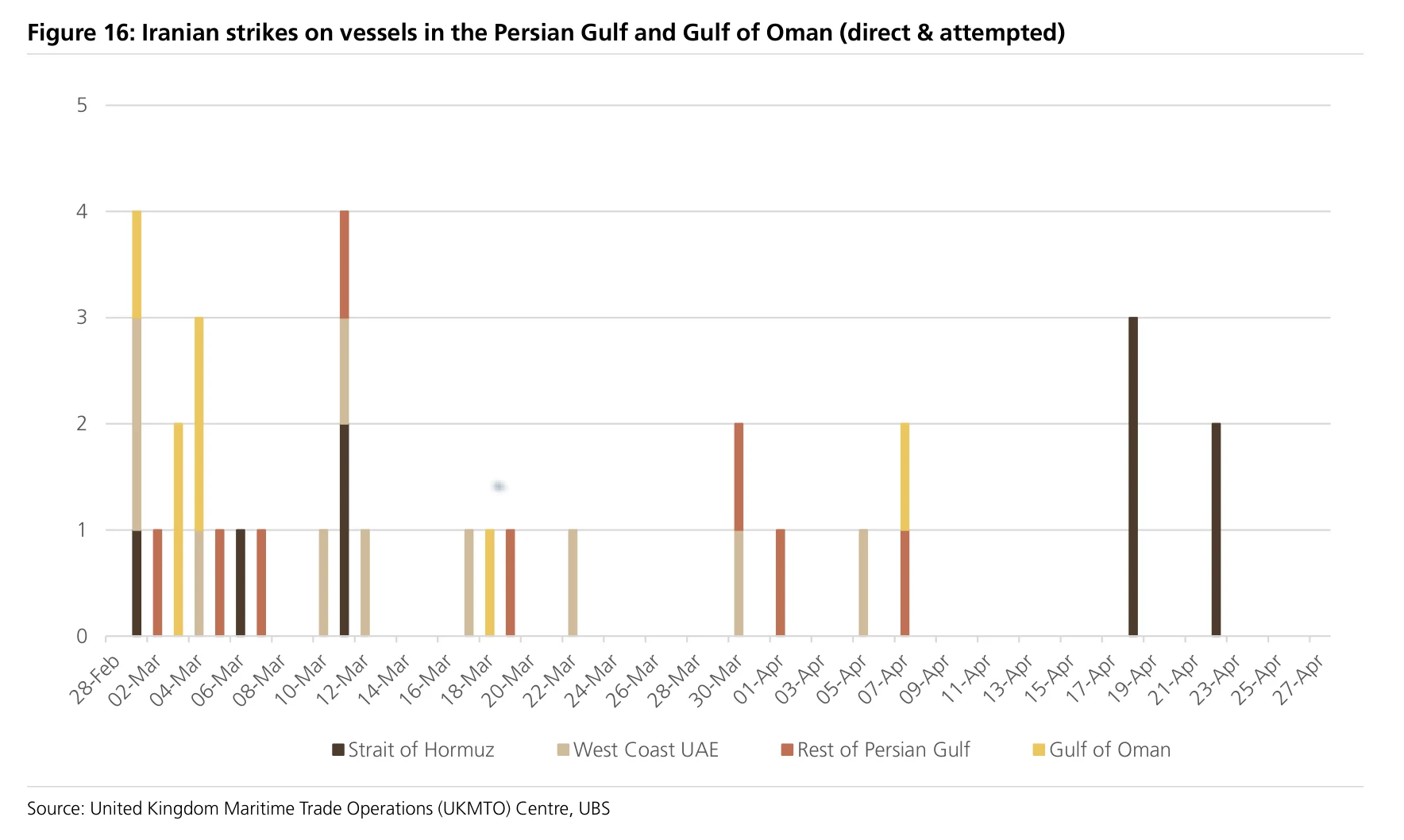
Exhibit 17
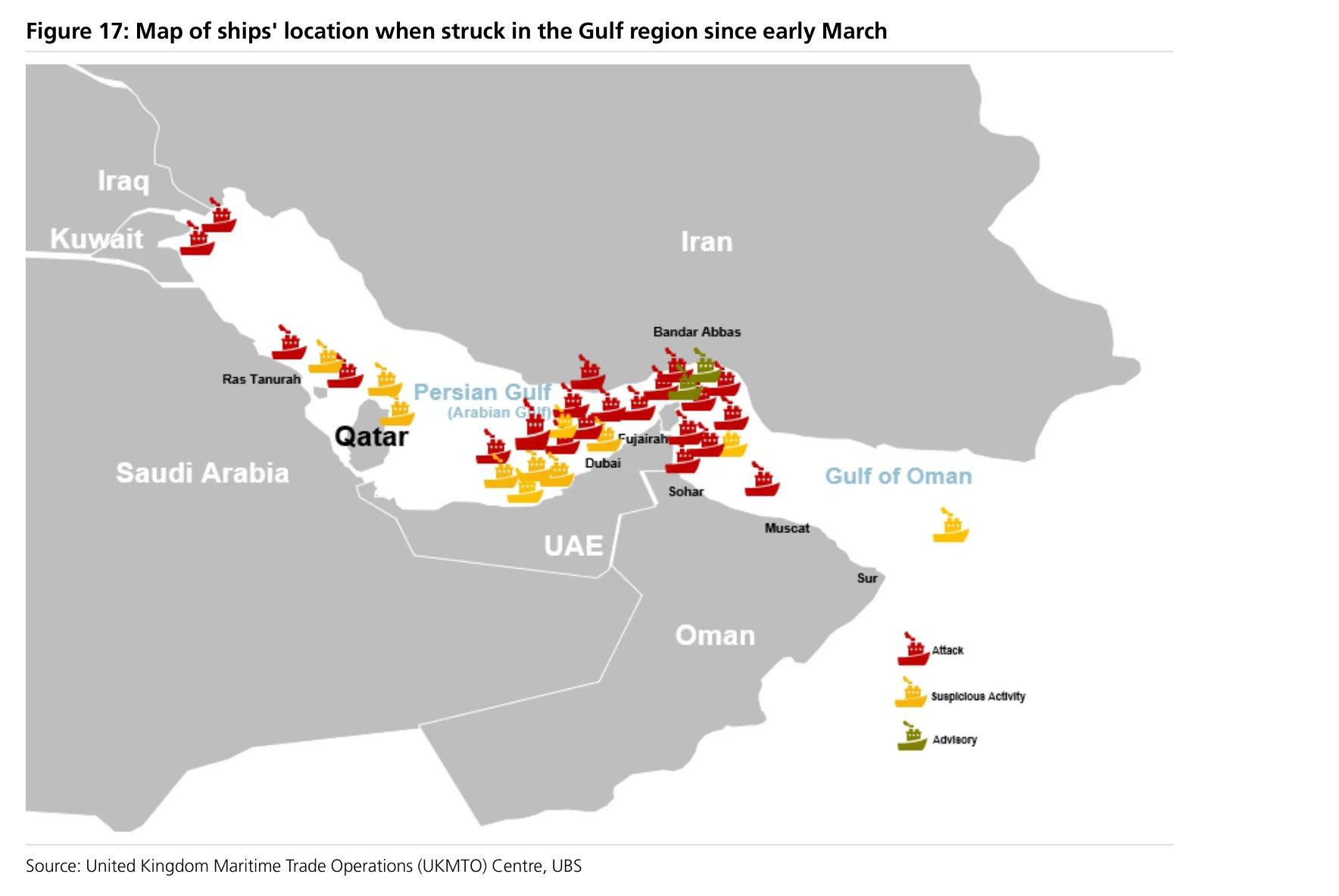
Exhibit 18
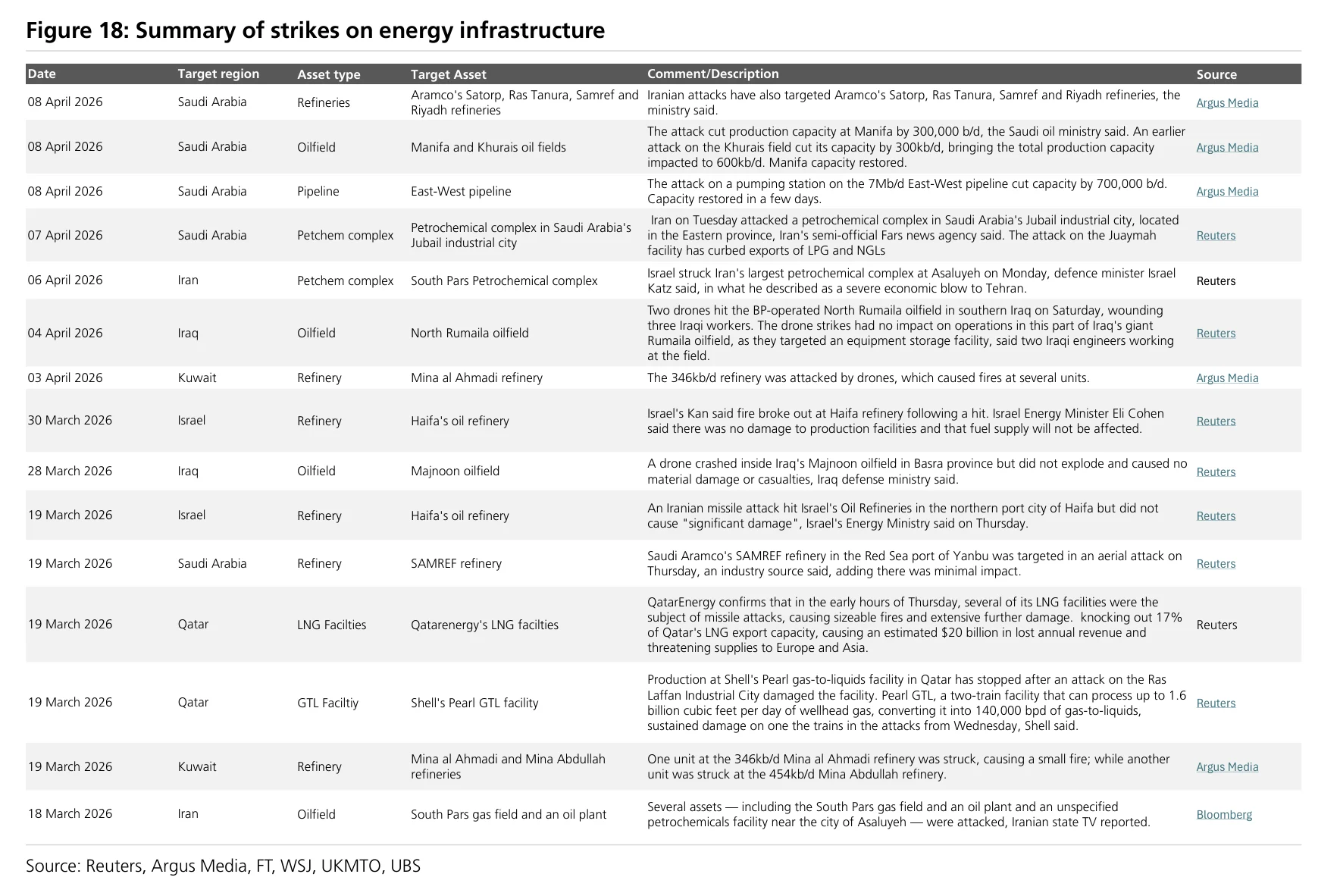
Exhibit 19