Bernstein: Circle Faces Open USD Competition as 140-Partner Consortium Launches Stablecoin
Summaries are public. PDF access requires an active membership; all members have the same access. Sign in
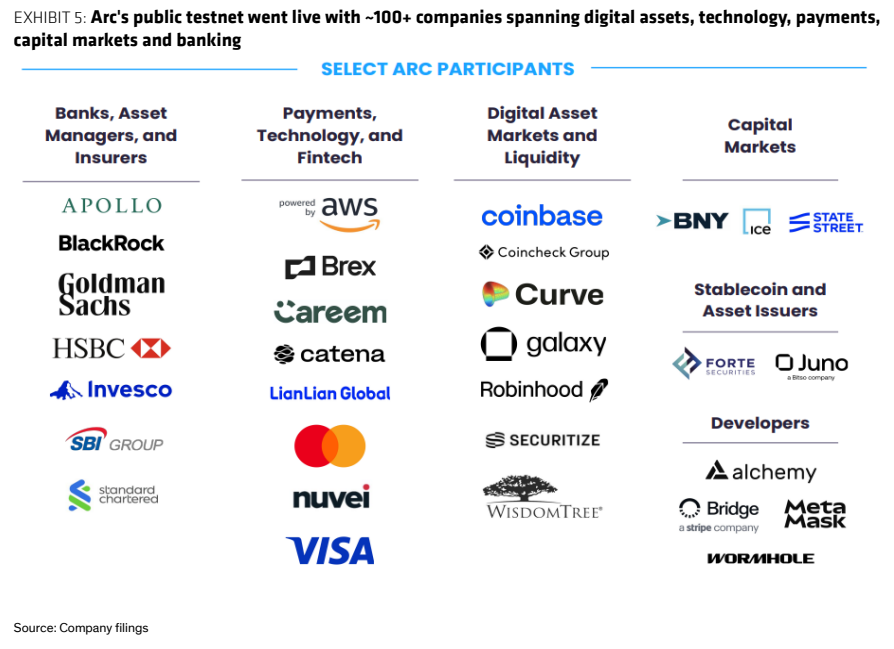
On July 1, 2026, a consortium of over 140 companies named Open Standard announced the launch of Open USD (OUSD), a new dollar stablecoin. Partners include Visa, Stripe, Mastercard, BlackRock, BNY, Coinbase, Cloudflare, Ripple, Google, and Shopify. OUSD is slated to go live in the second half of 2026. Following the announcement, Circle (CRCL) shares fell 17.5%.
Bernstein maintains an Outperform rating on Circle with a target price of $190, implying roughly 203% upside from the current price of $62.63. The report argues that OUSD represents an unprecedented validation of the stablecoin category, demonstrating it is moving toward mainstream financial services. However, Circle's USDC remains the dominant network. USDC processed $4.5 trillion in transaction volume in 2025, surging to $5.3 trillion in the first half of 2026, reflecting a year-over-year increase of approximately 140%. Its market share in transaction volume climbed from roughly 40% in 2025 to about 60% year-to-date in 2026.
OUSD presents a significant competitive threat as the first notable entrant to challenge the Circle-Tether duopoly. Its design disrupts the traditional model where issuers retain reserve yield. Instead, OUSD distributes yield among partners and charges only a minimal management fee, potentially pressuring Circle to share more revenue with distribution partners.
Despite this, new entrants may underestimate the liquidity and network effects of crypto capital markets. Circle leverages its relationship with Coinbase, Hyperliquid, and Polymarket to sustain liquidity. Meanwhile, questions remain regarding OUSD's governance, operational architecture, and the complexity of integrating 140+ partners.
Key exhibits
Exhibit 1
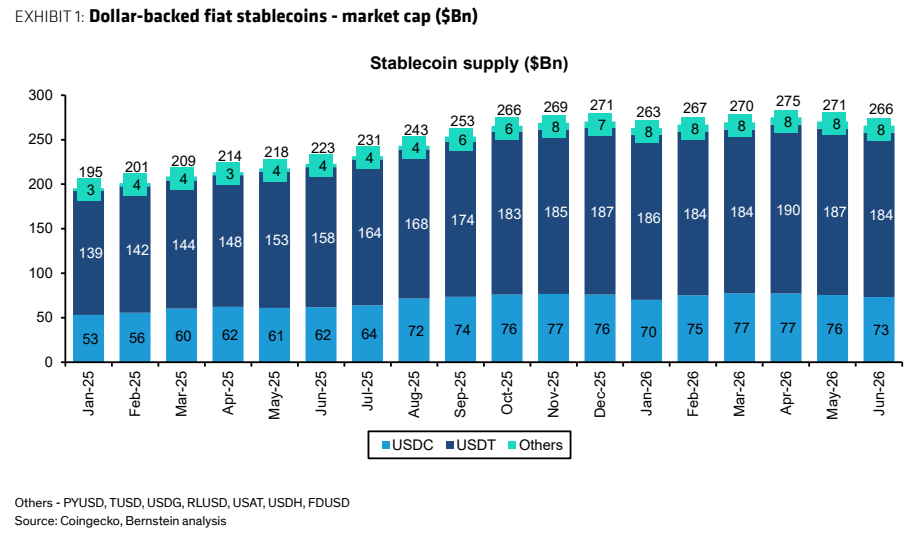
Exhibit 2
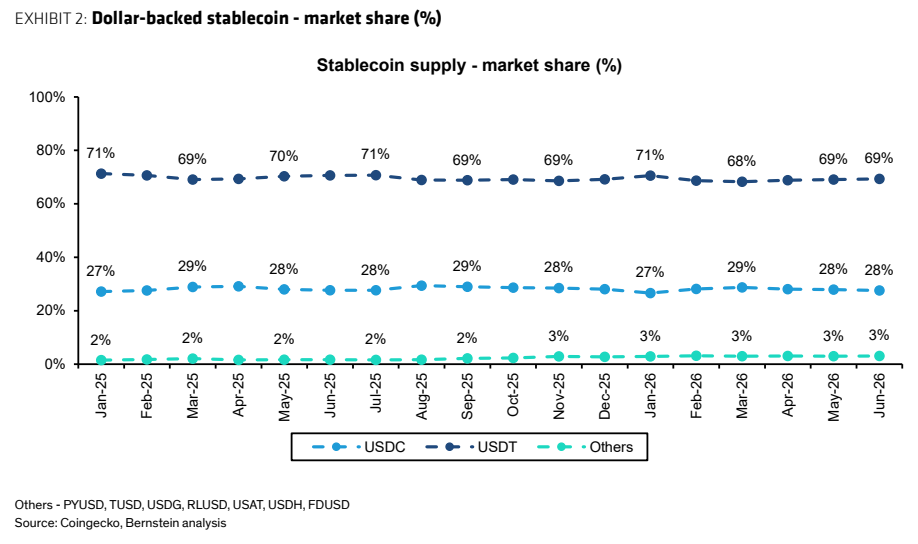
Exhibit 3
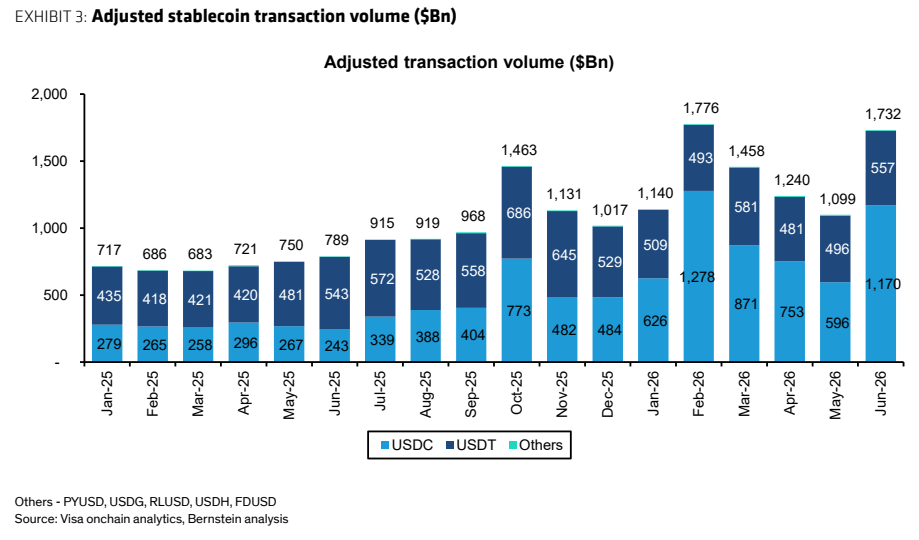
Exhibit 4
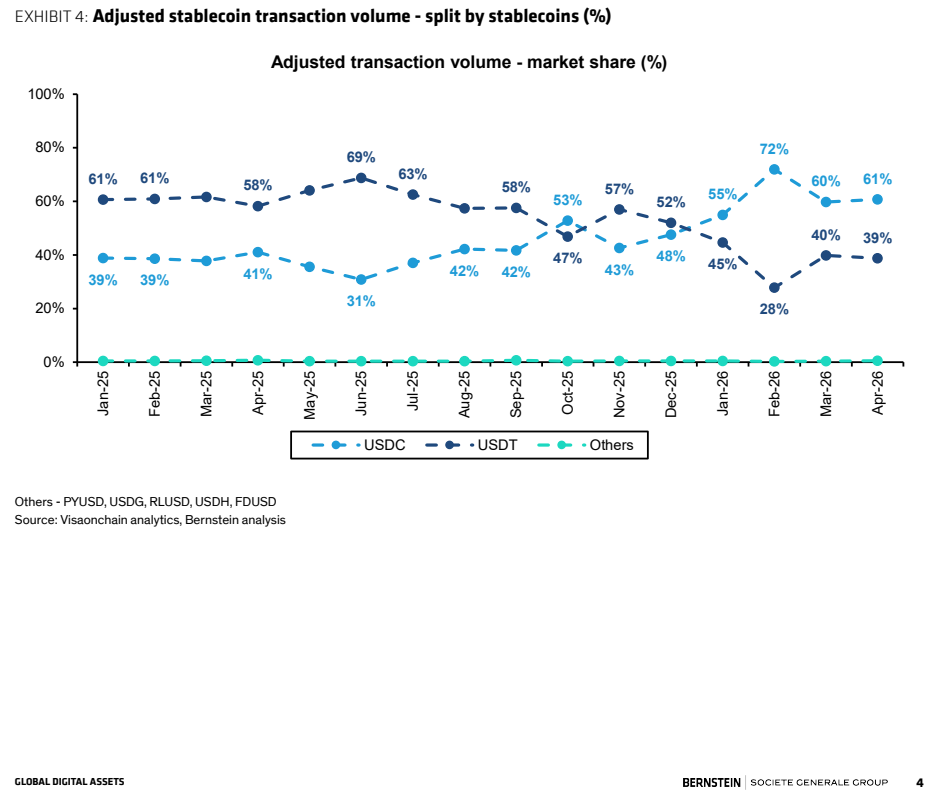
Exhibit 5