J.P. Morgan Global LNG Supply & Shipping Tracker: Qatar's Ramp-Up Under Spotlight Again
Summaries are public. PDF access requires an active membership; all members have the same access. Sign in
Key Views
Prior to the escalation, Qatar had accelerated its production ramp-up, with actual loading rates rising from a June average of 16% to 30%. However, Hormuz exports slowed sharply, with only two departures observed in July. QatarEnergy has reportedly suspended ramp-up efforts due to regional tensions. J.P. Morgan's base case assumes a 2–3 month recovery timeline, with risks skewed toward delay rather than early full-capacity restoration.
Market pricing currently embeds the assumption that Qatari production (excluding two damaged trains) will reliably recover before the Northern Hemisphere winter. If this assumption comes into question, winter prices and the forward curve should incorporate a significant risk premium.
Global weekly LNG deliveries fell 0.8 Bcm month-over-month, driven by a 1.1 Bcm decline in Asia, while exports rose 0.3 Bcm. European LNG inventories remain at historically low levels, with Europe's share of US LNG exports dropping from 55% in June to approximately 40% in July as more volumes flow to Asia. Among new projects, Arctic LNG 2 loaded two cargoes, Tortue and Darwin one each, while Golden Pass recorded no loadings for a second consecutive week.
Outlook
No specific validation milestones were provided. The key upside risk to prices centers on whether ramp-up conditions or restart timelines undermine confidence in pre-winter supply recovery.
Key exhibits
Exhibit 1
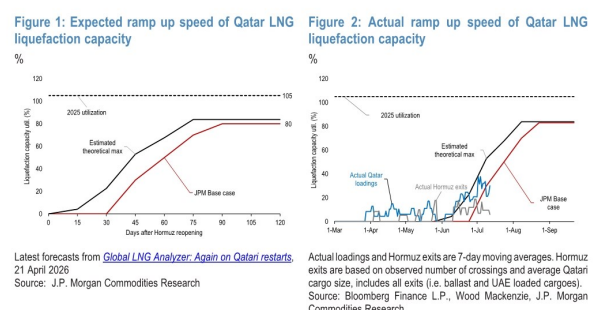
Exhibit 2
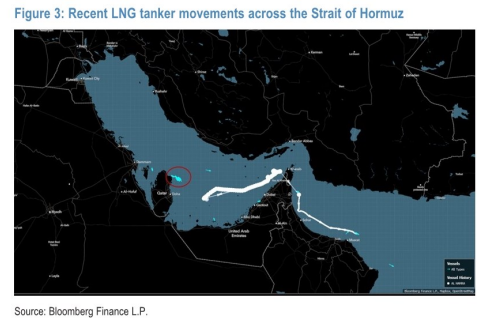
Exhibit 3

Exhibit 4
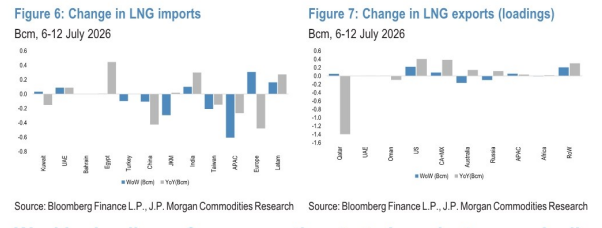
Exhibit 5

Exhibit 6

Exhibit 7

Exhibit 8
