Goldman Sachs US Economics Analyst: Tracking Inflation Risks from the Middle East Conflict
Summaries are public. PDF access requires an active membership; all members have the same access. Sign in
Key Views
Goldman Sachs' commodity-to-consumer-price transmission model indicates that the incremental monthly impact on core PCE peaked in Q2 and will decline noticeably in Q3 and Q4. A second model controlling for oil prices reaches the same conclusion absent further escalation. Supply chain pressure indicators from the Fed and New York Fed rose far less than during the pandemic and have already retraced from peaks.
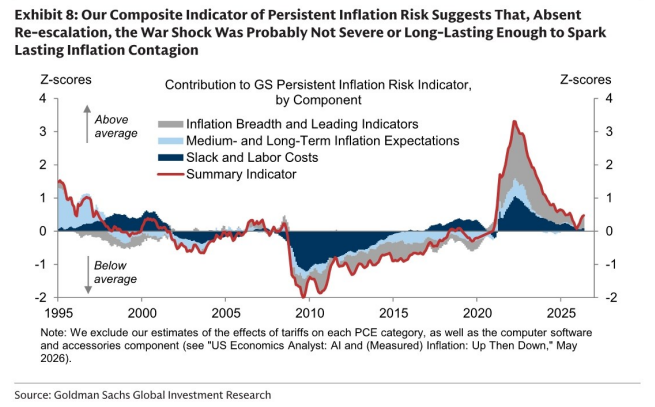
Inflation expectations remain broadly un concerning. Market-based measures are muted; consumer surveys such as Michigan are elevated but of questionable reliability. Goldman's composite persistent inflation risk indicator suggests that, without further escalation, the conflict shock is unlikely to trigger lasting inflation spillover. Incremental inflation impacts from tariffs and AI demand are also fading.
Outlook
Goldman forecasts June core PCE at 24bp month-over-month, thereafter holding at 20-23bp. A BEA methodology adjustment will lower the year-over-year reading to 3.2% in August, with only modest declines thereafter. The Fed is expected to hold rates steady through remaining 2026 FOMC meetings. If oil prices return to $100/bbl, monthly core inflation would rise an additional 3-4bp, though policy implications could be larger.
Key exhibits
Exhibit 1
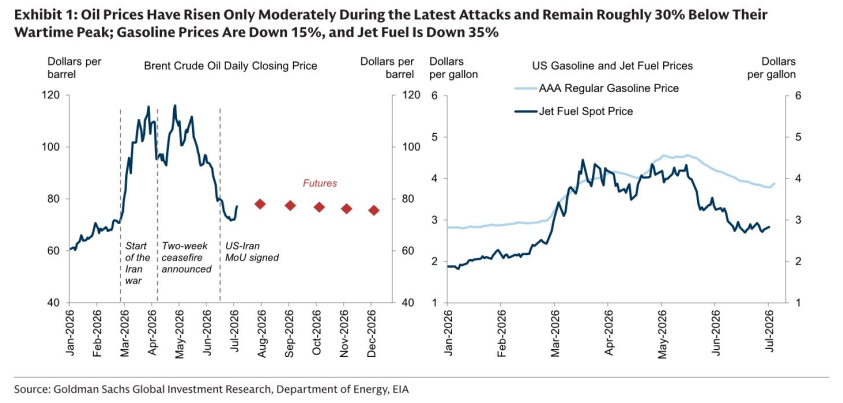
Exhibit 2
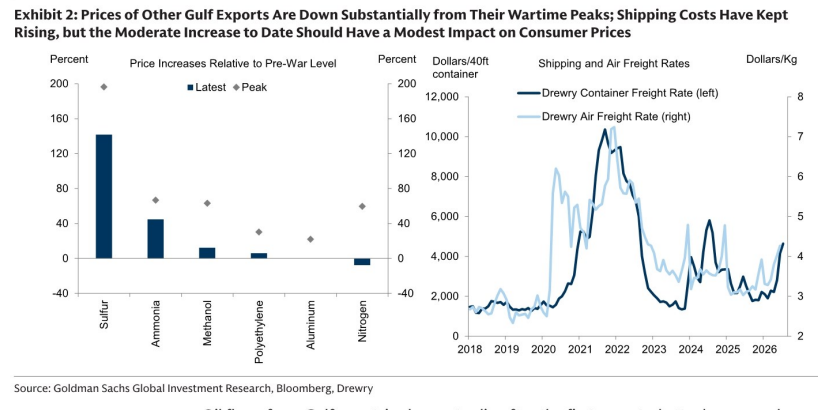
Exhibit 3
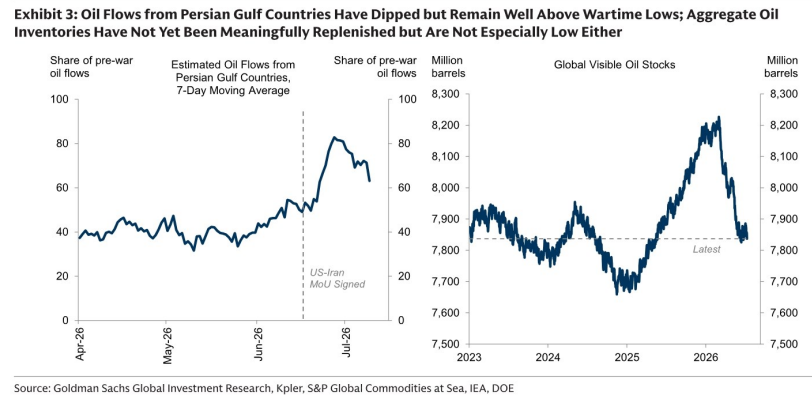
Exhibit 4
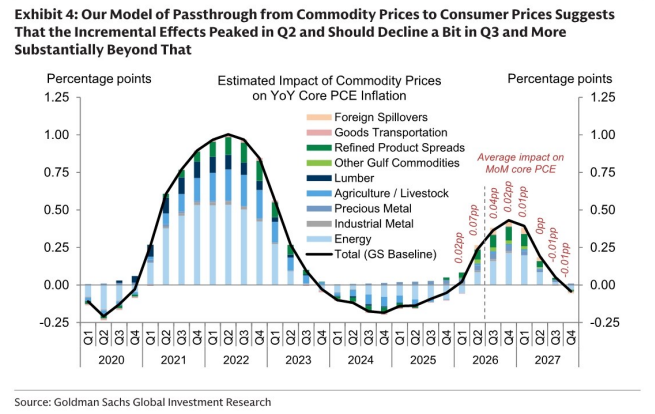
Exhibit 5
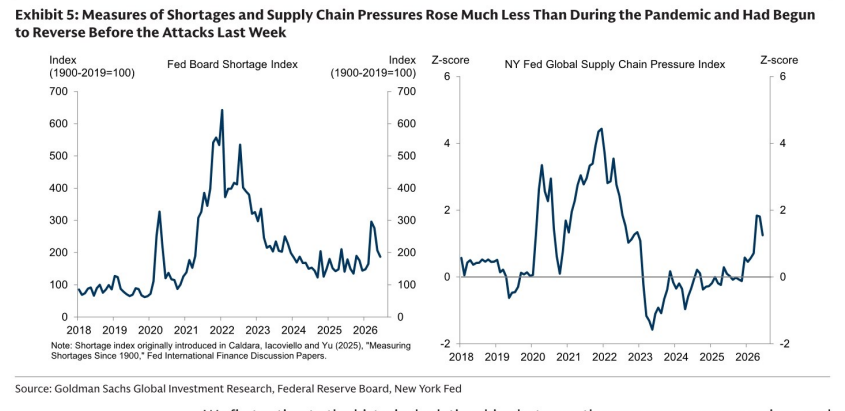
Exhibit 6
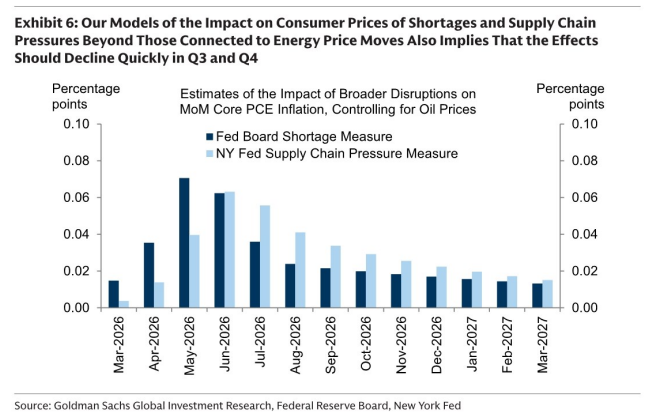
Exhibit 7
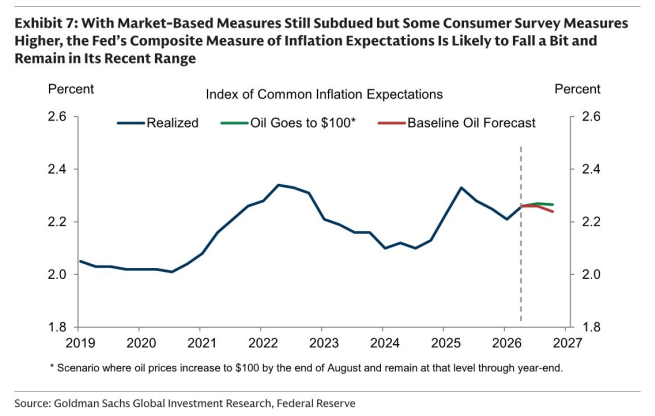
Exhibit 8