Morgan Stanley Global Tech 2026 Outlook: A Tale of Two Halves
Summaries are public. PDF access requires an active membership; all members have the same access. Sign in
Morgan Stanley frames its 2026 global technology outlook as a tale of two halves, where the first half continues the AI capital expenditure and memory pricing momentum from 2025, while the second half faces challenges from rising costs, elevated valuations, and potential demand destruction. The firm projects global semiconductor revenue could reach USD 1.6 trillion in 2026, driven jointly by memory and logic, potentially delivering record industry earnings.
The report argues that AI-driven winners will broaden beyond pure-play logic, commodity memory, and semiconductor equipment to include various bottleneck segments. Stock selection should increasingly prioritize pricing power, supply constraints, cash flow quality, and valuation discipline. While the long-term AI investment cycle remains intact, the second half will likely see the market differentiate more severely between true bottleneck assets and momentum-driven, high-valuation stocks.
Key risks in the second half include wafer, OSAT, and component cost inflation compressing downstream margins, potentially delaying edge AI adoption in smartphones and PCs. Morgan Stanley suggests a barbell approach: holding strong AI names with clear pricing power while also adding beaten-down recovery stocks with solid cash flows and reasonable valuations. Expected Nvidia GPU server rack shipments of roughly 75,000 in 2026, up from 29,000 in 2025, underscore ongoing strength in AI hardware supply chains.
Key exhibits
Exhibit 1

Exhibit 2
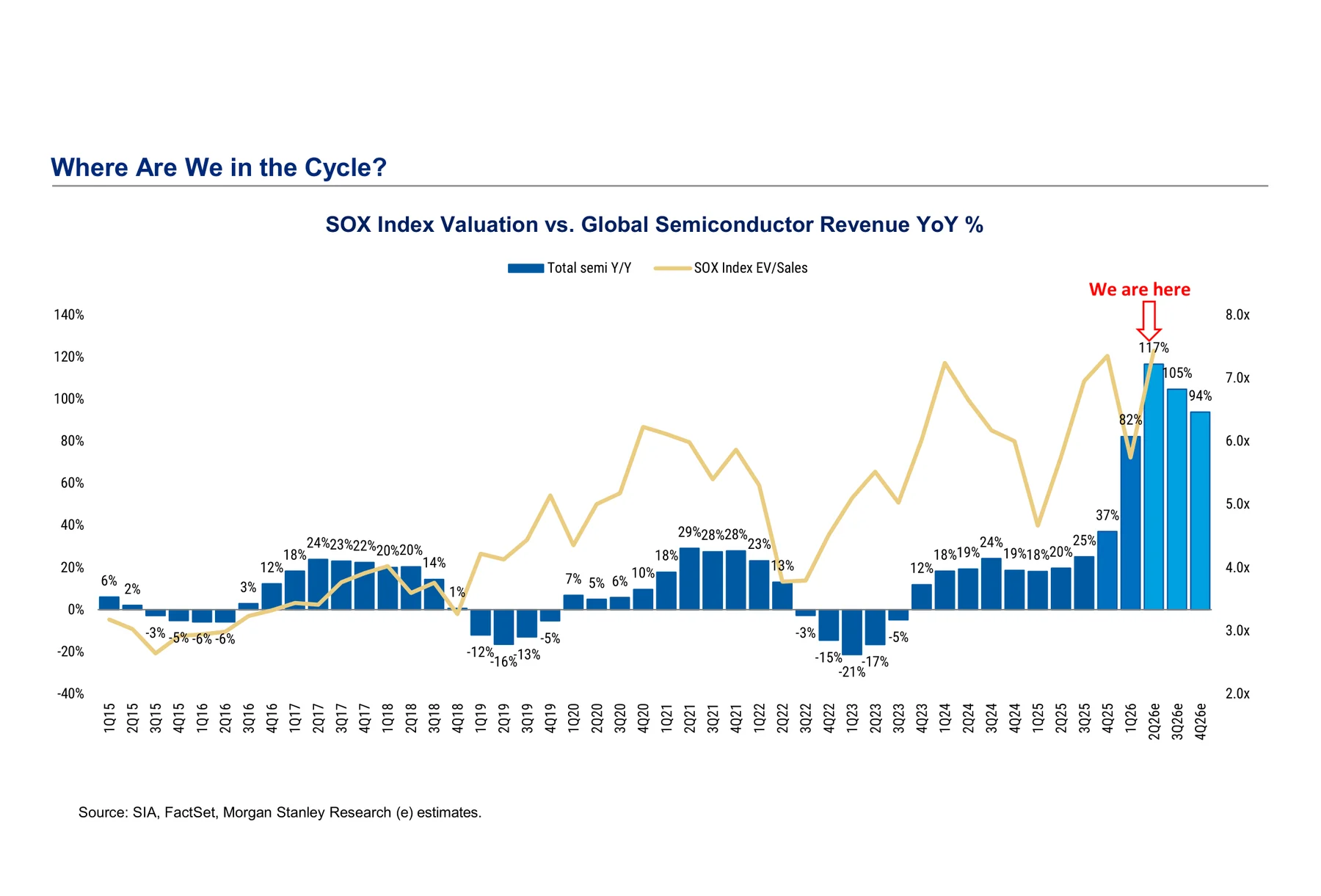
Exhibit 3

Exhibit 4

Exhibit 5

Exhibit 6
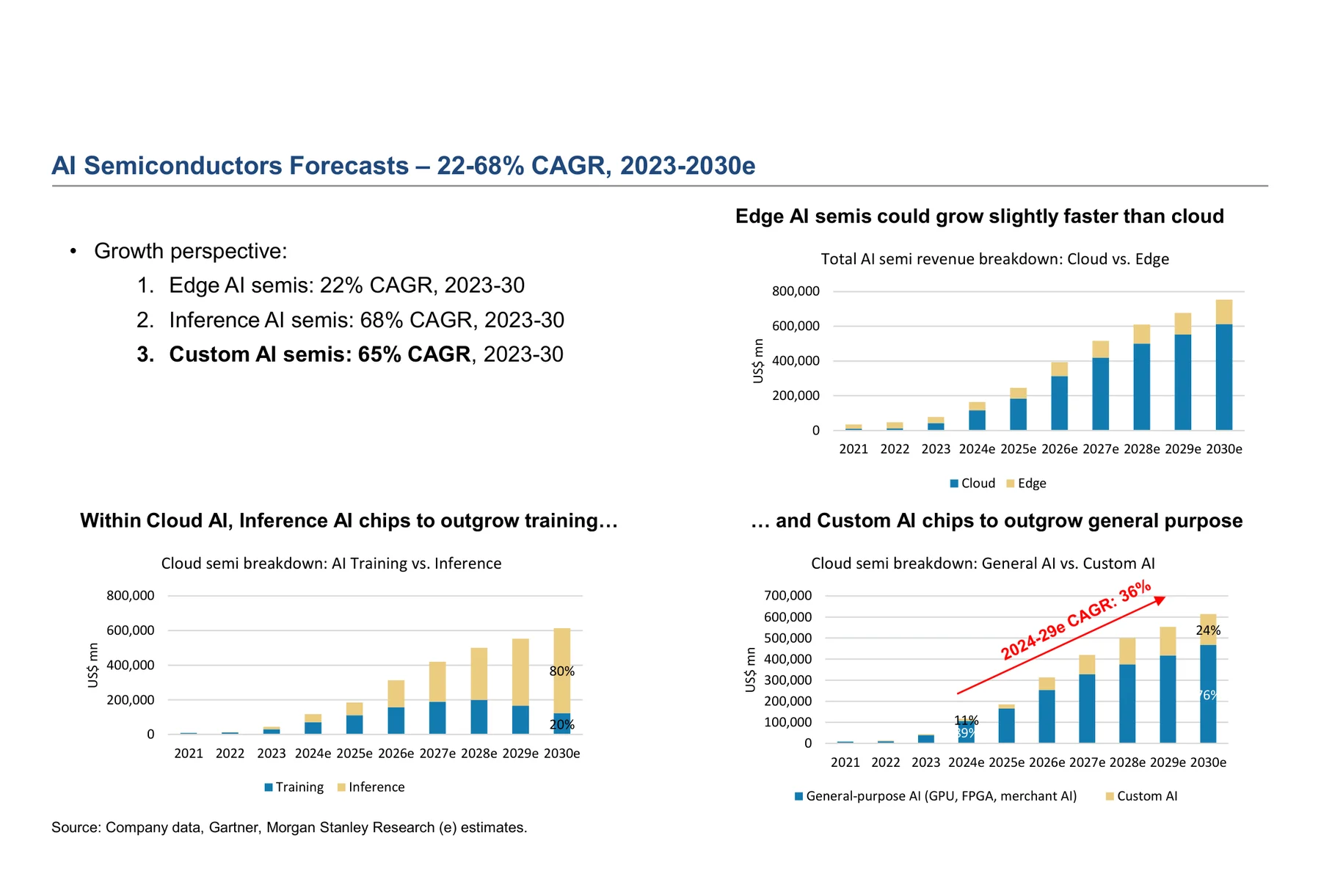
Exhibit 7

Exhibit 8
