Estee Lauder (EL): US Prestige Beauty Model — Quantifying Structural Challenges
Summaries are public. PDF access requires an active membership; all members have the same access. Sign in
Bernstein introduces a bottom-up channel model for the US prestige beauty market to analyze structural challenges facing Estee Lauder (EL). The model spans five key channels—Ulta, Sephora, department stores, Amazon, and brand direct-to-consumer—and demonstrates a 91% correlation with Circana market growth data and an 85% correlation with EL's reported Americas growth.
The analysis reveals a structural imbalance in EL's channel mix. Approximately 26% of the company's US sales come from department stores, nearly double the market average of 14%. Concurrently, EL's exposure to Amazon stands at only 16%, significantly below the market's 28%. Beyond unfavorable channel placement, EL is also losing market share across most channels, suggesting shifting consumer preferences and potentially weakening brand competitiveness.
Bernstein rates EL as Market-Perform with an $82 target price, based on a 24.0x target P/E multiple. While the firm expects NTM EPS to grow 36% and NTM+1 EPS to grow 13%, these forecasts remain approximately 7% below market consensus.
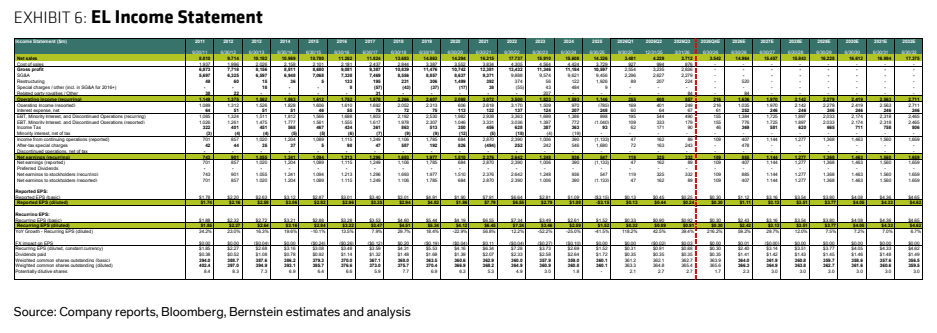
For FY2025, reported revenue was $14.326 billion with adjusted EPS of $1.52. Revenue is projected to reach $14.964 billion in FY2026 and $15.457 billion in FY2027. Adjusted EBITDA is forecast at $1.848 billion for FY2026 and $2.811 billion for FY2027, compared to -$1.614 billion in FY2025. Corresponding adjusted P/E ratios are 34.5x for FY2026 and 26.6x for FY2027. Despite resumed growth, structural headwinds will likely prevent further acceleration.
Key exhibits
Exhibit 1
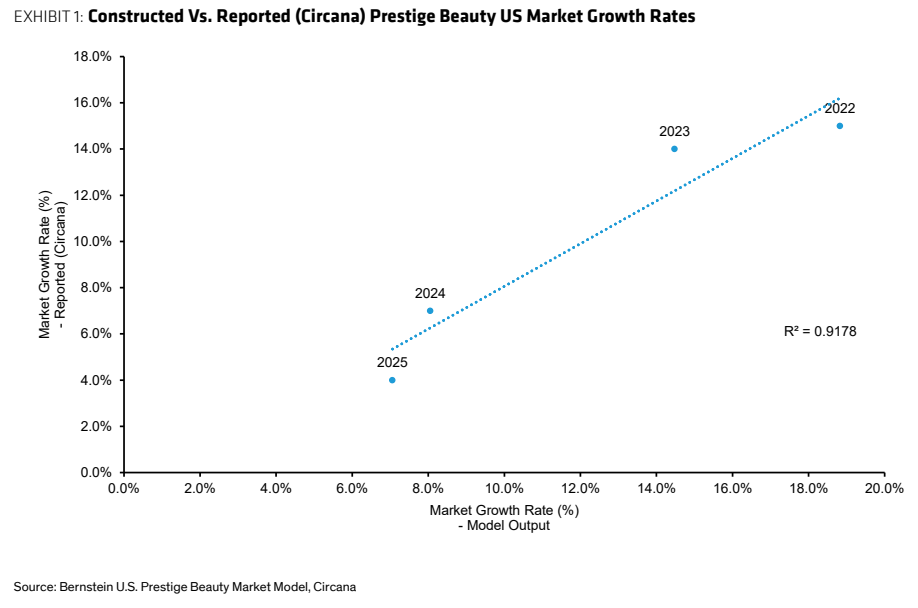
Exhibit 2
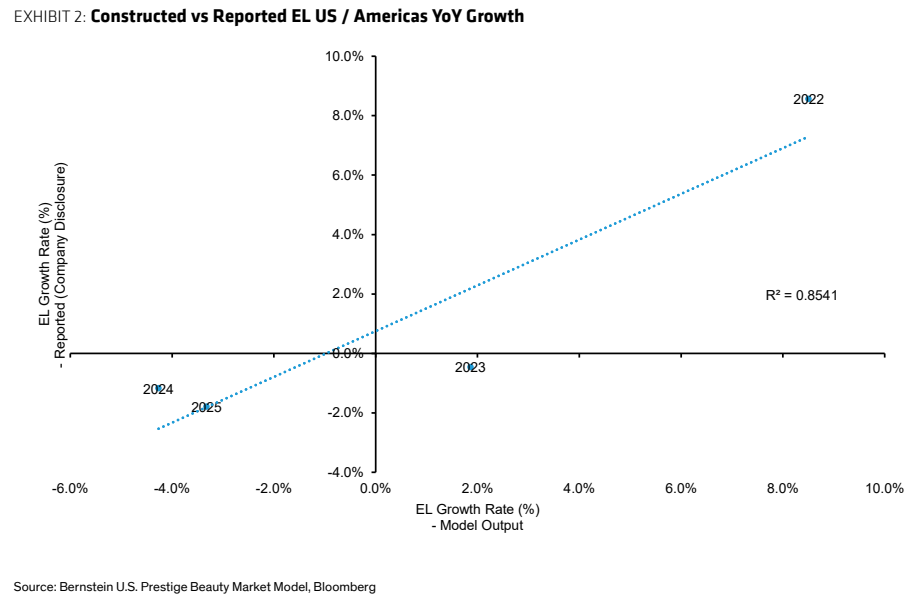
Exhibit 3
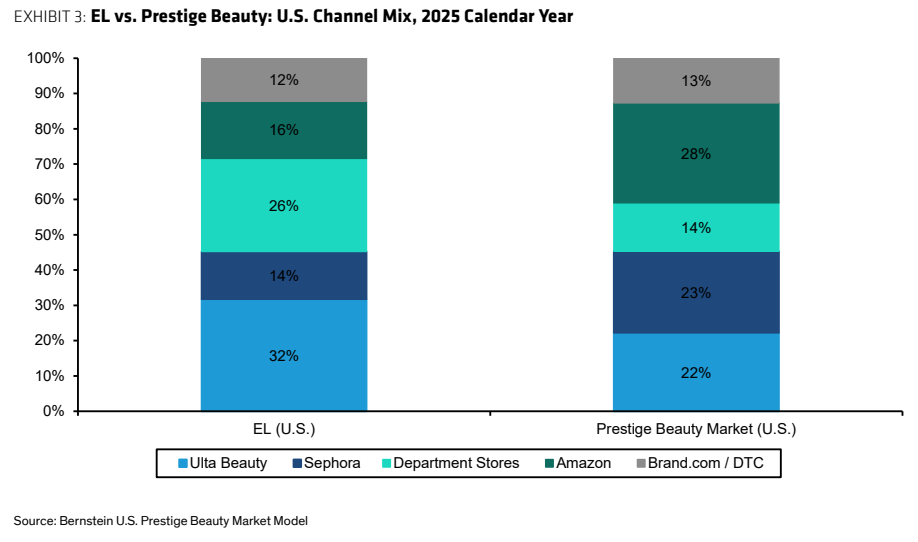
Exhibit 4
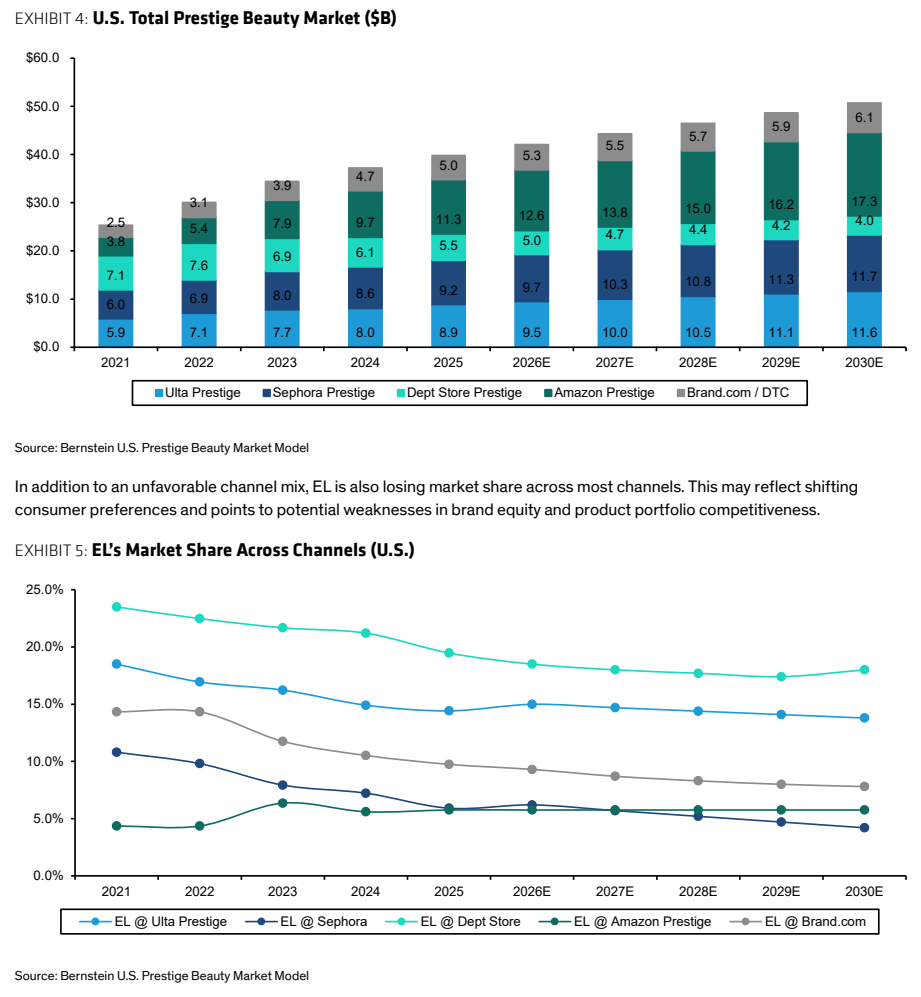
Exhibit 5