Nomura Economic Insights: US: Assessing Labor Market Impact of AI
Summaries are public. PDF access requires an active membership; all members have the same access. Sign in
Key Views
Employment growth in high-AI-exposure sectors has shown resilience since the pandemic, outperforming low-exposure industries. Microdata reveal early effects in select areas—unemployment among recent college graduates in AI-exposed majors has edged up, and call center employment has declined sharply due to conversational AI and virtual agents. However, software publishing employment has risen since June 2021, and job openings for software development have recovered since September 2023.
JOLTS data show layoff rates in high-AI-exposure industries are not significantly elevated, while hiring slowdowns are a broad macroeconomic phenomenon rather than AI-driven. Wage growth in high-exposure industries remains robust, contradicting the AI displacement narrative.
Outlook
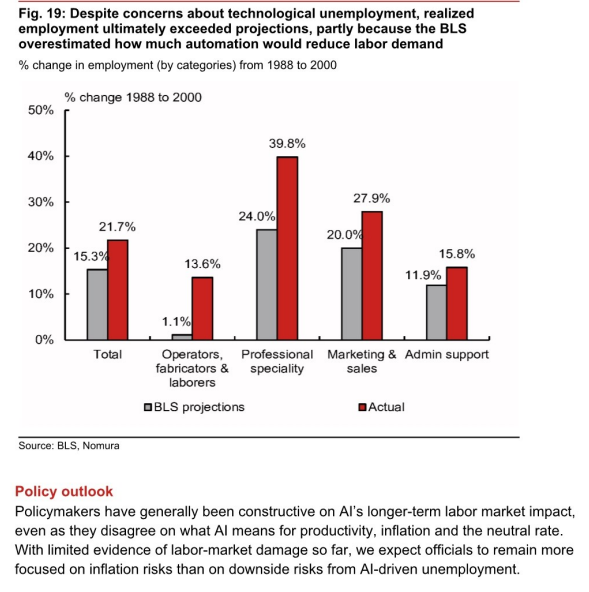
Historical precedent suggests technological change typically expands employment rather than causing permanent technological unemployment. During 1988–2000, actual employment growth far exceeded BLS forecasts, partly because the agency overestimated automation's negative impact on labor demand. Policymakers maintain a constructive stance on AI's long-term labor market effects and are expected to remain focused on inflation risks rather than AI-driven unemployment downside risks.
Key exhibits
Exhibit 1
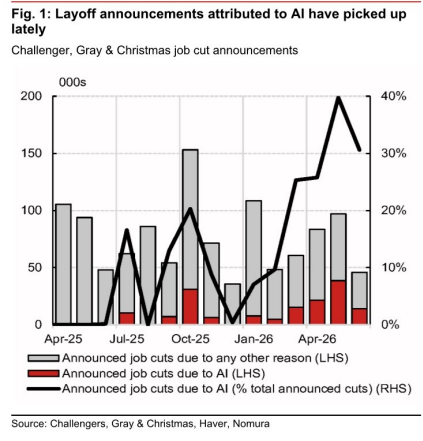
Exhibit 2
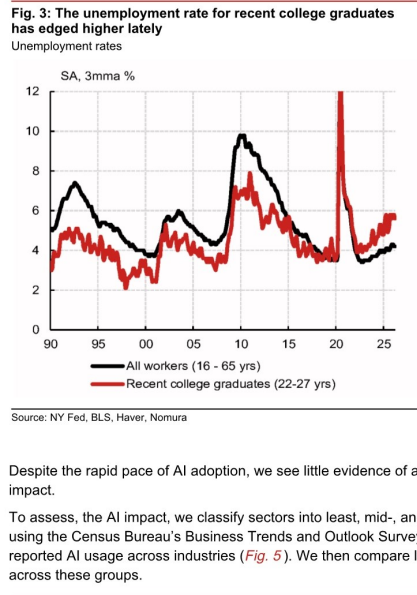
Exhibit 3
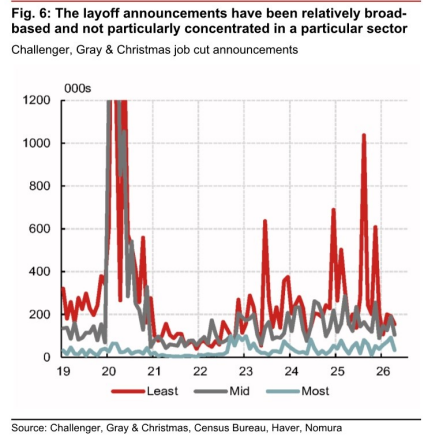
Exhibit 4
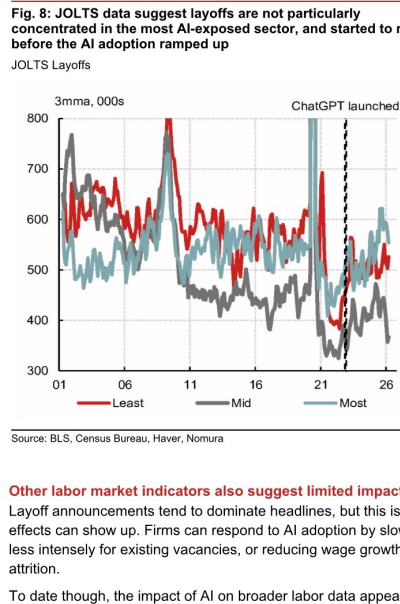
Exhibit 5
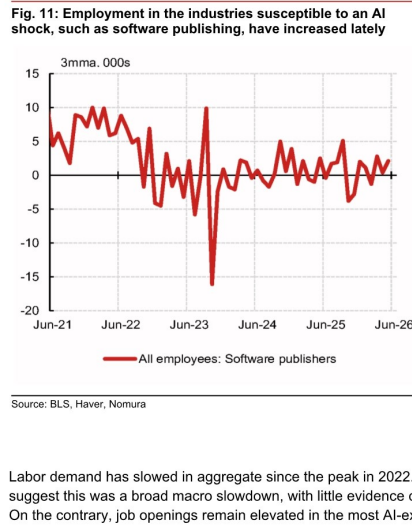
Exhibit 6
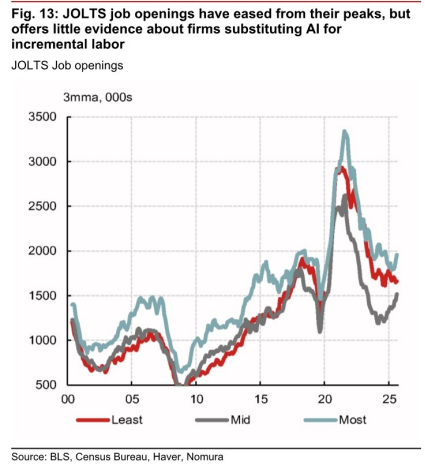
Exhibit 7
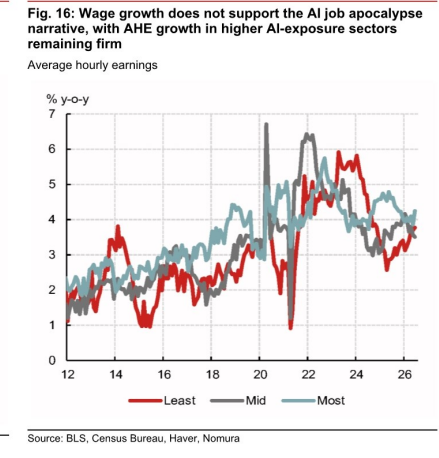
Exhibit 8