CICC: What Changes with the Revised Hang Seng Tech Index?
Summaries are public. PDF access requires an active membership; all members have the same access. Sign in
Abstract
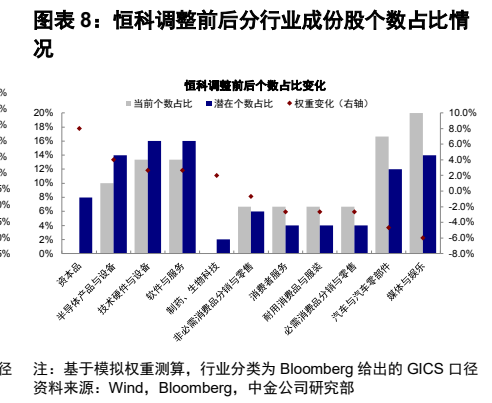
CICC examines the deepest systemic revision since the Hang Seng Tech Index launched, designed to fix its long-running problems: outsized exposure to domestic-demand plays such as internet platforms, e-commerce and EVs, and insufficient hard-tech coverage. Constituents expand from 30 to 50, selection moves to a dual-bucket mechanism spanning market cap and revenue growth, and the industry requirement is replaced by six technology themes. The final rules impose stricter liquidity and revenue-size thresholds than the consultation draft, and the new revenue-growth bucket favors small-cap, high-growth tech companies. CICC estimates roughly HK$26bn of passive inflows and sees sector weights shifting notably toward capital goods and hard tech. The timetable is set: review results on November 20, implementation after the December 4 close, and effectiveness on December 7; passive funds are expected to rebalance in a concentrated way on the last trading day before effectiveness, which could drive unusual end-of-day volume spikes in individual names. The index has lagged this year, down 23.9% year-to-date, largely because of its domestic-demand tilt and lack of hard tech. While the overhaul should improve the index's technology representativeness over time, performance ultimately depends on fundamentals and the repair of the household credit cycle. The report lists potential additions but issues no individual buy/sell ratings.
Key exhibits
Exhibit 1
Exhibit 2
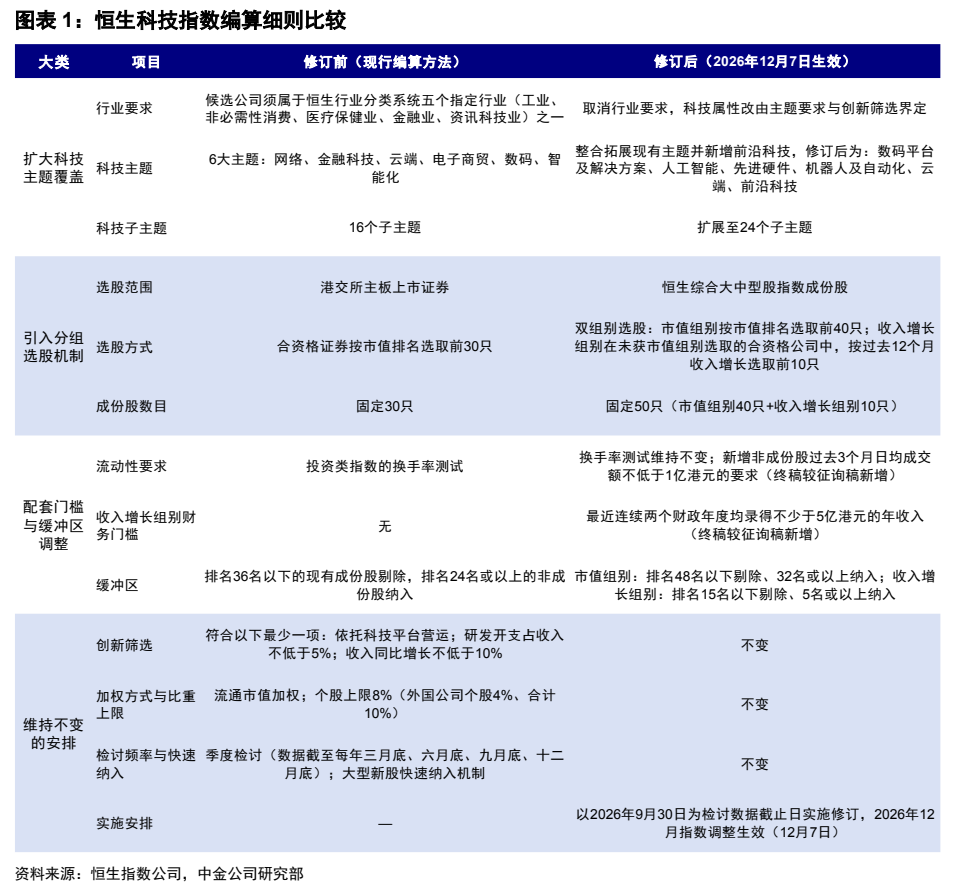
Exhibit 3
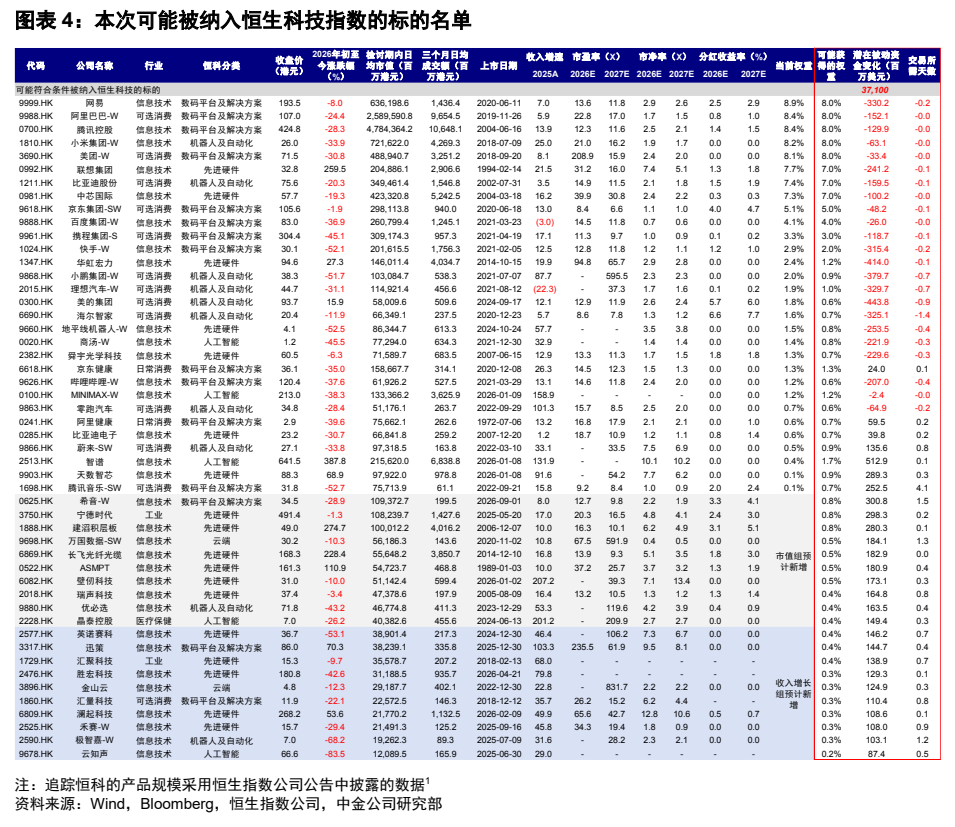
Exhibit 4
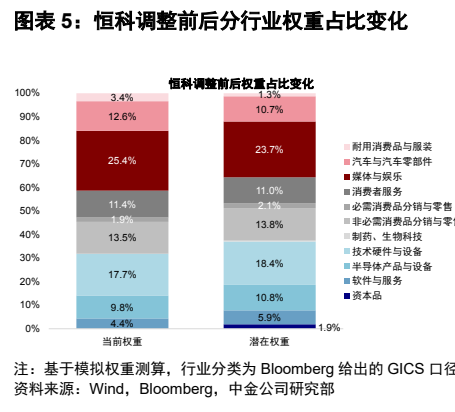
Exhibit 5
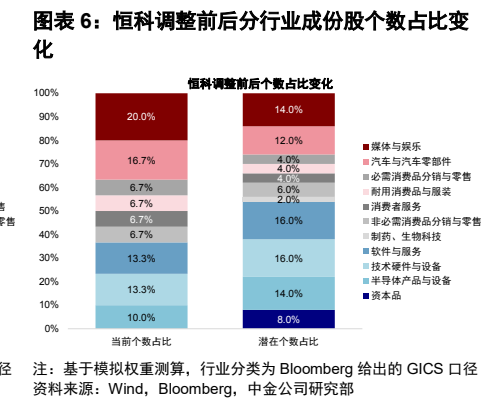
Exhibit 6
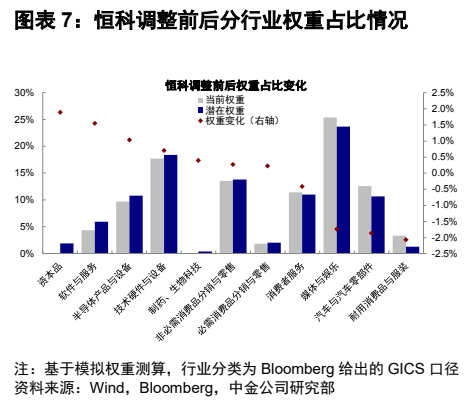
Exhibit 7