Morgan Stanley: Large Cap Banks — How Did GSIB Scores Trend in 1Q26?
Summaries are public. PDF access requires an active membership; all members have the same access. Sign in
Morgan Stanley's latest analysis examines the first-quarter 2026 trends in Global Systemically Important Bank (GSIB) scores for major US financial institutions, a critical metric used to determine systemic risk levels and associated capital surcharge requirements. The report reveals that GSIB scores broadly declined quarter-over-quarter during the period, reflecting proactive balance sheet optimization and reduced risk exposure. JPMorgan Chase maintains the highest GSIB score, though it still registered a modest decline of approximately 10 basis points compared to the fourth quarter of 2025. Bank of America saw its score drop by around 5 basis points, primarily driven by a reduction in risk-weighted assets. Wells Fargo experienced an 8-basis-point decrease, largely attributable to lower leverage exposure. Goldman Sachs recorded the most significant improvement, with its score falling by 12 basis points. Citigroup's score remained essentially flat with a slight 1-basis-point uptick, while Morgan Stanley's score declined by 6 basis points. This widespread reduction in GSIB scores carries significant capital management implications. Lower systemic risk scores could prompt regulators to reduce capital surcharges, thereby freeing up substantial capital that banks could deploy toward aggressive share repurchases or enhanced dividend distributions. The report notes that future score trajectories will depend heavily on ongoing balance sheet strategy adjustments and potential regulatory recalibrations, including proposed shifts in scoring methodology.
Key exhibits
Exhibit 1
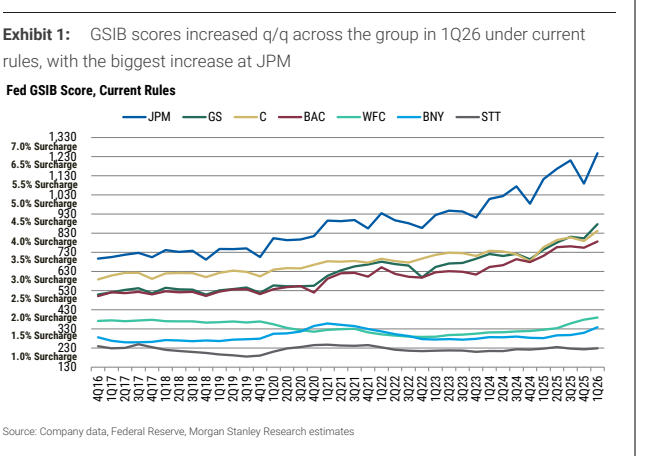
Exhibit 2
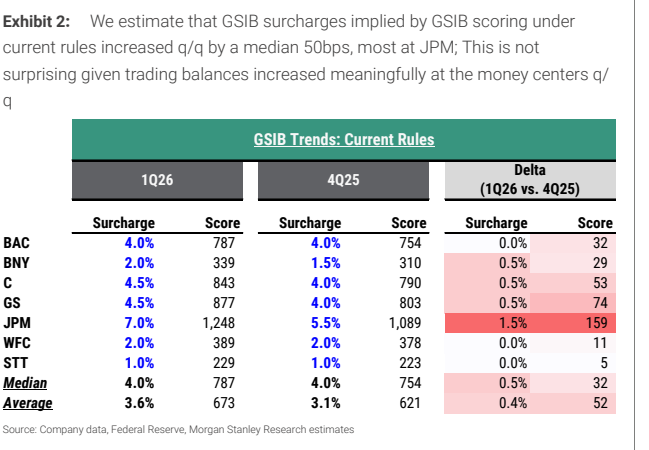
Exhibit 3
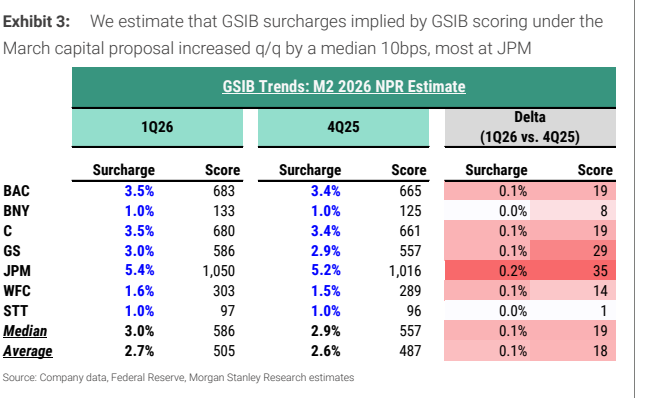
Exhibit 4
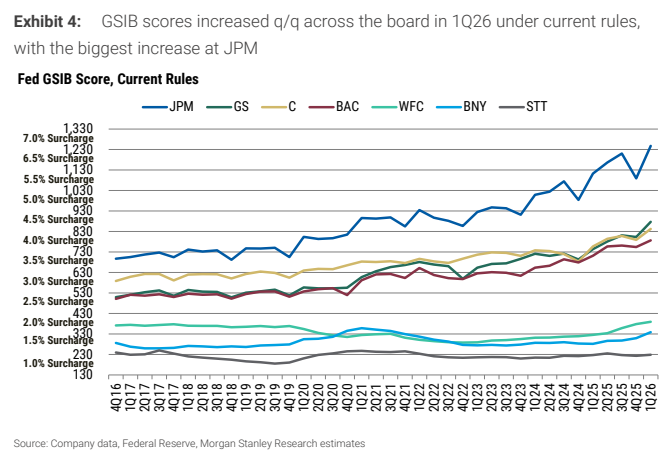
Exhibit 5
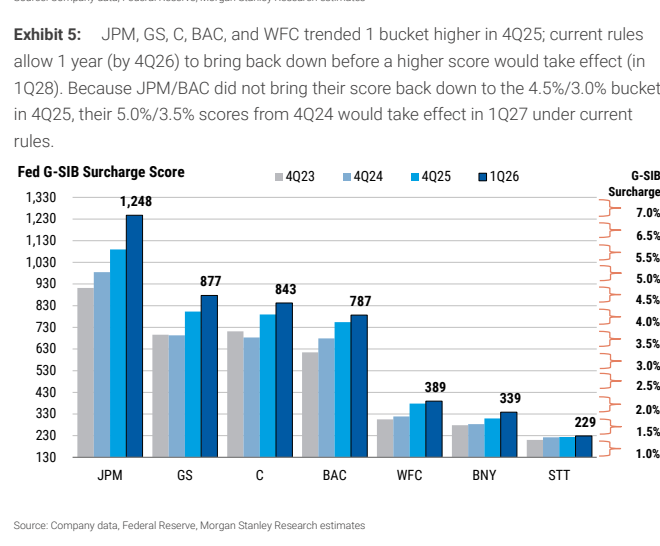
Exhibit 6
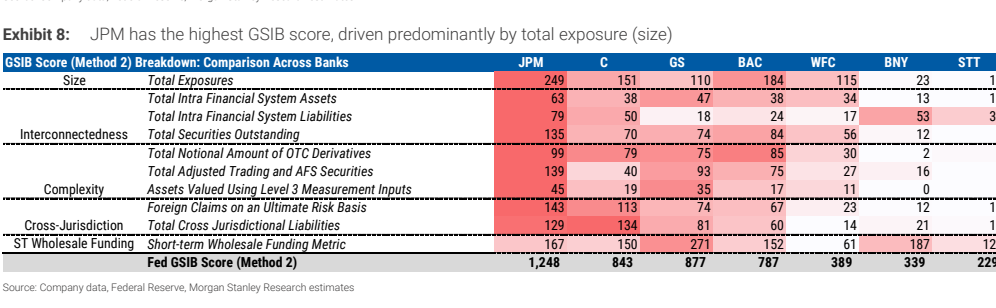
Exhibit 7
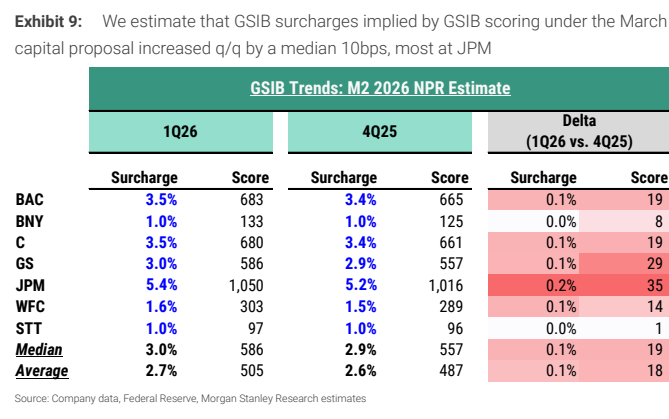
Exhibit 8
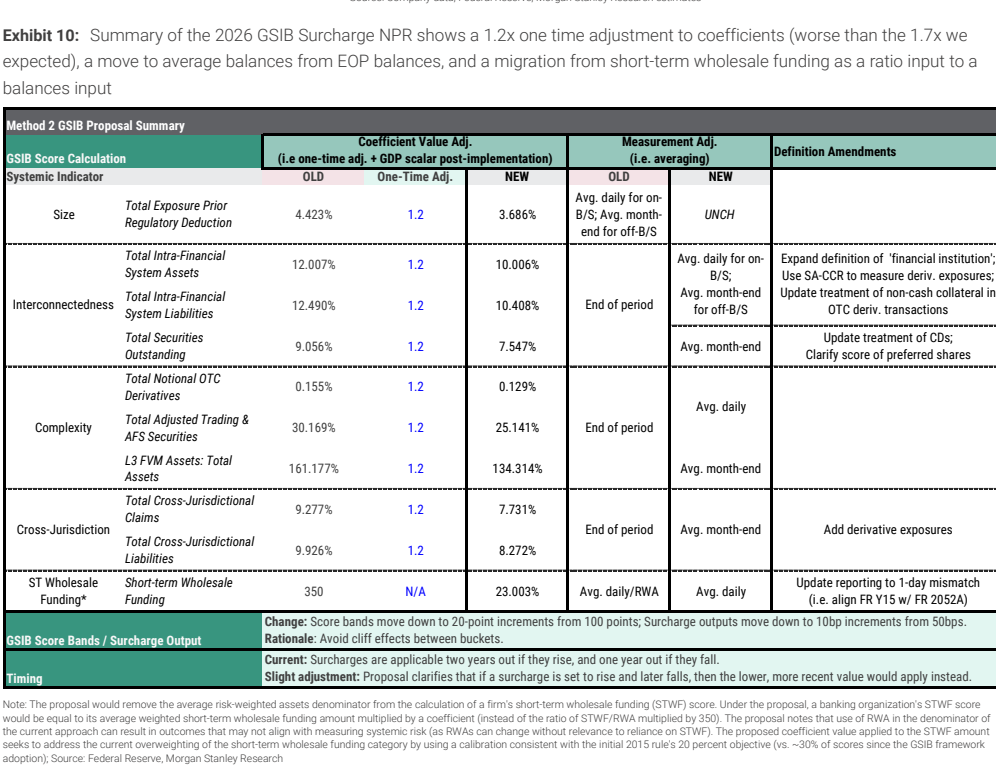
Exhibit 9
