Bernstein US Business Services: US Waste — A Primer on the Recycling Segment
Summaries are public. PDF access requires an active membership; all members have the same access. Sign in
Bernstein provides a comprehensive primer on the recycling segment within the US waste management industry, detailing its operational dynamics, economic drivers, and structural characteristics. The report outlines the core recycling workflow, which involves the collection, sorting, and processing of recoverable materials such as paper, plastics, metals, and glass.
The segment's economic viability is inherently tied to volatile commodity markets, meaning fluctuations in raw material prices directly impact recycling profitability. Furthermore, regulatory frameworks—such as state-level recycling targets—and growing consumer awareness act as primary catalysts for improving recycling rates. Despite these demand tailwinds, the industry remains relatively fragmented, populated by numerous regional and local participants alongside major national players.
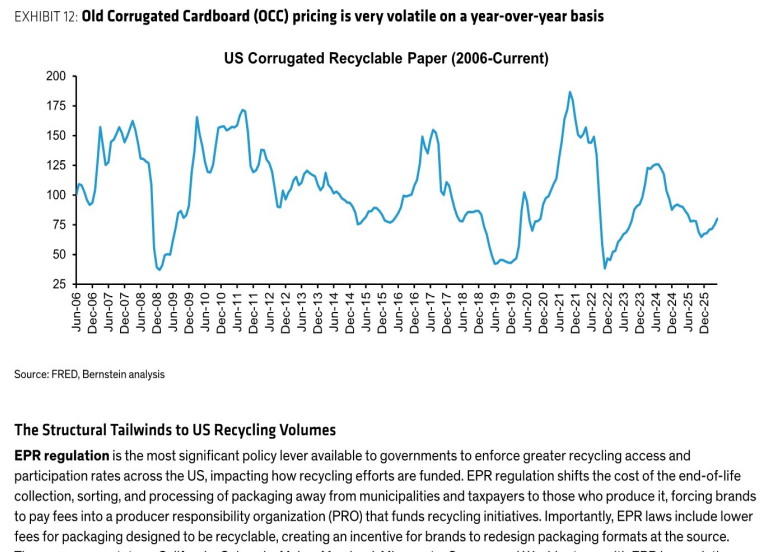
Significant geographic discrepancies exist across the United States, and the report notes that the country's overall recycling rate trails the European Union average. However, operational efficiencies are improving through automation. The adoption of automated Material Recovery Facilities (MRFs) can potentially double EBITDA margins for operators. For the three major waste companies, a 10% fluctuation in the recycling commodity basket materially impacts overall financial performance, with Old Corrugated Cardboard (OCC) prices serving as a critical, highly volatile benchmark.
While the primer outlines compelling operational efficiencies and long-term growth potential, Bernstein does not introduce specific company ratings, price targets, or defined forward-looking timelines within this overview.
Key exhibits
Exhibit 1
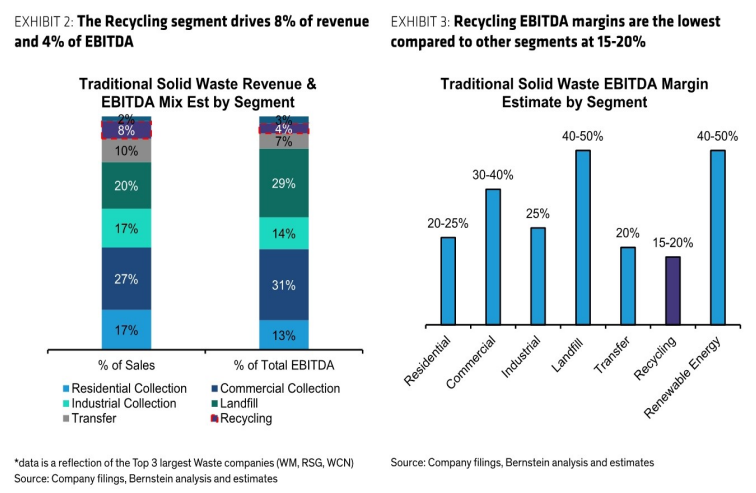
Exhibit 2
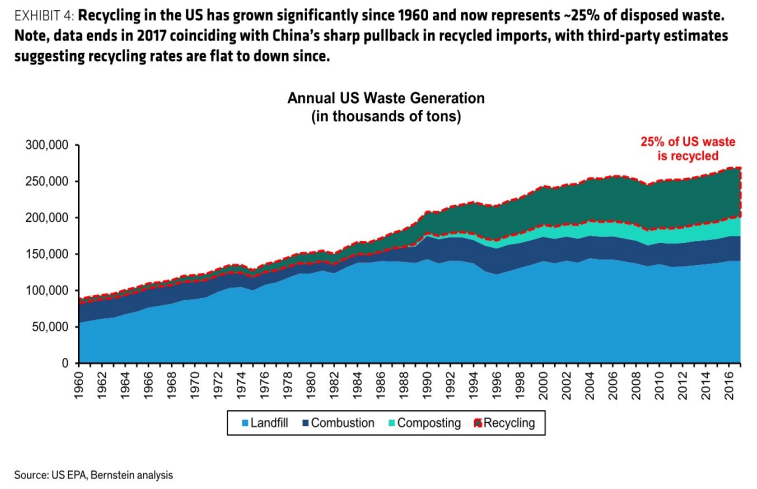
Exhibit 3
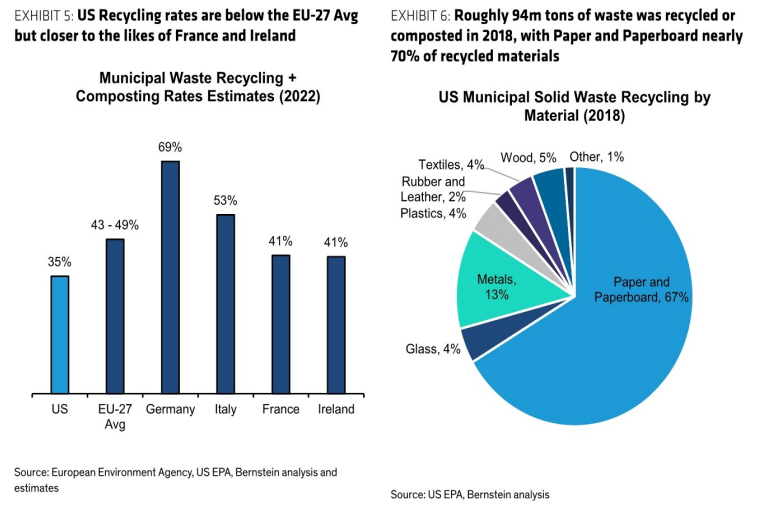
Exhibit 4
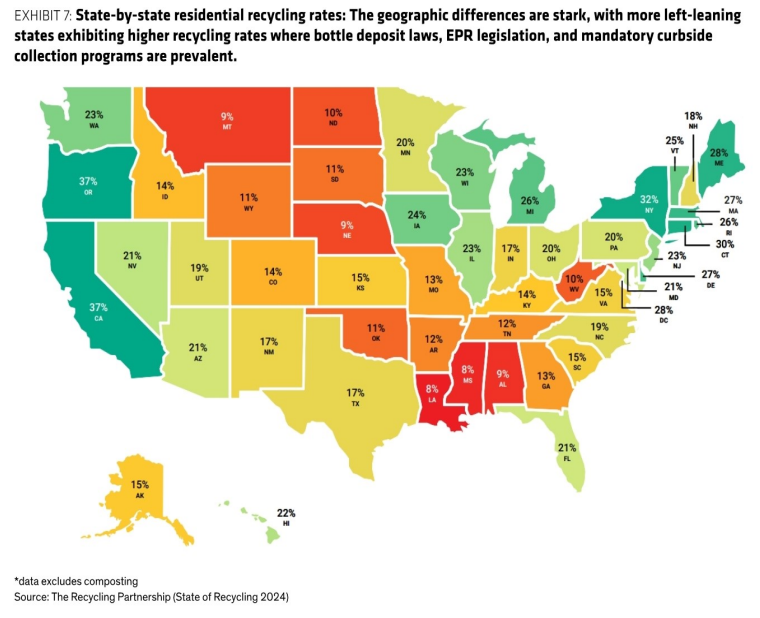
Exhibit 5
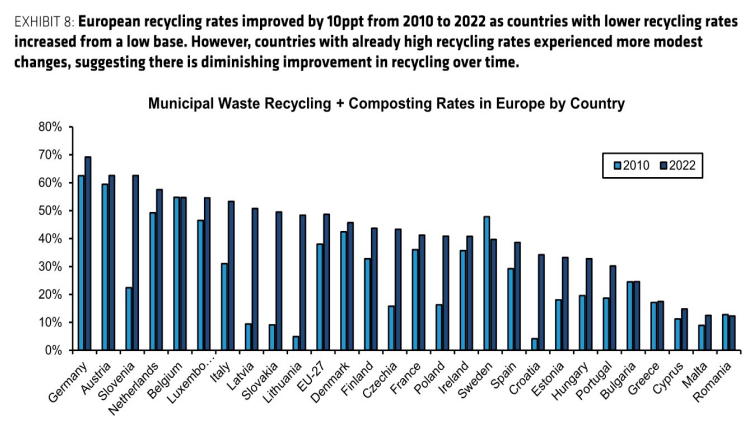
Exhibit 6
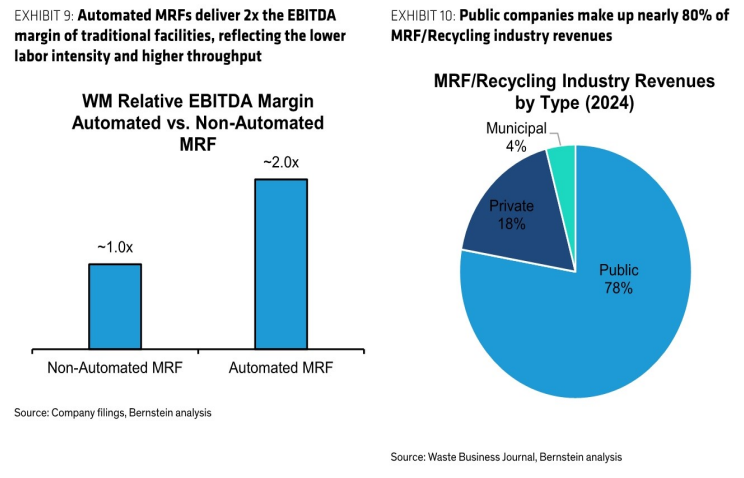
Exhibit 7
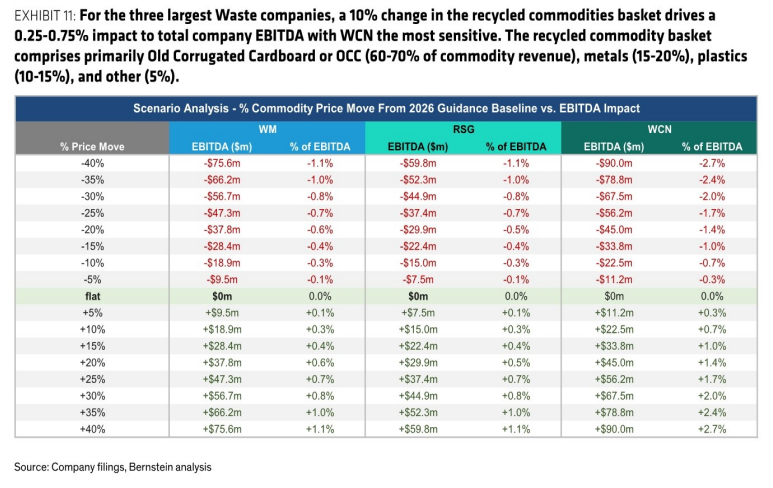
Exhibit 8