UBS: Gold's Medium-Term Upside Intact, but Consolidation May Last Longer
Summaries are public. PDF access requires an active membership; all members have the same access. Sign in
UBS maintains a constructive medium-term outlook for gold despite significant near-term pressure from rising yields, hawkish Federal Reserve expectations, and thin summer trading liquidity. While the current price action echoes previous bear markets, UBS argues this cycle remains fundamentally different. Long-term drivers—including de-dollarization, official reserve diversification, fiscal sustainability concerns, and geopolitical uncertainty—continue to underpin structural demand for gold.
The bank anticipates that the Fed will resume rate cuts from 2027, providing directional support. Furthermore, central banks and other official institutions still possess substantial capacity to expand their gold allocations, even if some existing buyers moderate their pace. Physical investment demand remains robust globally, with Asia accounting for over 70% of total physical demand, proving that high prices have not entirely deterred end investors.
However, UBS acknowledges that the timeline for reaching higher price targets may be delayed due to elevated near-term risks, such as equity market sell-offs, stronger US growth, and higher real rates. Within the white precious metals complex, silver and platinum remain highly correlated with gold. While they may benefit from capital spillover during gold rallies, slowing industrial demand will likely constrain their relative performance. Meanwhile, palladium faces persistent structural headwinds from rising electric vehicle adoption and cheaper Chinese auto exports. Overall, UBS recommends maintaining exposure to gold while exercising caution regarding short-term volatility.
Key exhibits
Exhibit 1

Exhibit 2

Exhibit 3

Exhibit 4

Exhibit 5

Exhibit 6

Exhibit 7

Exhibit 8
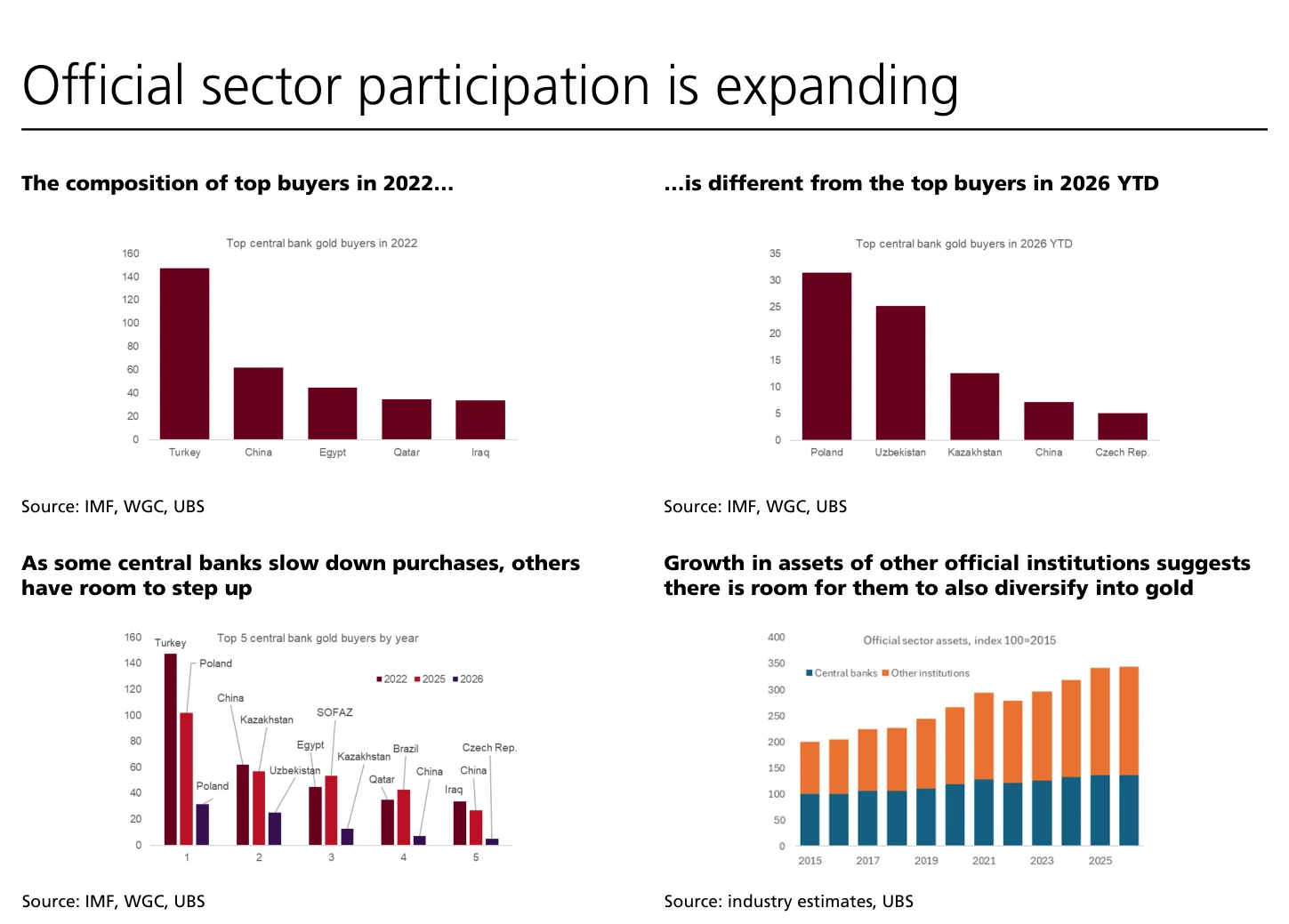
Exhibit 9

Exhibit 10

Exhibit 11

Exhibit 12

Exhibit 13
