UBS European Economic Perspectives: Eurozone: Fiscal Policy in 2026 — Takeaways from Budget Plans
Summaries are public. PDF access requires an active membership; all members have the same access. Sign in
Based on eurozone national budget plans, UBS assesses that the 2026 fiscal stance will tighten modestly, with the aggregate deficit declining from 2.8% of GDP in 2025 to approximately 2.5%. However, the structural fiscal deficit narrows by only about 0.3 percentage points of GDP, suggesting limited drag on economic growth. UBS projects eurozone GDP growth of 1.2% in 2026.
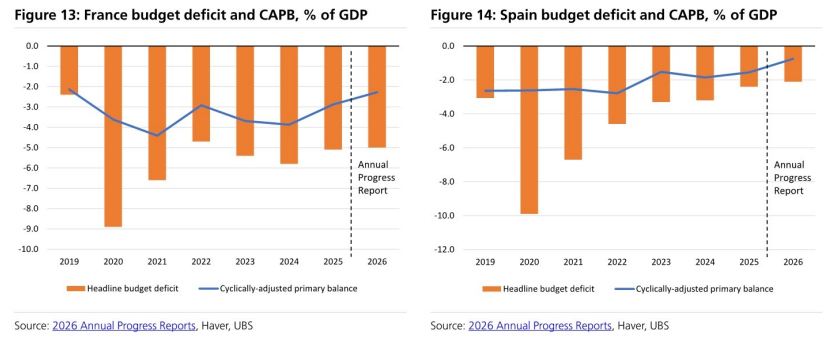
Country divergence is pronounced. Germany's debt brake reinstatement drives the most significant consolidation, cutting its structural deficit by roughly 0.8 percentage points. Italy's deficit is projected to fall from 4.3% to 3.7%, though public debt remains above 140% of GDP. France targets a reduction from 5.0% to 4.5%, but political fragmentation could impede further consolidation. Spain stands out favorably, with deficits projected below 2.5% and declining debt ratios. The Netherlands maintains a broadly neutral stance with deficits near 1.5%.
The primary risk is political: if France or Italy fails to deliver pledged fiscal consolidation, market confidence could deteriorate, widening sovereign bond spreads and potentially triggering rating downgrades. The report does not specify target prices or individual asset recommendations.
Key exhibits
Exhibit 1
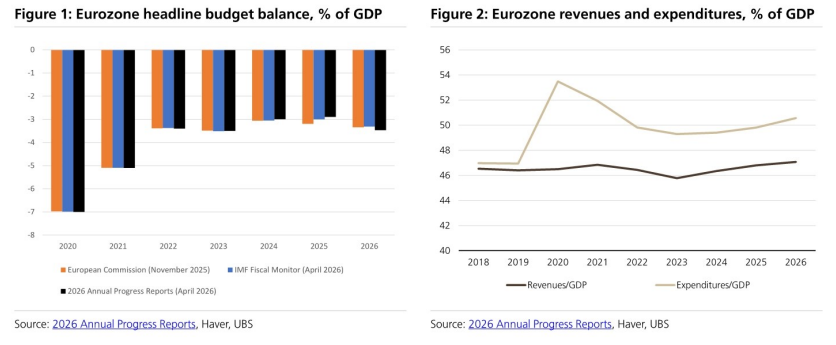
Exhibit 2
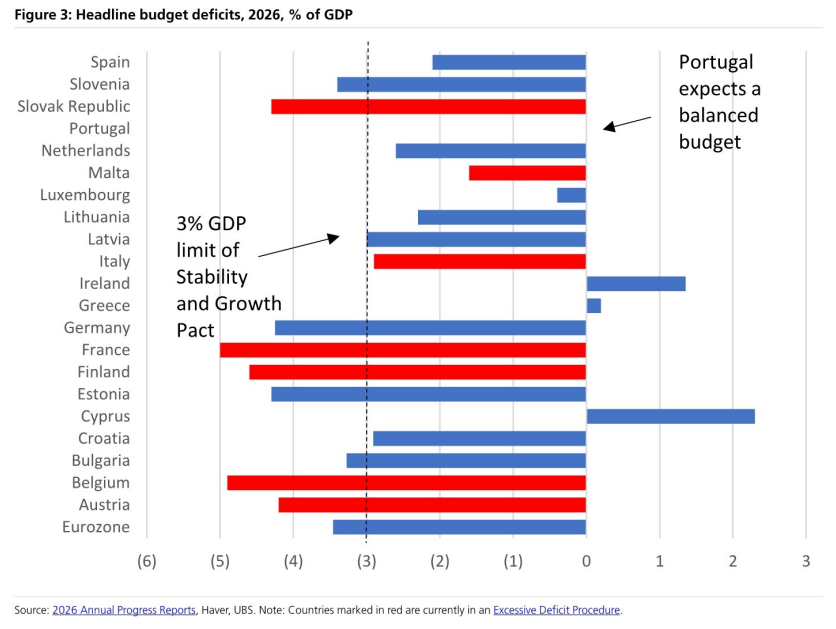
Exhibit 3
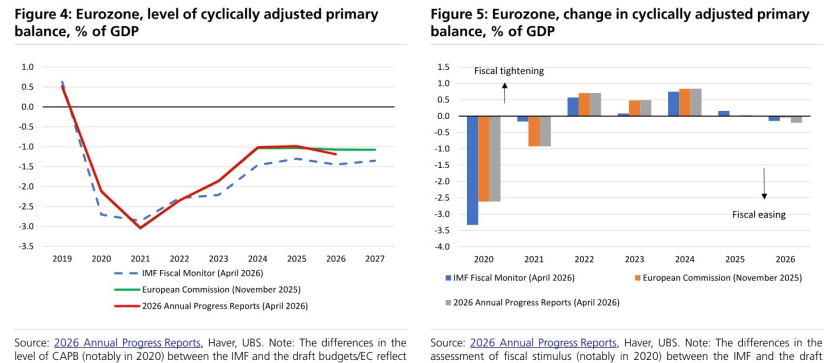
Exhibit 4
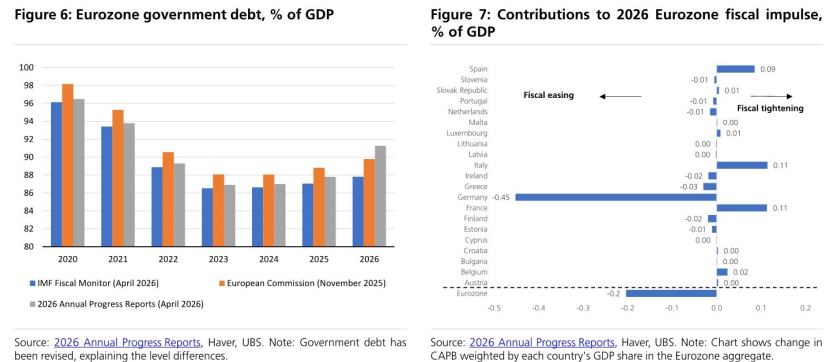
Exhibit 5
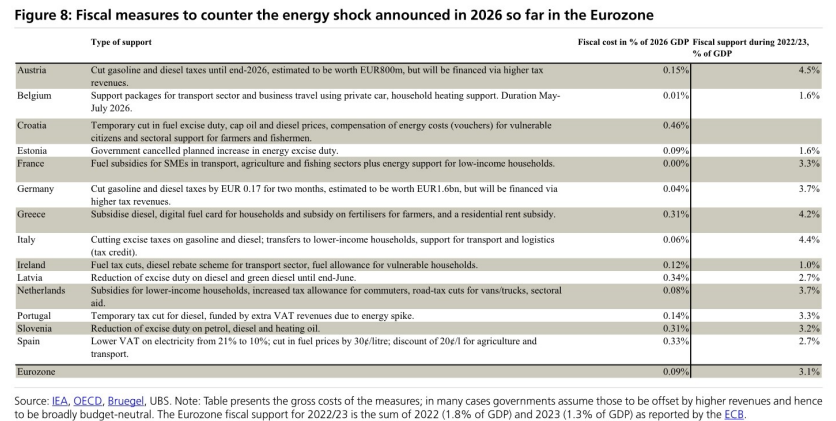
Exhibit 6
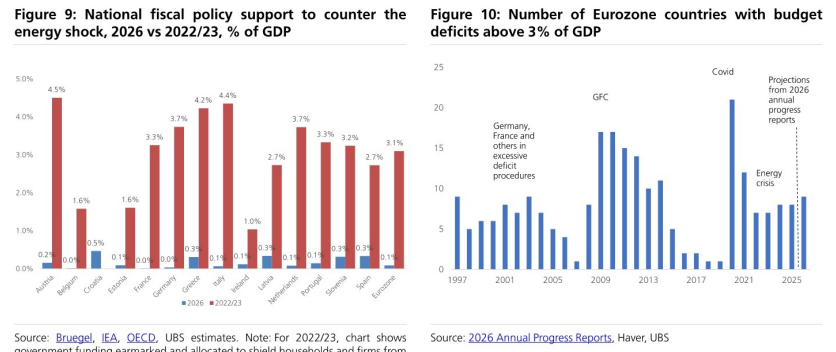
Exhibit 7
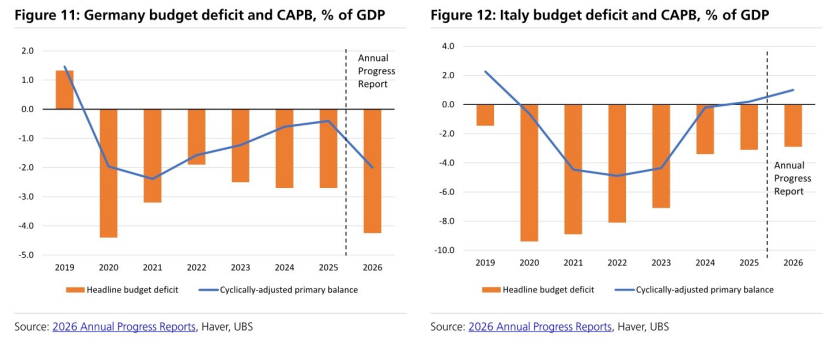
Exhibit 8