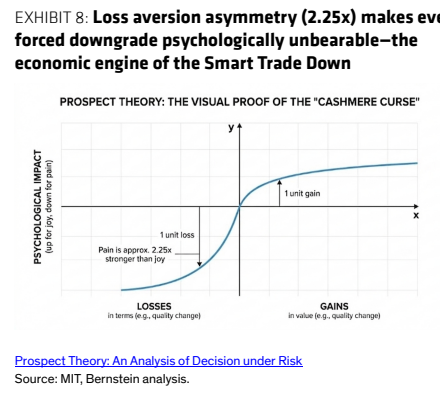
Bernstein: Japan Consumer — Best of Times, Worst of Times: Sell Me This Pen, Have You Met My AI?
Summaries are public. PDF access requires an active membership; all members have the same access. Sign in
Bernstein draws a Dickensian parallel to describe the current global consumer landscape, characterized by a K-shaped economy where the middle class faces pressure but still demands genuine value over hype. The firm asserts that artificial intelligence will revolutionize consumer price comparisons, eroding traditional brand premiums built on marketing. Japanese brands are structurally positioned to dominate this shift. Forced to survive three decades of deflation, Japanese companies have relentlessly focused on product investment and operational efficiency rather than marketing fluff.
For instance, Uniqlo allocates approximately 31% of its product price directly to manufacturing quality, compared to only 15% for Gap. This substance-over-style philosophy serves as an impenetrable economic moat as AI empowers consumers to instantly evaluate specifications and cost. Bernstein maps consumer maturity onto an S-curve, arguing that Western markets have reached an adult stage of essentialism, while Chinese consumers are rapidly transitioning away from conspicuous consumption. Japanese brand philosophy perfectly aligns with this global evolution toward smart essentialism.
Bernstein remains structurally bullish on Japanese global compounders. The firm rates Fast Retailing (target price: JPY 90,400), ASICS (target price: JPY 6,100), and Food & Life (target price: JPY 7,500) as Outperform. Ryohin Keikaku/MUJI is rated Market Perform with a target price of JPY 3,700, as the firm awaits proof of execution in Western markets. These structural winners leverage high product integrity to capture global market share.
Key exhibits
Exhibit 1

Exhibit 2
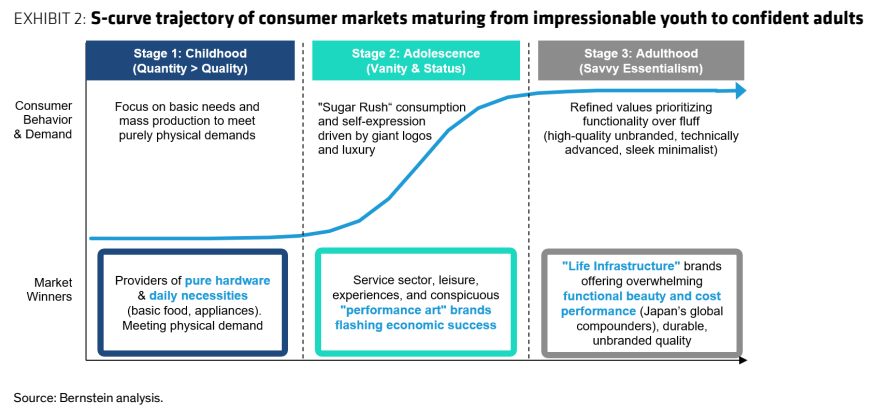
Exhibit 3
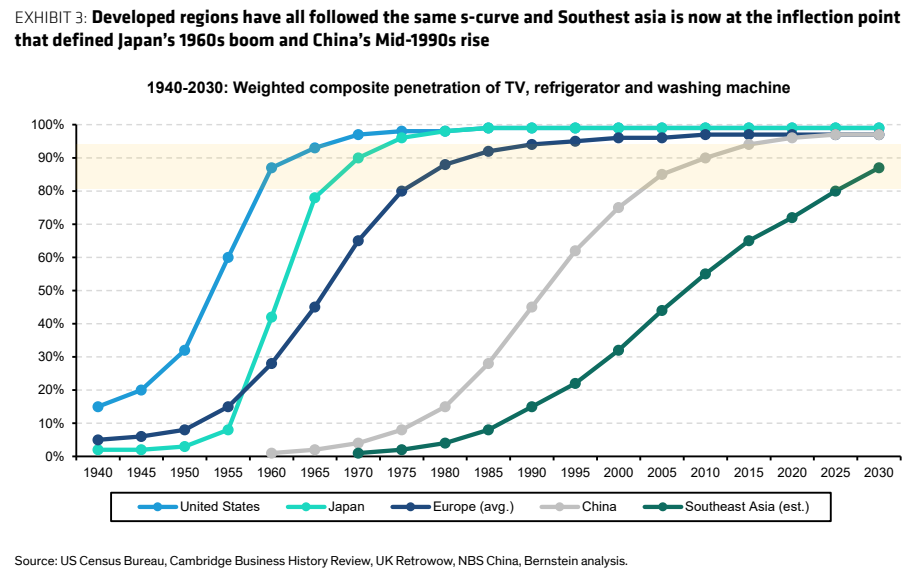
Exhibit 4
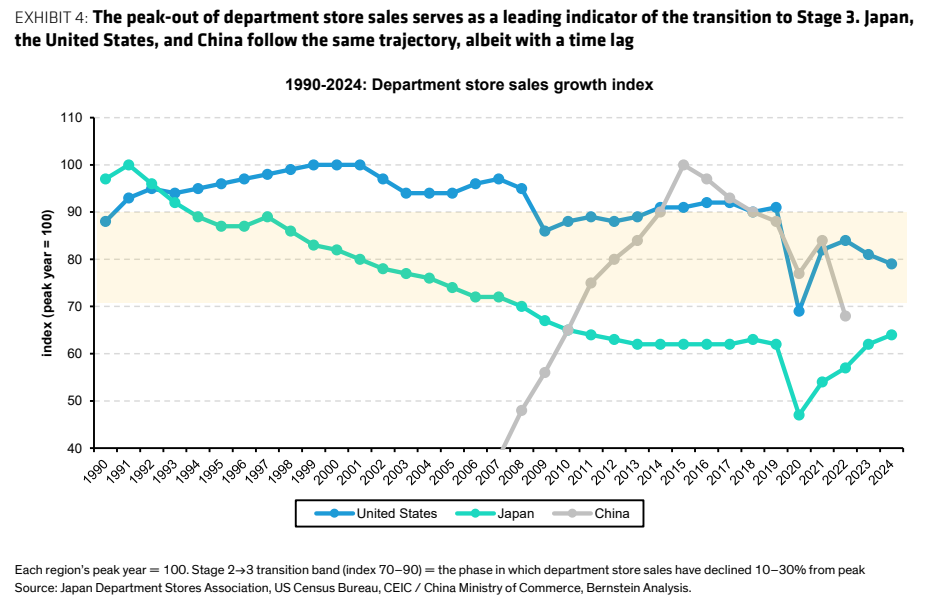
Exhibit 5
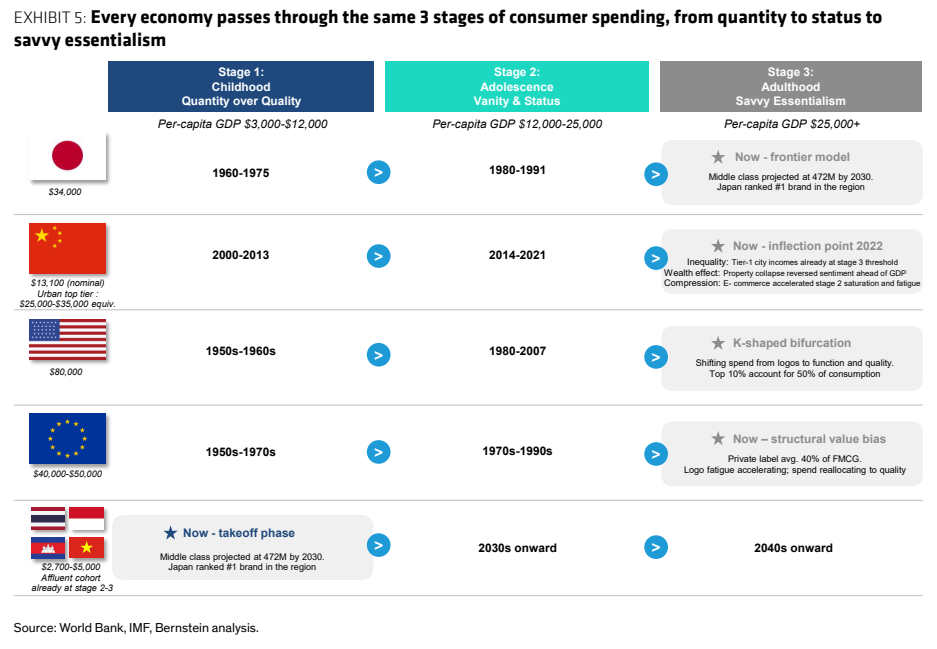
Exhibit 6
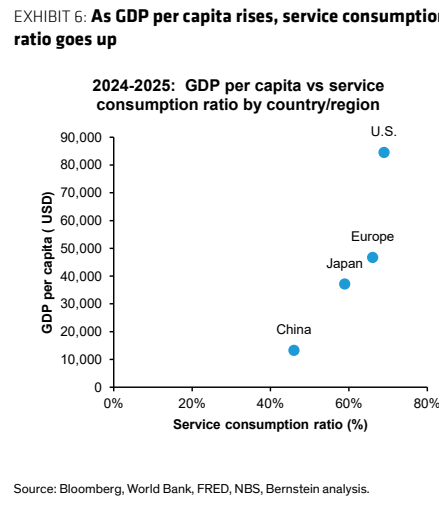
Exhibit 7
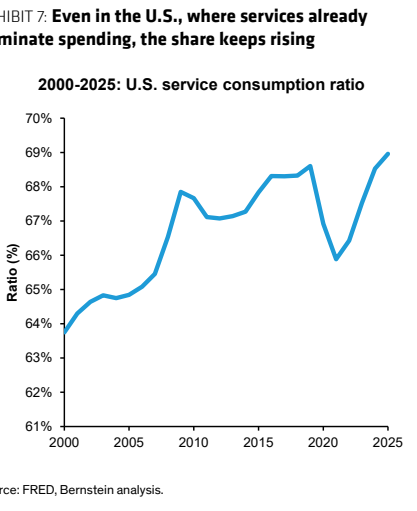
Exhibit 8