Morgan Stanley Biopharma: Front-Line Lung Cancer Takeaways from ASCO
Summaries are public. PDF access requires an active membership; all members have the same access. Sign in
Following ASCO 2026, Morgan Stanley provided an in-depth analysis of key front-line lung cancer data, focusing on emerging bispecific antibodies and antibody-drug conjugate combinations. The PD-1/CTLA-4 bispecific cadonilimab demonstrated promising efficacy in previously untreated non-small cell lung cancer patients with PD-L1 TPS of 50% or higher, achieving an approximate 60% twelve-month progression-free survival rate. This compares favorably with historical pembrolizumab benchmarks, though the median PFS has not yet been reached.
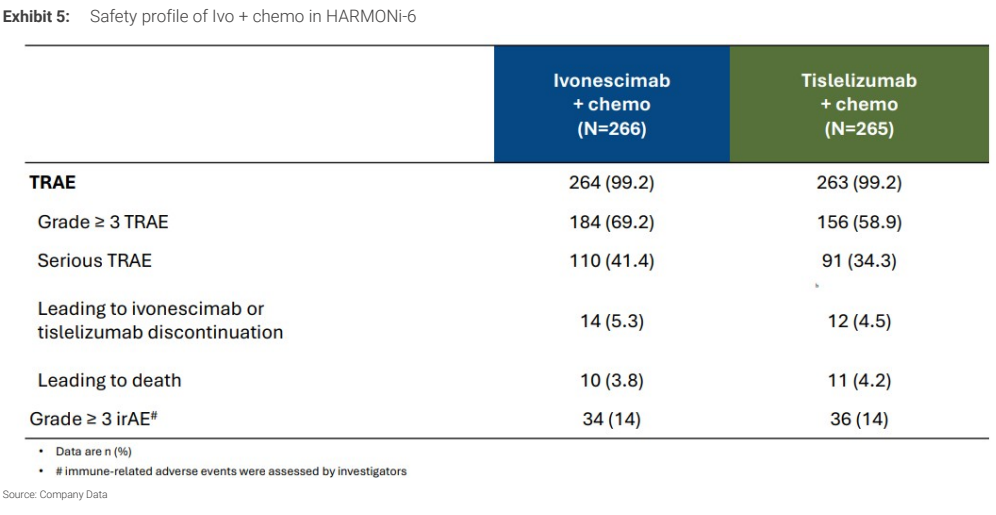
However, safety profiles warrant caution. The incidence of grade 3 or higher treatment-related adverse events reached approximately 35% in the bispecific arm, notably higher than the roughly 20% associated with pembrolizumab. Meanwhile, the TROP2 ADC datopotamab deruxtecan combined with pembrolizumab showed an objective response rate of 50% and a median PFS of approximately 11 months in frontline non-squamous NSCLC.
Morgan Stanley suggests these novel combinations could reshape the frontline treatment landscape, though validation from larger Phase III trials is essential. The firm maintains an Overweight rating on BeiGene, citing steady label expansion progress for tislelizumab across multiple indications. Zai Lab retains an Equal-weight rating, reflecting uncertainty around the Chinese launch timeline for tarlatamab. For PD-L1 low-expressing patients, chemo-immunotherapy combinations remain the standard, as bispecific data in this population remains limited.
Key exhibits
Exhibit 1

Exhibit 2

Exhibit 3

Exhibit 4

Exhibit 5
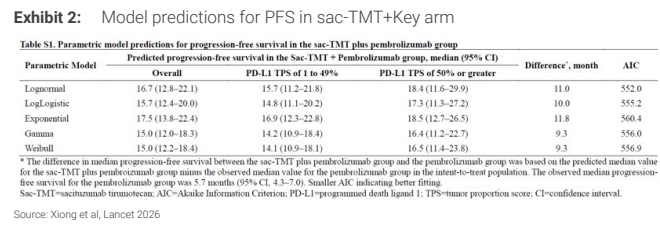
Exhibit 6
Exhibit 7
Exhibit 8