J.P. Morgan Fund Flows & Liquidity: Pressure on Long-Duration and Spread Exposures
Summaries are public. PDF access requires an active membership; all members have the same access. Sign in
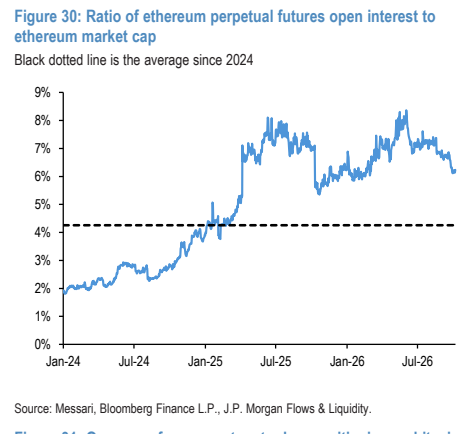
J.P. Morgan's fund flows and liquidity analysis finds divergent positioning in global bond markets: quant funds have benefited from short-duration exposure, while active managers are still working down excess duration and spread exposure. Because active managers are far larger than quant funds, the bank sees a near-term risk that further position reduction amplifies negative market momentum. Reserve managers diversified into the euro and gold during the second quarter. Digital-asset capital inflows have improved but, at an annualised USD66bn, remain only about half of year-ago levels. Institutional investors are less bullish on Brazilian equities than retail investors following the first round of the presidential election. Risk-parity funds are running below-average leverage, yet rising bond volatility is dampening their willingness to add. Looking ahead, the bank flags two-way risk for bonds: either mean-reversion signals trigger profit-taking by quant funds, pushing yields lower, or active managers cut duration and spread exposure further, magnifying negative momentum. The report does not highlight specific stock recommendations.
Key exhibits
Exhibit 1

Exhibit 2
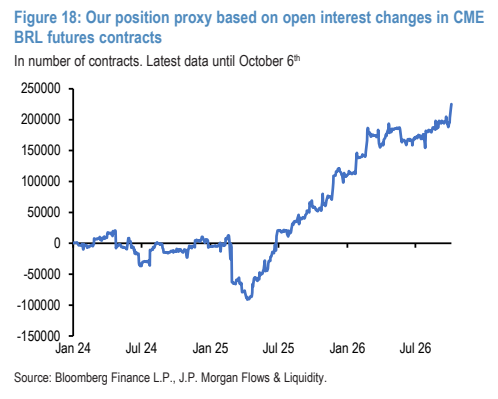
Exhibit 3
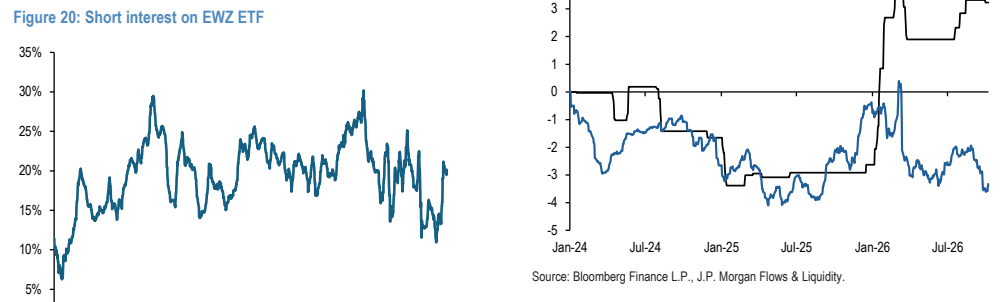
Exhibit 4