US Rates: Breaking the 5% Ceiling on 30-Year Treasuries Is Not a Fade
Summaries are public. PDF access requires an active membership; all members have the same access. Sign in
Barclays warns that the 30-year US Treasury yield breaking above 5% should not be viewed as a contrarian buying opportunity. The long-end sell-off is a global phenomenon, with UK 30-year yields approaching 6%, diminishing the likelihood of targeted domestic intervention. US economic resilience, persistent inflation, widening fiscal deficits, and rising term premiums collectively support elevated long-end yields. Historically, the 30-year yield trades 150-180 basis points above the federal funds rate; the current spread of roughly 150 basis points suggests the long bond is not cheap.
The bank's scenario analysis highlights significant upside risks. If the economy maintains momentum and the Federal Reserve holds rates steady, investor reassessment of the neutral rate could push the 30-year yield to approximately 5.4%. Should sticky inflation force the Fed to resume hiking, the yield may exceed 5.6%. Deteriorating public finances compound this pressure, as effective tariff rates lag Congressional Budget Office assumptions and rising interest costs exacerbate future deficits.
While the Treasury and Federal Reserve possess tools to cap long-end yields, Barclays views immediate intervention as unlikely. The Treasury is more sensitive to 10-year yields, and the Fed faces high action thresholds given stable financial conditions and smooth market functioning. Sustained rebound requires clear growth deceleration or a sharp risk-asset correction. Until then, investors should maintain a cautious or bearish stance on long-duration US Treasuries.
Key exhibits
Exhibit 1
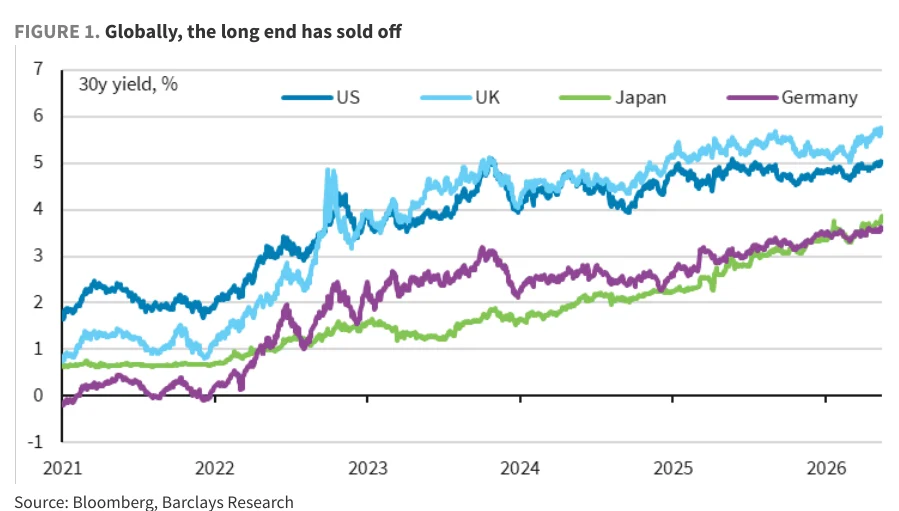
Exhibit 2

Exhibit 3

Exhibit 4

Exhibit 5
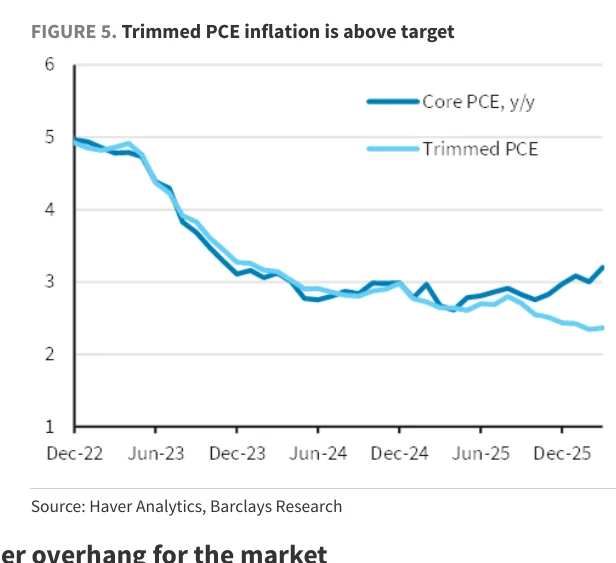
Exhibit 6

Exhibit 7

Exhibit 8

Exhibit 9

Exhibit 10

Exhibit 11

Exhibit 12

Exhibit 13
