Morgan Stanley Going Global: China's Expansion into Europe
Summaries are public. PDF access requires an active membership; all members have the same access. Sign in
Morgan Stanley explores China's accelerating expansion into Europe and its broader implications for global foreign exchange markets. Chinese foreign direct investment in Europe has grown approximately 150% over the past five years, reaching an annual pace of $30 billion. Mergers and acquisitions have predominantly targeted the technology and automotive sectors. Meanwhile, China-Europe trade constitutes 15% of China's total trade volume. The report highlights how these deepening economic ties are facilitating greater renminbi usage in cross-border payments. Currently holding a 2% share in European payments, the renminbi is projected to climb to 5% by 2028. European dependence on Chinese exports is rising, particularly in new energy equipment and electric vehicles. Chinese technology firms are also expanding their European market share in areas such as 5G and artificial intelligence. Morgan Stanley notes that this expansion benefits from policy frameworks including the Belt and Road Initiative and green transition partnerships. Regarding currency markets, the euro-renminbi exchange rate may experience heightened volatility driven by shifting trade and capital flows. The European Central Bank could adjust monetary policy in response to growing renminbi utilization. While Chinese financial investments in euro-denominated bonds are increasing, the internationalization push still faces regulatory scrutiny and geopolitical risks. Charts indicate European OEMs may continue losing market share through fiscal year 2027, with mass-market OEM earnings facing potential downside risks exceeding 10%.
Key exhibits
Exhibit 1

Exhibit 2
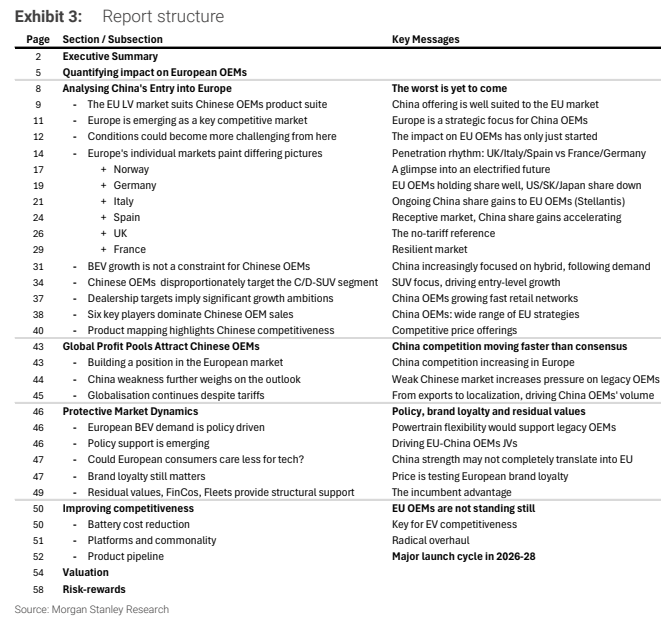
Exhibit 3
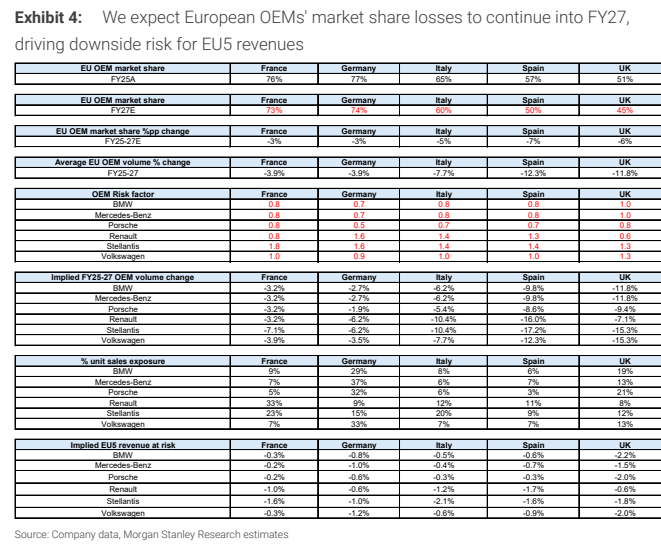
Exhibit 4

Exhibit 5
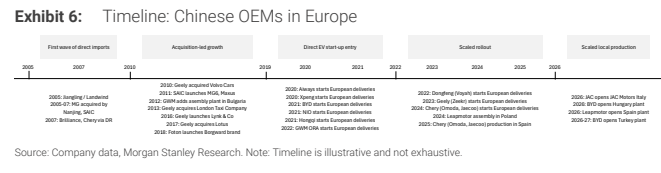
Exhibit 6
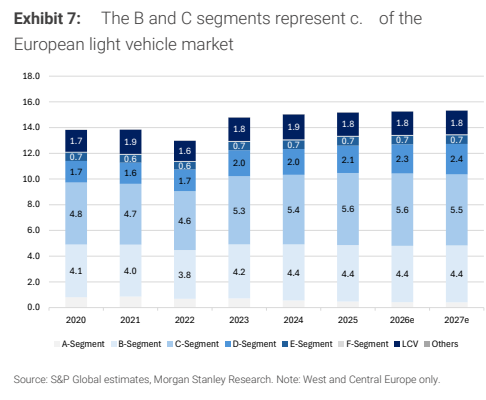
Exhibit 7
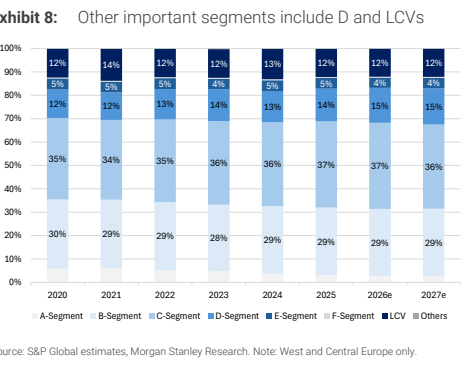
Exhibit 8