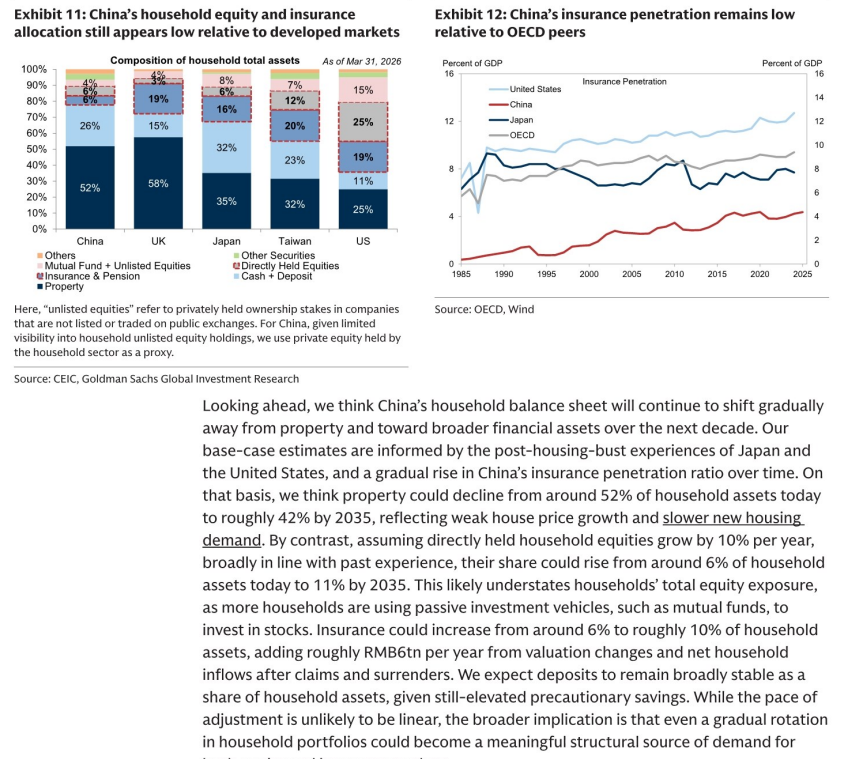
Goldman Sachs Asia Economics Analyst: Chinese Household Balance Sheet - Structural Shift from Property to Financial Assets Amid Ongoing Deleveraging
Summaries are public. PDF access requires an active membership; all members have the same access. Sign in
Goldman Sachs observes that Chinese households are undergoing a major structural transition in their balance sheets, steadily reallocating wealth from real estate into financial assets while continuing a deleveraging process. Property's share of total household assets has declined from a 2019 peak of approximately 60% to roughly 55% in 2024. Concurrently, the pace of household debt growth has decelerated significantly, falling from 15% in 2019 to just 5% in 2024. Within the financial asset category, bank deposits and wealth management products have increased, while the proportion of direct equities and mutual funds has contracted. The household net savings rate reached 12% in 2024, exceeding pre-pandemic norms. Consequently, real consumption growth has moderated to approximately 4%, down from the 6% levels seen in 2019. Goldman Sachs anticipates that this structural shift will persist, projecting that the share of financial assets will eventually surpass that of real estate by 2026. While policy support and market reforms could accelerate financial asset allocation, the ongoing desire to reduce leverage inherently limits the potential for a robust consumer spending rebound. This transformation carries profound implications for economic growth trajectories and domestic financial market liquidity.
Key exhibits
Exhibit 1
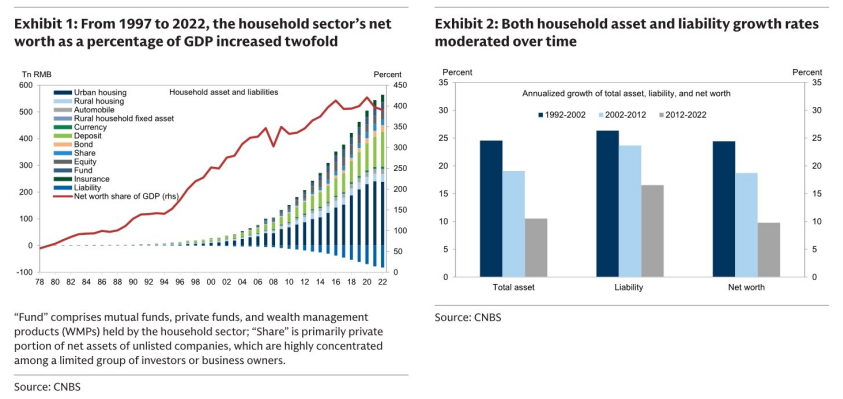
Exhibit 2
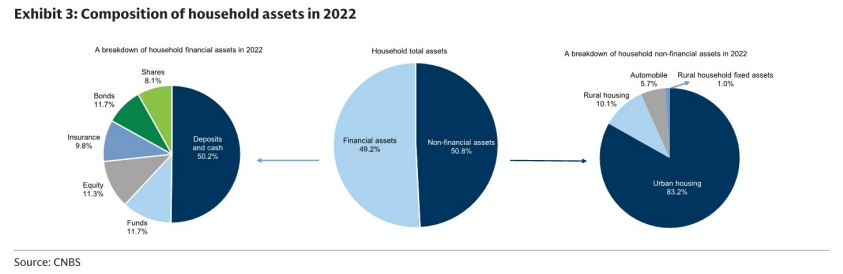
Exhibit 3
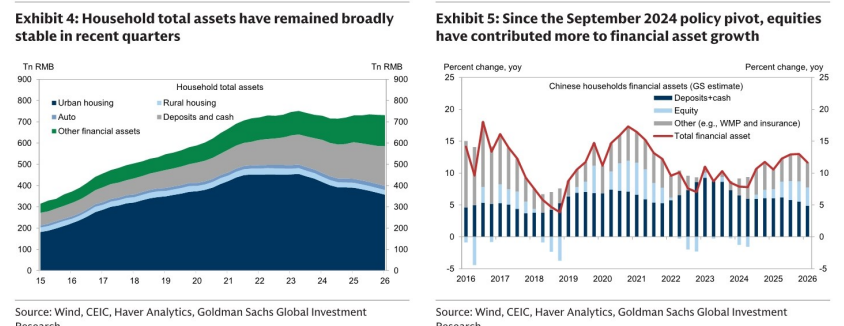
Exhibit 4
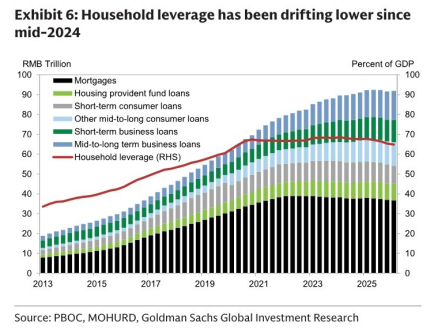
Exhibit 5
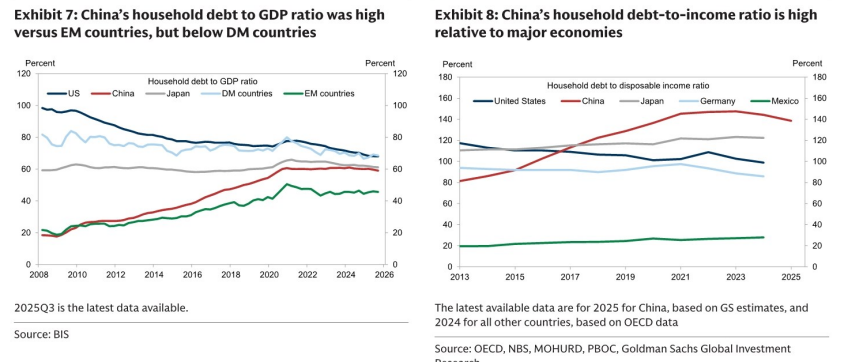
Exhibit 6
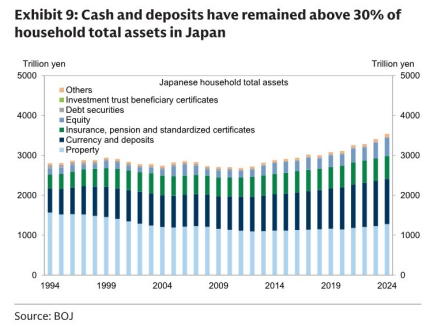
Exhibit 7
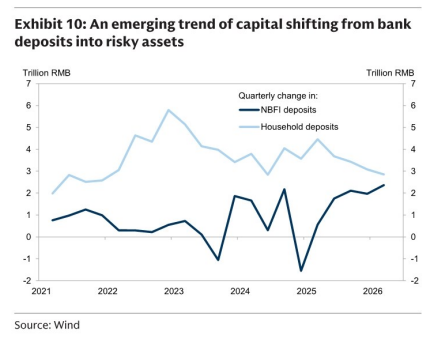
Exhibit 8