Bernstein Global Capital Goods: Powering AI - Gas Turbine Supply Stack Analysis
Summaries are public. PDF access requires an active membership; all members have the same access. Sign in
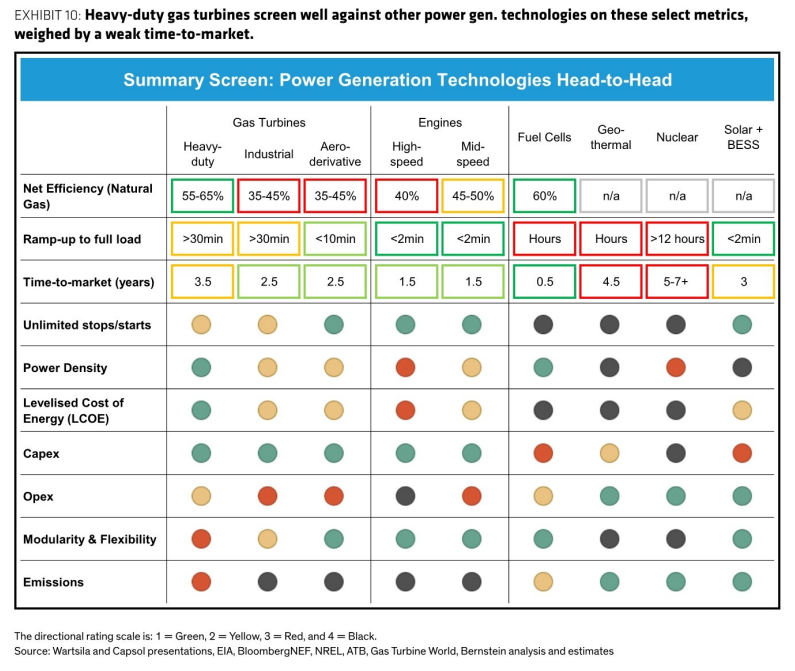
Bernstein maps the gas turbine supply chain through a unified framework, highlighting structural investment opportunities driven by surging AI data center electricity demand. Global data center power consumption is expected to reach 5% of total global generation by 2028, positioning gas turbines as an essential technology for meeting peak loads and providing backup power. The industry is already in an upcycle, with 2025 global orders growing 18% year-on-year, and Bernstein projects a 12% compound annual growth rate for orders from 2026 to 2028.
The analysis dissects the entire value chain from upstream materials to downstream services, concluding that component manufacturing and aftermarket services offer the highest margins and entry barriers. Supply chain bottlenecks are concentrated in superalloy blades and combustion components, benefiting key suppliers like Precision Castparts and Howmet Aerospace. Services, encompassing maintenance, repair, and overhaul, contribute roughly 40% of original equipment manufacturers' profits, providing high revenue visibility through long-term contracts.
Among OEMs, Siemens Energy is highlighted for its leadership in high-efficiency H-class turbines. Turbine capacity is projected to expand over 60% by 2030, adding more than 40 gigawatts. Mitsubishi Heavy Industries is expanding capacity 30% through fiscal 2028. Gas turbines remain highly complementary to renewable energy, ensuring sustained investment in natural gas peaking power.
Key exhibits
Exhibit 1

Exhibit 2
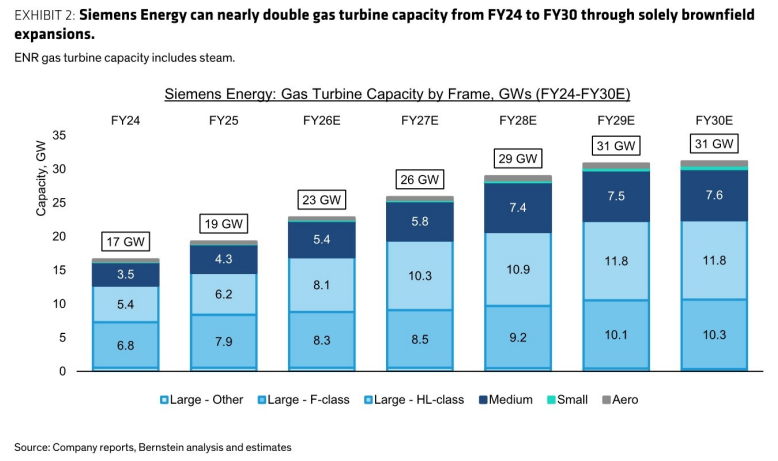
Exhibit 3
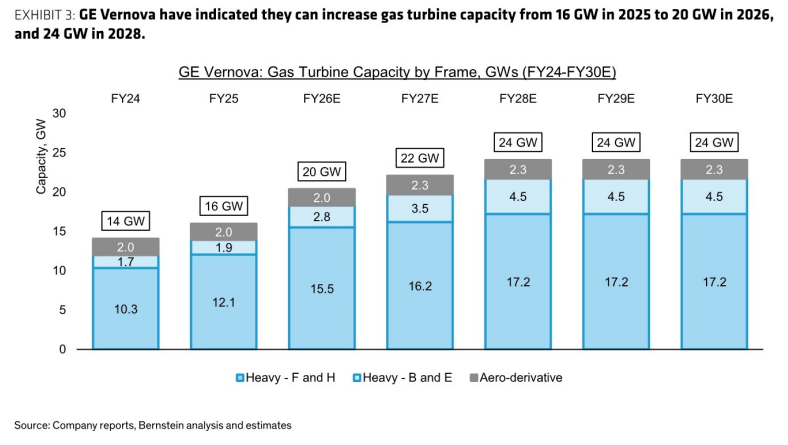
Exhibit 4

Exhibit 5
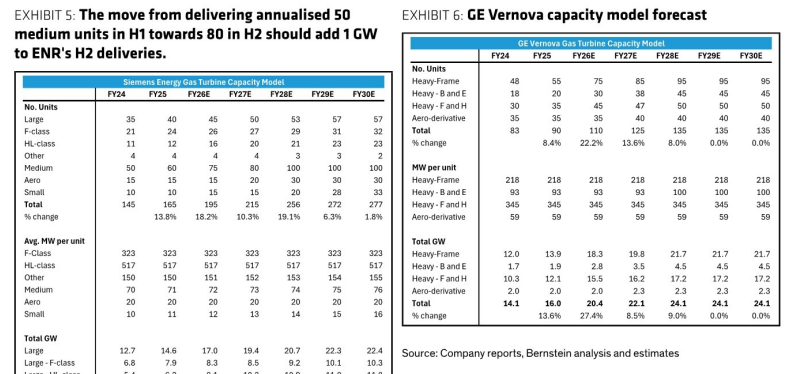
Exhibit 6
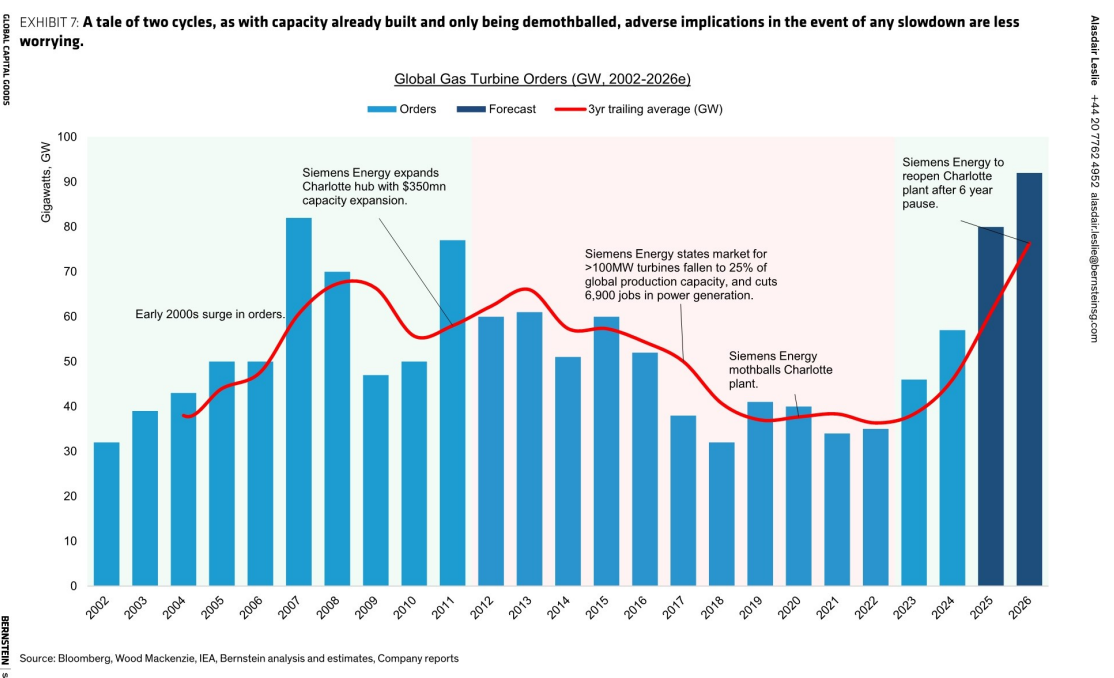
Exhibit 7
Exhibit 8