J.P. Morgan Amazon.com (AMZN.US): AWS Accelerating, Backlog Building, Retail Running
Summaries are public. PDF access requires an active membership; all members have the same access. Sign in
J.P. Morgan reiterates an Overweight rating on Amazon.com (AMZN.US) with a 12-month target price of $240, based on 18x 2026E EV/EBITDA. The investment thesis centers on accelerating AWS growth, a record-breaking backlog, and sustained retail margin expansion.
AWS revenue grew 19% year-over-year in Q4 2025, with growth expected to exceed 20% in 2026, driven by AI inference workload migration. Unfulfilled AWS contracts reached $155 billion by the end of 2025, representing a 35% year-over-year increase and signaling robust long-term enterprise demand. AI-related revenue constituted 12% of total AWS revenue in 2025 and is projected to reach 18% in 2026, fueled by Bedrock and SageMaker services.
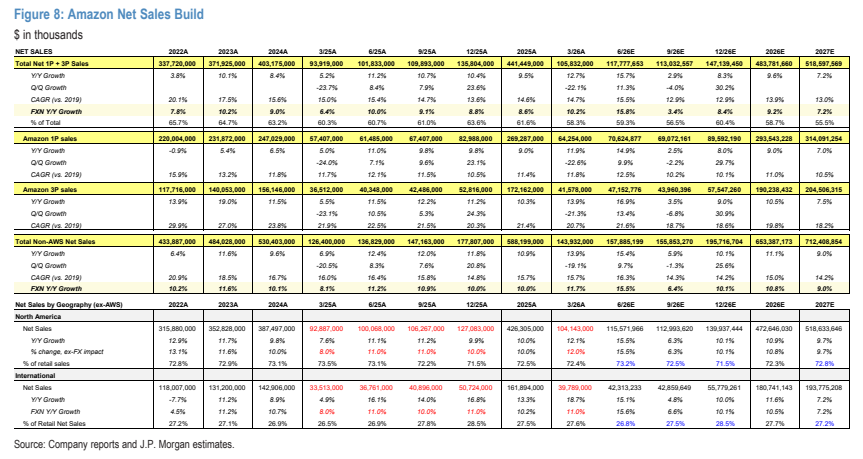
In the retail segment, North American operating margins reached 5.2% in Q4 2025 and are expected to hit 6% in 2026. This improvement is driven by a regionalized fulfillment network that reduced per-order delivery costs by 15%. The advertising business also demonstrated momentum, growing 28% year-over-year to $18 billion in Q4 2025, with sustained growth above 25% anticipated for 2026. International retail losses narrowed significantly to $500 million from a $1.2 billion loss in the prior-year period.
Total capital expenditure for 2025 is projected at $75 billion, with approximately $60 billion allocated to AWS infrastructure, including AI servers and networking equipment. Free cash flow for 2025 stood at $42 billion, up 40% year-over-year, and is expected to surpass $50 billion in 2026. The firm notes the current valuation offers a margin of safety, trading at approximately 16x 2026E EV/EBITDA, below the historical average of 18x.
Key exhibits
Exhibit 1

Exhibit 2

Exhibit 3
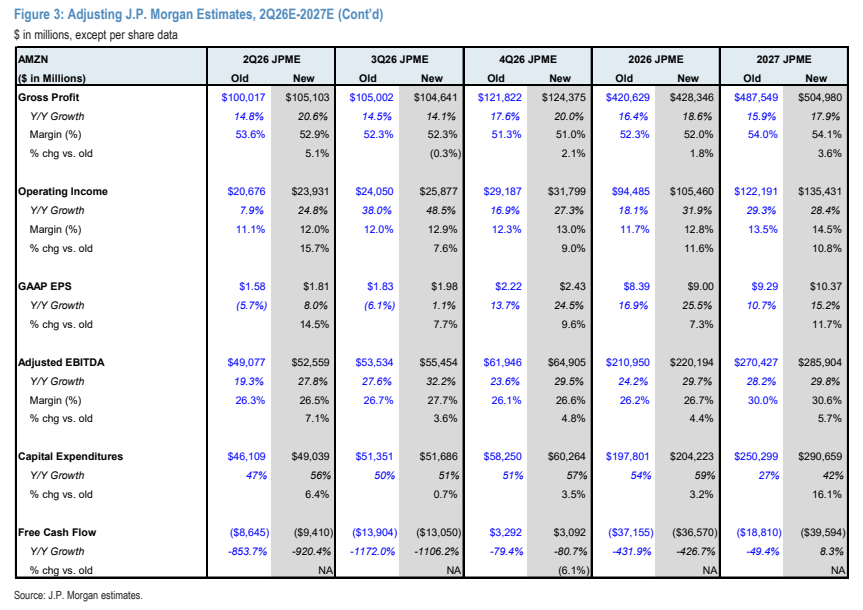
Exhibit 4

Exhibit 5
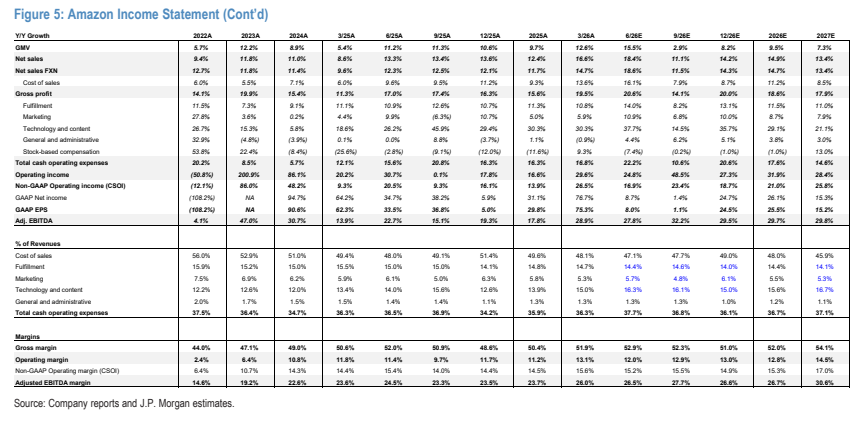
Exhibit 6

Exhibit 7
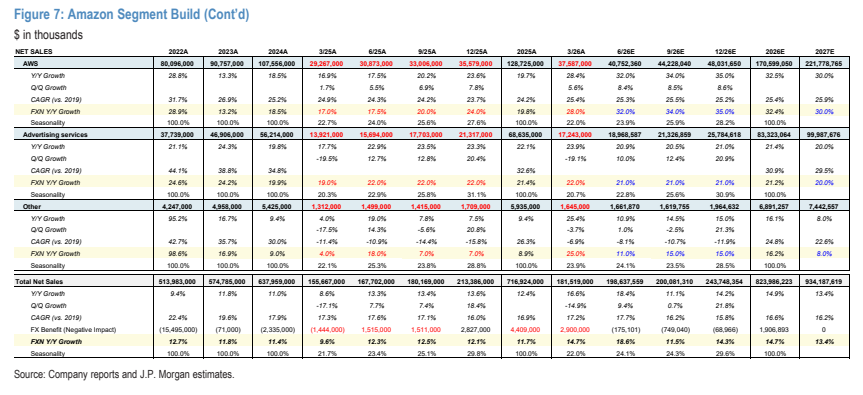
Exhibit 8