Morgan Stanley Global Technology: Agentic AI – The Surge Begins
Summaries are public. PDF access requires an active membership; all members have the same access. Sign in
Morgan Stanley asserts that agentic AI is transitioning from concept to enterprise deployment, positioning 2026 as the inaugural year of mass adoption. The share of enterprise IT spending allocated to AI is projected to climb from 5% in 2025 to 12% in 2026, propelling a 60% surge in global AI infrastructure investment to $180 billion.
Capable of autonomously executing multi-step workflows rather than merely generating content, agentic AI will likely drive enterprise adoption rates from 15% to 40%. This paradigm shift is set to fundamentally reshape SaaS business models, accelerating the transition toward outcome-based pricing.
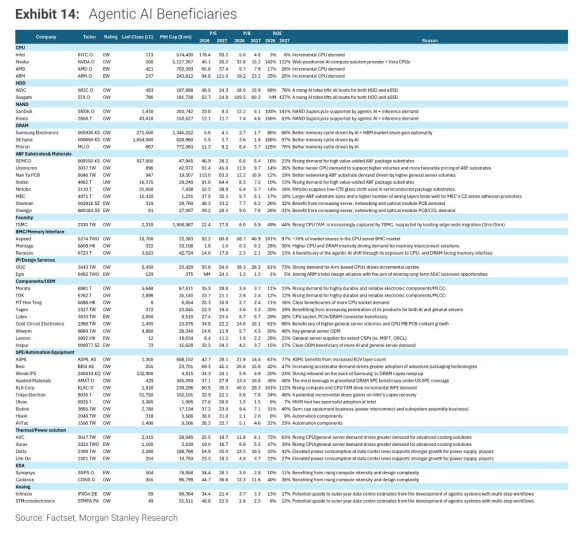
Infrastructure investment will lead the upcycle. NVIDIA (NVDA), maintaining an Overweight rating with a $180 target price, stands as the primary beneficiary of this hardware expansion. Subsequently, software platforms will leverage embedded AI agents to boost average revenue per user. Microsoft (MSFT), rated Overweight with a $550 target, should capture incremental revenue through Azure AI and Copilot ecosystems. ServiceNow (NOW), targeted at $1,100, anticipates 25% subscription revenue growth in 2026 via integrated AI agents.
Furthermore, cybersecurity demands will rise sharply, necessitating novel identity and access management solutions for autonomous agents. CrowdStrike (CRWD) holds a $400 target, while Palantir (PLTR) targets $80. By 2027, agentic AI could contribute 1.5% to global GDP, equivalent to roughly $1.5 trillion. Key risks include regulatory uncertainty, AI safety incidents, and underwhelming enterprise budget execution.
Key exhibits
Exhibit 1
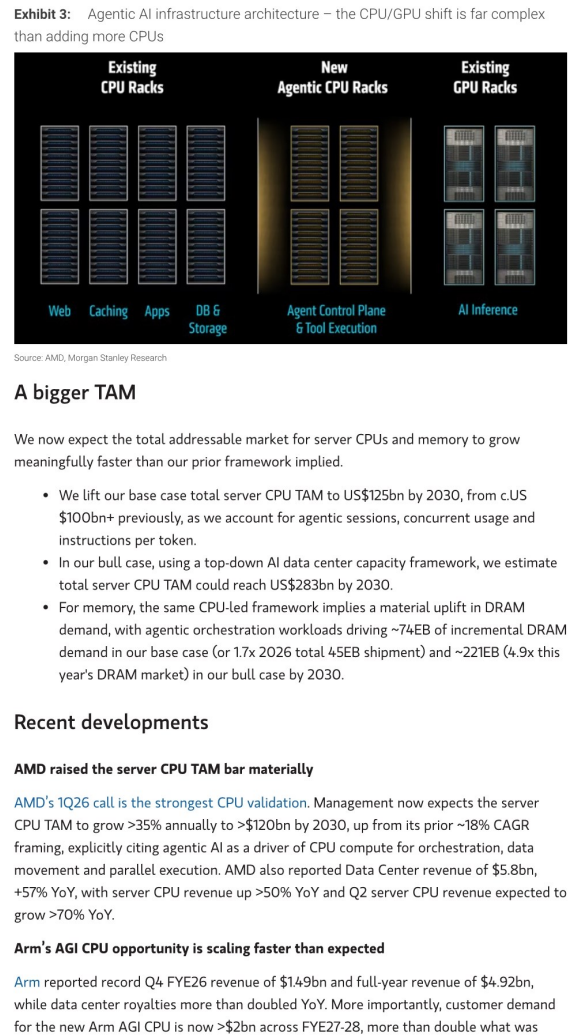
Exhibit 2
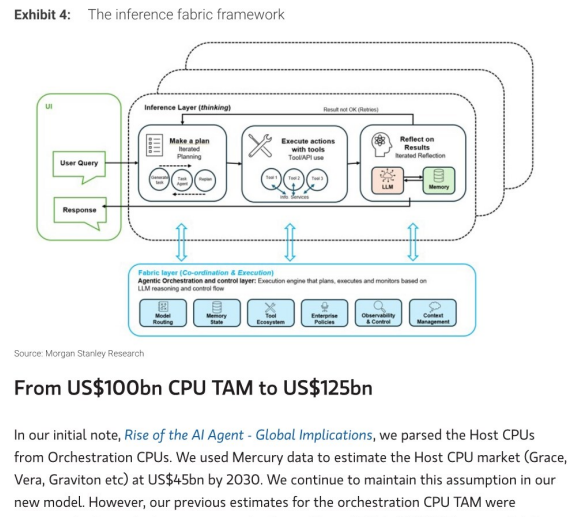
Exhibit 3
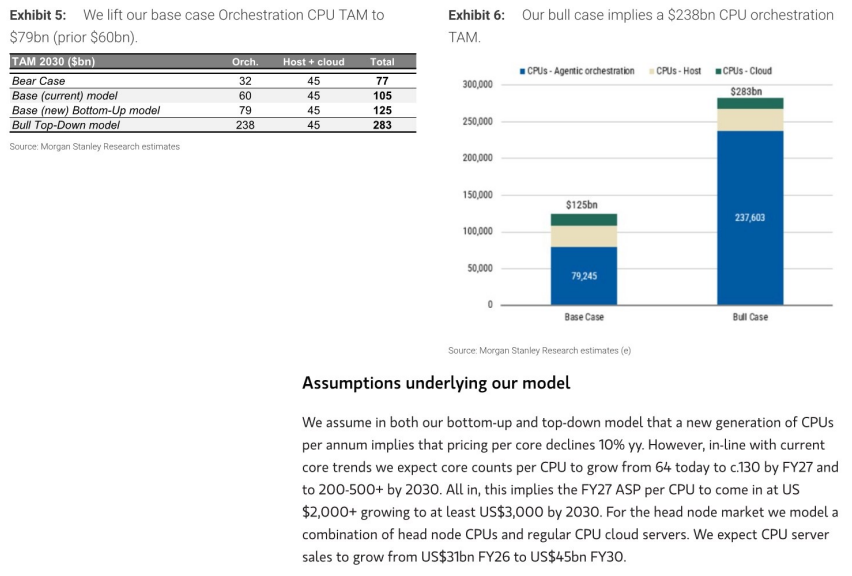
Exhibit 4
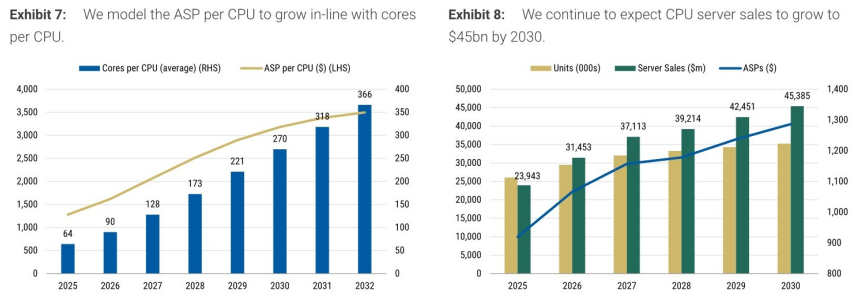
Exhibit 5
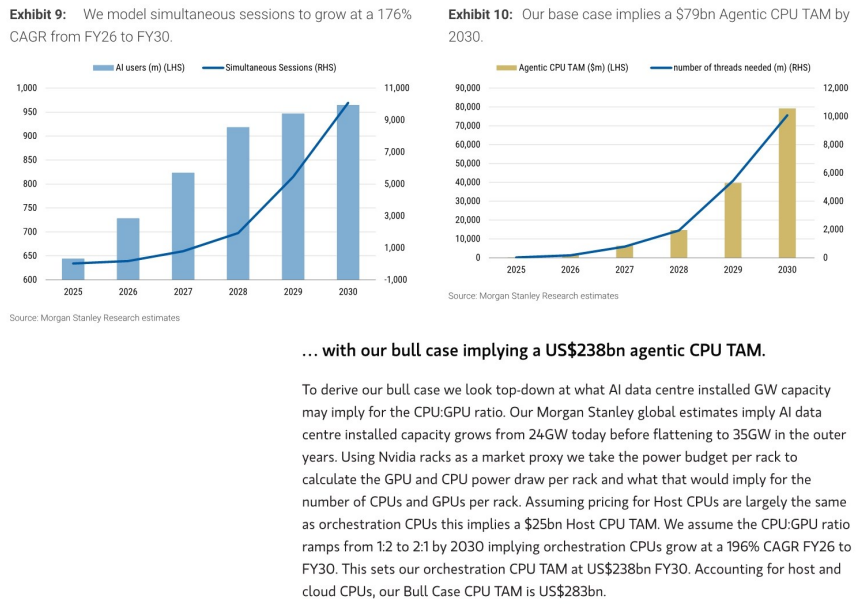
Exhibit 6
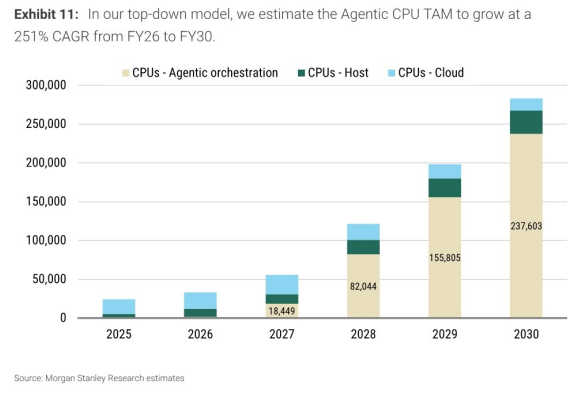
Exhibit 7
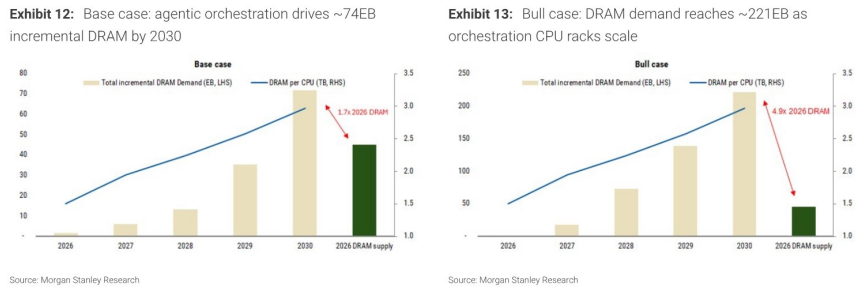
Exhibit 8