Huatai Securities Macro Insight: How to Interpret the Export Tax Rebate Cuts
Summaries are public. PDF access requires an active membership; all members have the same access. Sign in
Huatai Securities examines the logic behind China's export tax rebate adjustments and their industry implications. Rebates are an internationally standard arrangement designed to prevent double taxation rather than a subsidy, and historical tweaks have typically served macro stabilization of exports, industrial competitiveness, and structural upgrading. Rebates totaled roughly RMB2.13 trillion in 2025, about 12% of overall tax revenue.
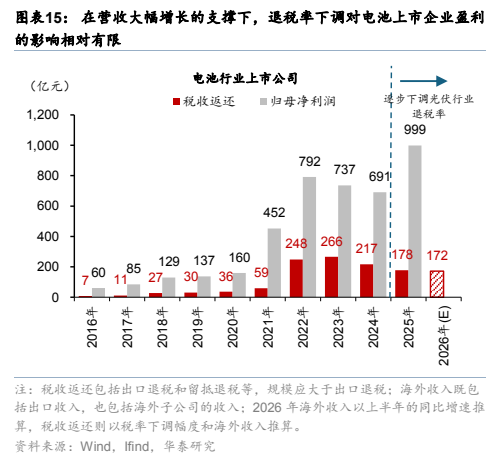
Recent rate cuts targeting solar, batteries, new-energy vehicles, and e-cigarette equipment are expected to reduce rebate outlays by roughly RMB100-110 billion combined over 2026-27, equivalent to around 0.6% of 2026 tax revenue. By industry, computer, communications and electronics claim the largest share—over 30% of rebates across 32 sectors—while autos and equipment manufacturing carry sizeable rebates with lower profit dependence; labor-intensive sectors show the inverse. Firms heavily reliant on rebates with weak overseas pricing power may face near-term margin pressure, but Huatai argues the steel precedent—short-term profit pain followed by capacity optimization—suggests the policy ultimately supports concentration gains and stronger competitiveness for efficient leaders.
Key exhibits
Exhibit 1
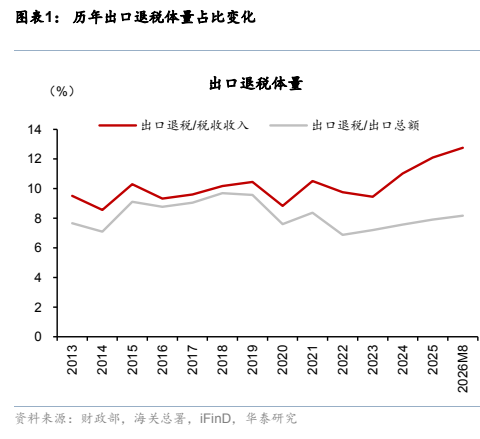
Exhibit 2
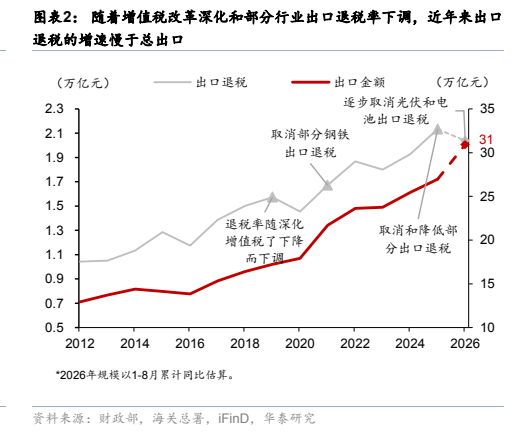
Exhibit 3
Exhibit 4
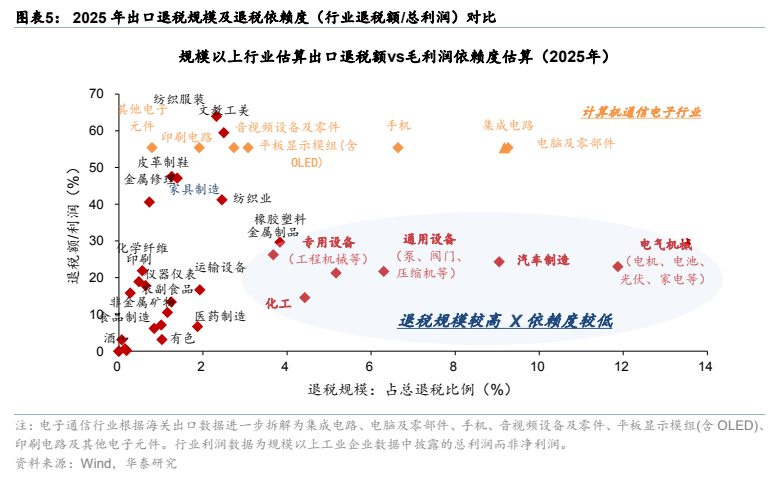
Exhibit 5
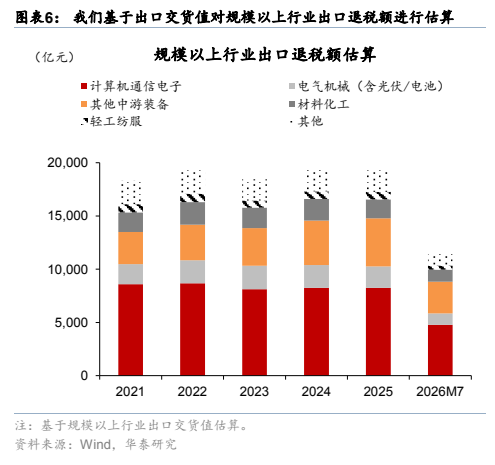
Exhibit 6
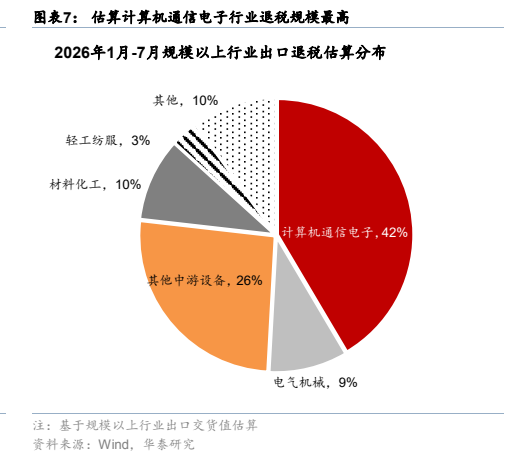
Exhibit 7
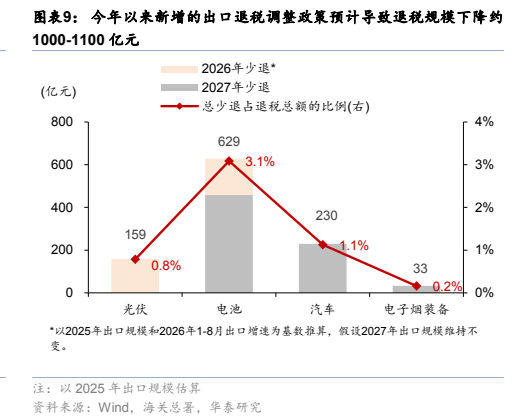
Exhibit 8
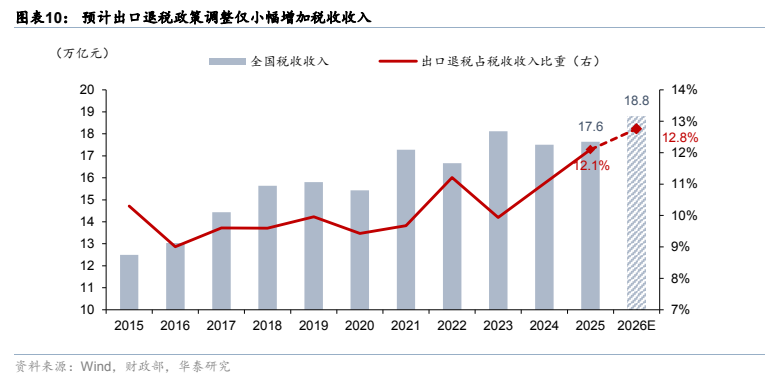
Exhibit 9
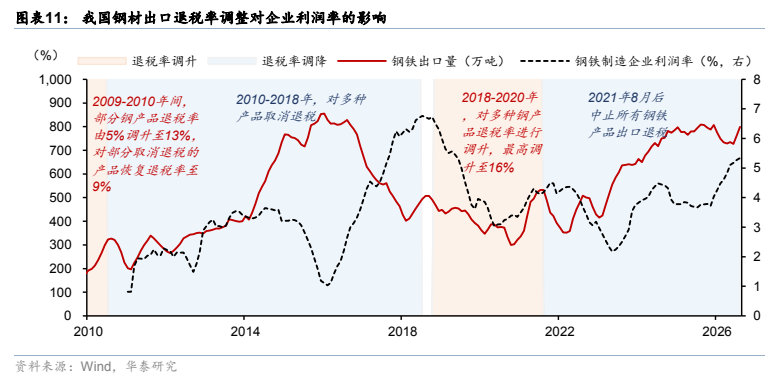
Exhibit 10
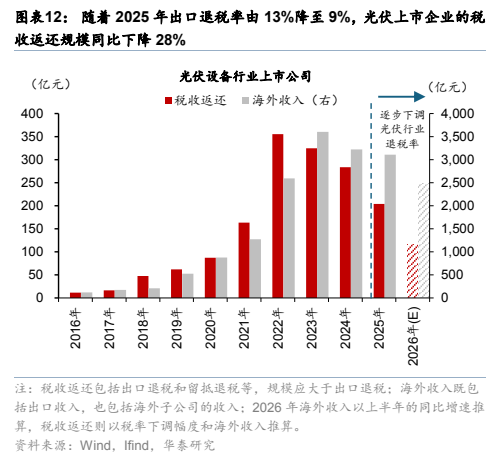
Exhibit 11
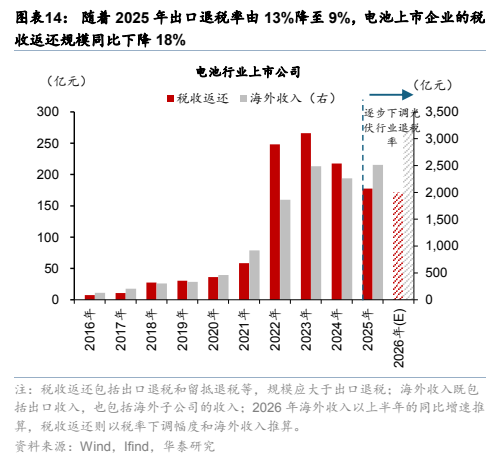
Exhibit 12