J.P. Morgan FX Volatility Strategy: What to Long, Short, and When
Summaries are public. PDF access requires an active membership; all members have the same access. Sign in
Key Views
The core finding is that short-dated, out-of-the-money USD calls represent the most robust implementation of FX vol carry, exhibiting the strongest and most consistent Sharpe ratios across strikes, tenors, and market environments. ATM structures and USD puts underperform, as collected premia are insufficient to offset periodic realized volatility shocks. Low-delta calls benefit from skew pricing and the poor systematic spot-volatility correlation.
Across VXY-G10, six USD pairs are USD-call biased during risk aversion (e.g., USD/SEK, AUD/USD), two lean USD-put (JPY, CHF), and EUR/USD is inconsistent. Steep curves (1M cheaper than 3M) signal normal conditions; inverted curves flag building pressure, during which short-dated USD-call carry deteriorates.
Outlook
Carry performs best in stable environments—moderate volatility, normal term structure, low central bank activity, and range-bound USD. It is vulnerable under inverted curves, clustered macro events, or strong USD trends.
Risk Management
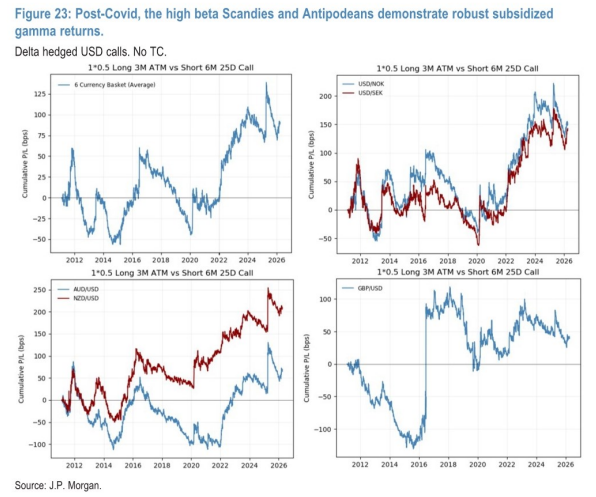
A dynamic sizing framework reduces exposure during inverted term structures or concentrated event risk and increases it in stable conditions. Delta-hedged inverse ratio structures provide effective tail protection during major vol shocks (e.g., COVID) but underperform in high-gamma-noise regimes (2022–23), where subsidized gamma structures are superior.
Key exhibits
Exhibit 1

Exhibit 2
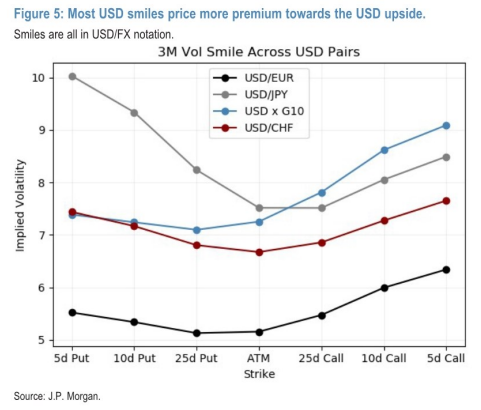
Exhibit 3
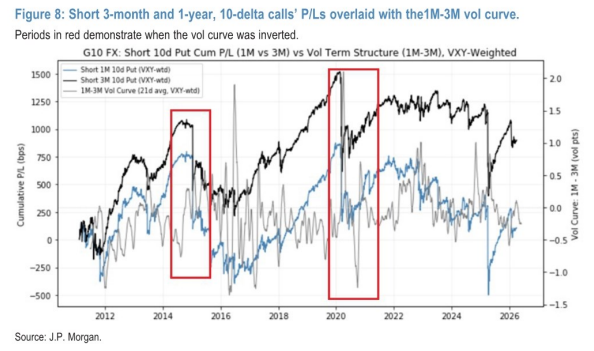
Exhibit 4
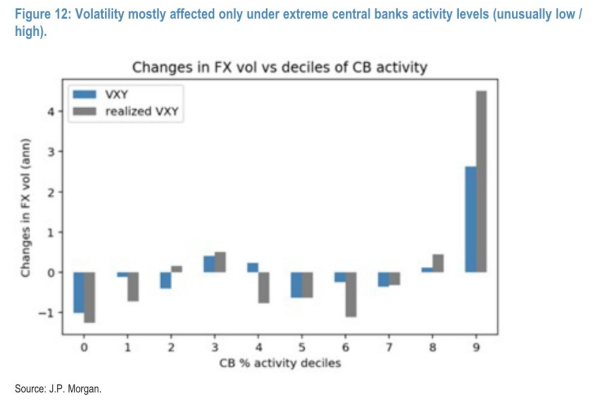
Exhibit 5
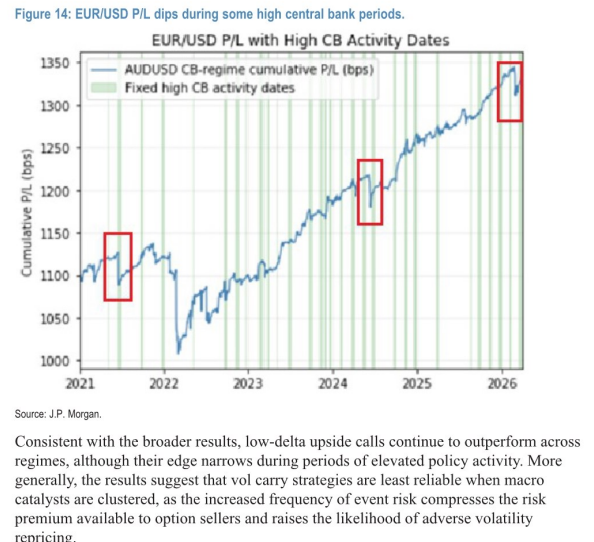
Exhibit 6

Exhibit 7
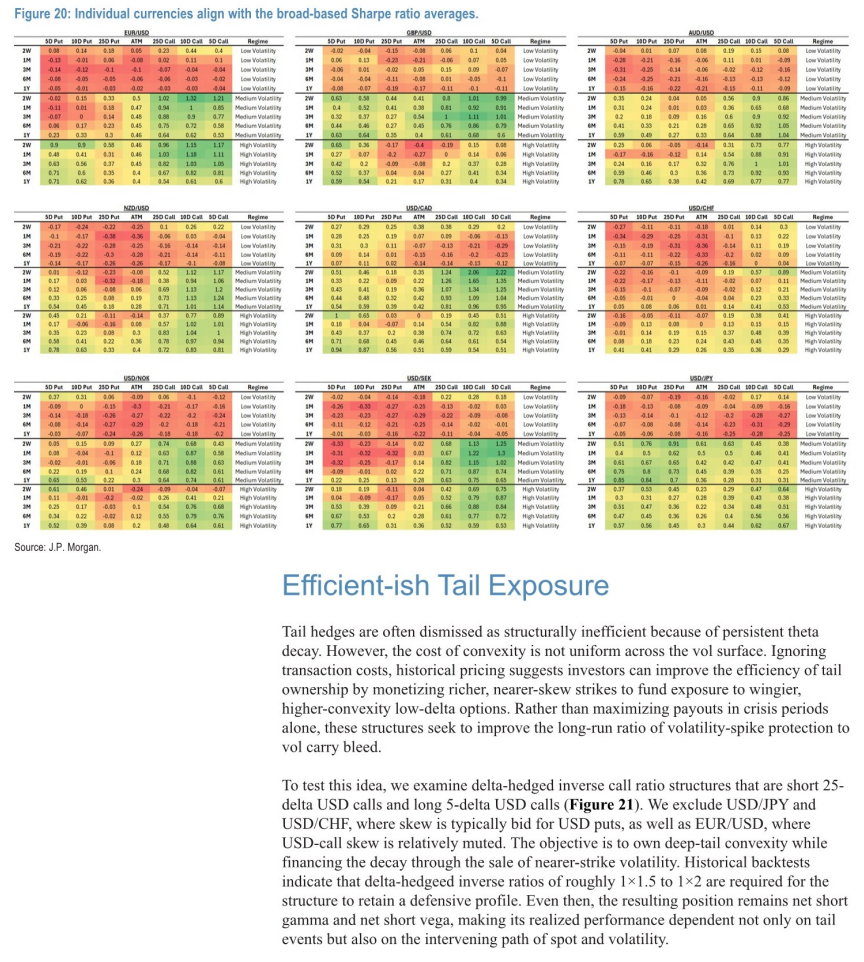
Exhibit 8